
EU steel import crackdown: quotas halved and tariffs doubled to 50 per cent
The measures aim to protect the steel sector from the very strong Asian competition. Applauded by the industry, Eurofer speaks of 'an important step forward for the defence of the sector' and of 'pioneering' work by the Commission
from our correspondent Beda Romano
 Aggiungi Il Sole 24 Ore
ai preferiti su Google
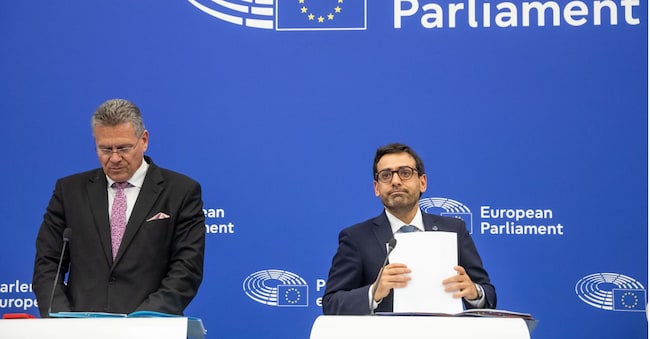
BRUSSELS - These are unusually radical protectionist measures that the European Commission has outlined on the steel front, measures that have been clearly welcomed by companies in a sector that has suffered in recent years from very strong competition from Asia. In addition to doubling the amount of tariffs, the EU executive has also proposed a reduction of half of the tariff quotas in order to protect the European market.
'We very much welcome and fully support the Commission's proposal,' commented Axel Eggert, managing director of Eurofer, the European trade association. 'This is an important step forward for the defence of the sector,' Eurofer described the EU executive's work in this area as 'pioneering'. The measure presented requires the importer to also prove the origin of the steel, specifying where it has been melted and poured (melted and poured, in English).
There are two main measures: an increase in tariffs to 50%, and at the same time a reduction of tariff quotas by 50%. "As a result, only 10% of the European market will remain open to international competition", i.e. 18 million tonnes per year, explained Single Market Commissioner Stéphane Séjourné. Unlike previous restrictive measures, the measure is permanent in nature and will have to be approved by the Parliament and the Council.
In essence, steel imported within the tariff-rate quotas would not be taxed, while steel imported beyond the tariff-rate quotas would be taxed at 50 per cent, from the current 25 per cent. The minimum quota that remains in free competition would also be untaxed. In this sense, the European strategy is different from the one decided by the Trump administration, which envisages tariffs on steel imported from abroad from the first tonne.
In recent weeks, the debate in the European Commission has been heated. Some commissioners were of the opinion that preserving a steel industry in Europe was no longer essential. Others supported the idea of producing only green or very high quality steel on the continent. In the end, those who want to maintain production sites and guarantee European sovereignty by producing steel for defence and automotive purposes also prevailed.


