Negotiations

EU, Tanzania working on 'unfreezing' frozen funds after vote

Foreign Minister Kombo flew to Brussels for talks with the institutions after the EUR 156 million stop for electoral violence

from our correspondent Alberto Magnani

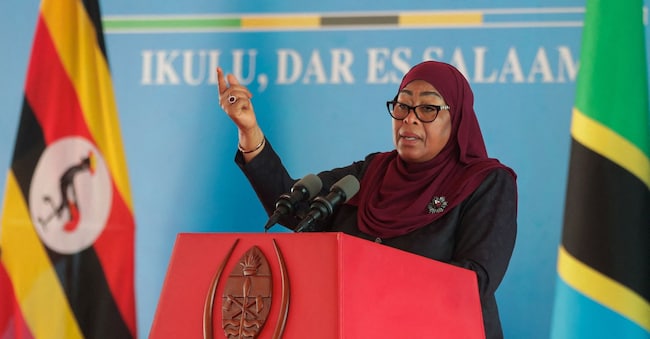
La preisdente Samia Suluhu Hassan in una conferenza stampa in Uganda

4' min read

Translated by AI
Versione italiana

4' min read

Translated by AI
Versione italiana

Nairobi - When the announcement of the suspension of tens of millions of euro in EU funds arrived last November, the Tanzanian authorities reacted coldly. "We are not going to starve," replied Foreign Minister Mahmoud Thabit Kombo, former ambassador to Italia until 2024, pointing out that Dodoma has its own budget and will be able to cope with the squeeze launched by Brussels: the freezing of the 156 million euros allocated to Tanzania in its Annual Action Plan, an operational document of the European Commission, in response to a European Parliament resolution against human rights violations and the repression of dissent in the presidential elections on 29 October.

The Tanzanian authorities have maintained a line ofsavoir-faire and insist on the project of national 'reconciliation' after the fractured vote, but in the meantime the leadership is talking to Brussels about restoring funds and ties already dented by unfavourable opinions of the Euro Chamber on Tanzania's repressive involution in the presidency of Samia Hassan.

Loading...

The post-voting tensions and the half-hearted 'reconciliation'

The Commission accepted the EU Parliament's request for a halt to the funds destined for Tanzania, plebiscised by 539 votes in favour and addressed to a specific objective: the demand for clarity and action on the events of last autumn, when observers and international organisations denounced abuses on the opposition and violence in a vote deemed farcical (the government declined responsibility).

Incumbent President Hassan, who took over power in 2021 at the time of John Magufuli's death, has officially cashed in with close to 100 per cent support and unleashed the ire of the opposition against the decades-long power of the Chama Cha Mapinduzi: the 'party of the revolution' that expresses Samia herself and has been at the top continuously since independence in the early 1960s.

The government first excluded the opposition Chadema party from competing in the presidential and parliamentary double vote at the end of October, imprisoning its leader Tundu Lissu, and then cashed in on accusations of a bloody repression of dissent that had spread after the polls closed. Diplomatic sources quoted by the Chatham House study centre speak of 1000 victims, a toll that has tarnished Dodoma's international reputation and soured relations with crucial partners. The EU is a case in point, as evidenced by the halt in funding and the diplomatic rush to support Tanzania's causes.

Meeting with Kallas and attempts at 'reconciliation'

At the heart of the mending strategy is the visit by Minister Kombo himself to Brussels at the end of January, marked by a rendez-vous with High Representative for Foreign Policy Kaja Kallas. According to Sole 24 Ore and EUrologus, Brussels reiterated its concern about the latest developments in Tanzania and confirmed the current freezing of funds. The meetings, again according to Sole 24 Ore and EUrologus, offered the opportunity to hear Tanzanai's intentions on investigations and reconciliation compared to EU expectations. Brussels expects developments especially on the front of the release of activists, preserving the 'strong relationship' that welds the EU to Dodoma.

The electoral chaos has sealed the descending parable of Samia Hassan, who has slipped from the openness of the first phase of her mandate to a repressive twist that has tarnished her reputation as an 'enlightened' leader on a global scale. After initial resistance, with accusations thrown back at the protesters, Hassan announced an investigation to shed light on the violence perpetrated during the election. The government is 'genuinely concerned about the international fallout' says Fergus Kell of Chatham House, a British think tank. At the same time, the 'effort has not translated into a real push for domestic accountability,' says Kell. 'At present, the efforts lack real depth and independence. Criticisms of the government 'enquiry' include the presence of government officials on the commission and the insistence on an external, 'criminal' hand in the protests, delegitimising political impulses.

Today, the Tanzanian economy has been growing at an estimated average rate of +6% over the past two decades by the Insitute of security studies, a research centre, with GDP tripling to USD 69.5 billion between 2004 and 2023 and a population hovering around a 'median' age of 18.4 years. The economic and demographic momentum has not translated into widespread growth, with GDP per capita confined to 31st place out of the 50-plus continental economies and more than 7 out of 10 Tanzanians below the US$ 3.65 mark in 2023. Today the EU remains a key partner when it comes to trade, hard currency inflows and remittances, but "the decline of development aid and concessional finance has reduced its (EU's) influence while other actors have increased their engagement," says Kell of Chathman House.

The map includes old ties with China and India and increasingly close relations with the Gulf countries, the most up-and-coming bloc in terms of investment volumes on an African scale. The United States and Russia maintain their focus on mineral resources and Moscow would like to intensify its footprint, although at the moment its reach seems 'limited' to the $1.2 billion uranium project launched by the national giant Rosatom at the Tanzanian Mkuju River site. Nothing excludes that relations could be refined. A few days after his tour in Brussels, Kombo himself was visiting Russia with his counterpart Sergei Lavrov. The expectation is that Hassan's turn will come soon. "We look forward to the visit," Lavrov said.

*This article is part of the European collaborative journalism project Pulse and was realised with the contribution of Eurologus-Hvg.

Copyright reserved ©
  • Alberto Magnani

    Alberto MagnaniCorrispondente

    Luogo: Nairobi

    Lingue parlate: inglese, tedesco

    Argomenti: Lavoro, Unione europea, Africa

    Premi: Premio "Alimentiamo il nostro futuro, nutriamo il mondo. Verso Expo 2015" di Agrofarma Federchimica e Fondazione Veronesi; Premio giornalistico State Street, categoria "Innovation"

Loading...

Brand connect

Loading...

Newsletter

Notizie e approfondimenti sugli avvenimenti politici, economici e finanziari.

Iscriviti