
EU travel and tourism stocks beat US stocks, +9% since start of year (eToro)
European stocks of airlines and travel search sites did well, while those of hotel chains suffered. Trivago boasted +96%.

3' min read
Le ultime da Radiocor
Svizzera: Meloni, cordoglio per Maria Spinelli, confidiamo che autorita' facciano luce
Nepal: salgono a 797 i morti nell'alluvione, 3.048 i dispersi
Borsa: verso settimana guardinga, attese inflazione Ue e lavoro Usa
3' min read
(Il Sole 24 Ore Radiocor) - 'Holiday' stocks in the Old Continent are taking off and are performing significantly better than their American counterparts. Research conducted by eToro shows that, thanks to the approach of the summer period, the shares of European-based travel and tourism companies are doing well, reflecting the 2025 attitude of preferring short routes and the search for low-cost accommodation solutions. The trading and investment platform has composed two 'Beach' baskets, one referring to the US and the other to Europe, consisting of fifteen stocks each, bringing together the major companies operating in the booking, entertainment, airline, cruise and hotel sectors. Both baskets have outperformed the market as a whole over the past twelve months, accumulating a return of 26%, compared to 6% for the Stoxx 600 and 12% for the S&P 500. Since the beginning of the year, however, the narrative has changed: since January, in fact, the Beach Europe basket has posted a performance of +9%, while the US basket has ceded 3%. It should be noted that the S&P 500 has risen about 2% and the Stoxx 600 9%.
Lale Akoner, global market analyst at eToro, comments: "The gap between European and US travel stocks in 2025 reflects cyclical forces and general sentiment. In Europe, falling interest rates and easing inflation are boosting consumer confidence and discretionary travel spending, while US consumers are still struggling with high interest rates and persistent inflation. Adding to these pressures are tariffs disputes, which are fuelling economic uncertainty and dampening expectations for international travel demand, particularly on long-haul routes,' he says.
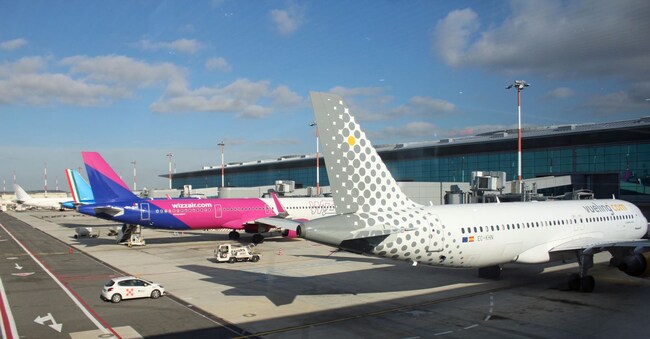
In more detail, European airlines such as Ryanair (+28%) and Deutsche Lufthansa (+18%) performed particularly well in this 2025, in stark contrast to US airlines such as United (-14%) and Delta (-15%), which are among the worst US performers. The only exception is the Hungarian low-cost carrier Wizz Air, whose stock plummeted last week as aircraft grounded and hit its profits. Hotel stocks, on the other hand, are struggling on both sides of the ocean: Hyatt Hotels Corp - Cl A (-15%), Las Vegas Sands (-18%), IHG (-13%) and Melia (-2%) all posted year-to-date price losses.
Lale Akoner says: 'European carriers are benefiting from strong demand for short-haul leisure travel, lean cost structures and a favourable monetary policy. Many European airlines have kept capacity and costs low since the pandemic, allowing them to expand profitably as demand recovers. US airlines, on the other hand, are facing a more difficult domestic environment: stagnant inflation and rising interest rates are weighing on consumer budgets, while airlines are hit by rising labour costs due to union negotiations and staff shortages'.
If the high-profile chains suffer,the sites that allow you to find the best bargains are booming. The best performer crown goes to hotel search platform Trivago, which has surged 96% since the start of the year, thanks in large part to a rally in early February when the company announced year-on-year revenue growth for the first time since the first quarter of 2023. Also on the rise was Booking Holding, the US-based but European-focused travel technology company, which outperformed most of its domestic peers in the US basket with 12% year-to-date growth. "In both the US and Europe, hotel industry margins are being squeezed by rising labour and operating costs, stagnant room rates and a slow recovery in business travel. The reality is that consumers continue to travel, but many are looking to save on accommodation, putting further pressure on full-service and upscale hotel chains," Akoner concludes.


