
EU and Ukraine reach agreement on drones. Fincantieri is among the selected companies
The aim is to promote the joint production of drones and anti-drone systems by the end of 2026

Key points
A new step towards a European defence strategy involving Ukraine, against the backdrop of a scaling back of US involvement in NATO? It could well be. On 24 February, during their visit to Kyiv, European Council President Antonio Costa and Commission President Ursula von der Leyen were taken to one of the capital’s drone factories. On that occasion, they were pleasantly impressed by the progress Ukraine has made in producing the weapon most widely used in the conflict with Russia.
The agreement between the EU and Ukraine
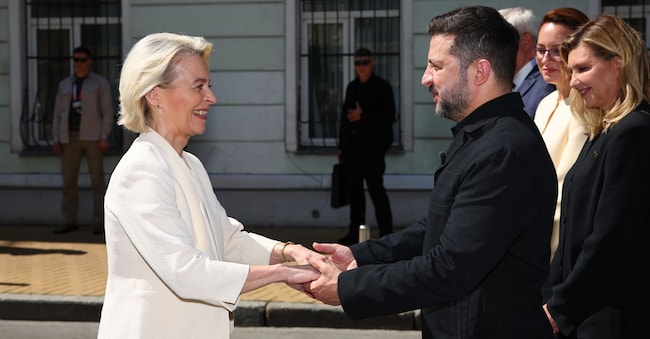
Five months later, on 15 July, von der Leyen returned to Kyiv. There, she signed a so-called ‘Ukraine Drone Deal’ – an industrial cooperation agreement for the production of drones – with the Ukrainian president Volodymyr Zelensky. In effect, the European defence industry is capitalising on the experience Ukraine has gained during years of war against Russia. The agreement will accelerate the development and production of next-generation drones and anti-drone systems, providing Ukraine with the necessary capabilities whilst strengthening Europe’s defence readiness for the future.
Countering drones and missiles
The aim of the agreement is to rapidly scale up the production and deployment of combat-proven capabilities to counter drones and missiles, whilst ensuring the long-term predictability needed to bolster investment and expand defence industrial capacity in both Ukraine and the European Union. The cooperation aims to provide protection against short- and medium-range drones and missiles, deploy combat-proven drone systems on a large scale – which can be stored outside Ukrainian territory – and provide both defence industrial bases with the predictability needed to significantly boost investment and production.
The European Commission has also announced Ukraine’s accession to the European Defence Fund (EDF) and the European Defence Industry Programme (EDIP).
The precedent set by the European coalition for a missile defence shield
The agreement follows on from the European Coalition for a missile defence shield, launched on Monday 13 July in Paris on the sidelines of the ‘Willing’ summit. According to the Financial Times, Kyiv has secured an exemption from the Commission for part of the €6 billion tranche of the €90 billion loan granted by Brussels to purchase drone components from China.


