Wine CMO

Wine, more flexibility and simplification in EU crisis funds

In the 300 million European package, clarity on new digital labels and rules on the use of promotion funds, which now also cover wine tourism

by Giorgio dell'Orefice

4' min read

Translated by AI
Versione italiana

4' min read

Translated by AI
Versione italiana

Strong simplification of wine labelling rules, flexibility in the use of EU funds for competitiveness measures such as promotion abroad or vineyard restructuring. Introduction of wine tourism, which is growing strongly in Italy, among the activities that can be financed with EU funds. But some doubts remain on the regulatory framework of the new deal wines.

These, in short, are the novelties introduced by the 'Wine Package' on which agreement was reached last week in the Trilogue between the European Commission, the EU Council and the European Parliament. Thus from Europe came, and for once, a timely response to the requests of European wine producers grappling with a difficult market phase between falling consumption trends and tariffs introduced by the US.

Loading...

Give way to digital labelling

A decisive step forward has been taken on the so-called 'digital label'. After years of debates between member countries on whether or not to indicate ingredients and nutritional information on labels, it has finally been decided to focus on a pictogram (probably the letter 'i' will be chosen, but this is still to be defined) and on the Qr code, referring the consumer to the digital consultation and thus avoiding a dangerous 'bugiardino effect' for wine labels. This also avoids having to translate the information on the label into different languages. The new rules will apply as much to wines marketed in the EU market as to those exported outside the EU.

More modular contributions

Another measure of great importance for businesses concerns the flexibility and greater intensity of contributions introduced by the wine package on support measures for the sector that can be financed with EU funds. It should be remembered that Italy receives an average of around EUR 300 million each year under the Wine CMO to co-finance measures such as wine promotion on the markets, vineyard restructuring, and technological investments in the cellar.

Until now, EU co-financing covered up to 50% of the investment. This percentage will now rise to 60% but can go upto 80% if the measures (such as vineyard restructuring or investments in the winery)encourage farm adaptation to climate change.

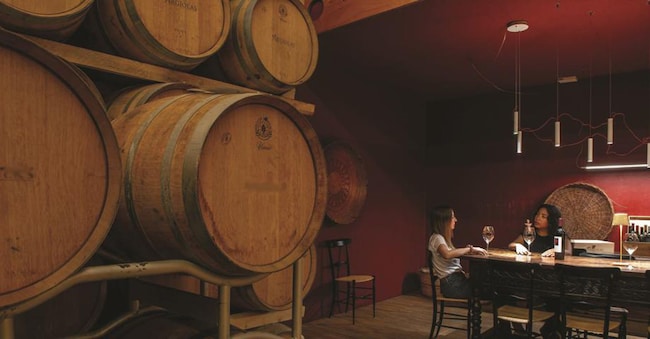
The other major novelty in the field of support measures is the possibility to support (within the slot 'investments in wine cellars', which for Italy is worth around 60 million euro per year) theinitiatives on wine tourism, a fast-growing sector in Italy in particular. In essence, EU funds can also be used to co-finance (at least 60 per cent) investments for the construction of tasting rooms or ad-hoc spaces for receiving visitors in the winery.

Also important is the novelty introduced for wine promotion actions abroad. In the past, it was possible to focus on a single outlet country for a maximum of five years; now this limit is increased to nine years.

Among the measures for the competitiveness of companies, mention should also be made of the authorisations for planting new vineyards, which in the past once granted had to be used within three years, now this limit is increased to eight years.

Vineyard Scrapping

Agreement also for anti-crisis measures. It is clarified that the grubbing-up of vineyards (which France is adopting on a massive scale) can be supported by a member country with EU funds, but within its national envelope of EU resources.

'This is an important development,' explain Federvini, 'because if the grubbing-up had been financed from the crisis reserve, it could have happened that Italy would also be called upon to contribute to the grubbing-up of French vineyards.

lack of clarity on dealings

With the Wine Package, Brussels introduces an initial framework for dealcoholised or partially dealcoholised wines, but the new rules leave some doubts on the table. First of all, a 'totally dealcoholised' wine will be one with an alcohol content between 0 and 0.5 degrees and may also be called 'alcohol free'.

Doubts arise for intermediate or 'reduced alcohol' grades. Today, the definition of partially dealcoholised wine is that of a product that has between 0.5 and 8.5 degrees. The standard also stipulates that the alcohol reduction must be at least 30% of the starting alcohol content. "In this way," explain the Italian Wine Union, "partially dealcoholised wines will be those that on average have between 0.5 and 5 degrees. But they do not say how those between 5 and 9 degrees alcohol will be considered. Will they still be able to be called 'wine'? Or will they have a different designation?"

The unknown duration

But the main unknown that the wine package leaves open is that of the duration of these measures. The novelties will certainly have an impact on the current Common Market Organisation for wine and its resources, which will remain unchanged until 2027. But now it will be the reform of the Common Agricultural Policy that will have to clarify whether the CMO wine will remain active in the future. A clarification that the producers hope will arrive soon otherwise all these important novelties will only have a time horizon of a few months.

Copyright reserved ©
Loading...

Brand connect

Loading...

Newsletter

Notizie e approfondimenti sugli avvenimenti politici, economici e finanziari.

Iscriviti