The report

Euro, consolidating its position as the world's second largest currency in 2025

The ECB analysis shows that the European currency has become dominant in the international bond market for green and sustainable issues.

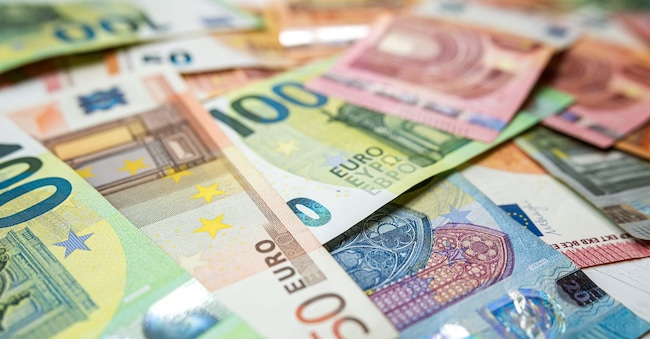
by Isabella Bufacchi

 (Adobe Stock)

3' min read

Translated by AI
Versione italiana

3' min read

Translated by AI
Versione italiana

The international role of the euro continued to grow in 2025, 'moderately', even as the US dollar continued to lose weight as a global reserve currency.

Putting together a large number of indicators on the use of currencies on a global scale, "the share of the euro has risen to around 20 per cent, continuing a gradual but steady upward trend observed sinceRussian invasion of Crimea in 2014": international issues of euro-denominated bonds and euro green bonds are rising sharply.

Loading...

The European single currency thus consolidated its status in 2025 as the world's second most important currency after the US dollar.

This is according to the Report on the International Role of the Euro published today by the European Central Bank, which, however, paints a picture with lights and shadows.

In a context where trends and movements are slow and gradual, however, 'fragmentation in international monetary systems' is increasing, and the use of the renminbi and bitcoins is rising.

Margins for growth of the euro's role in the world are there, but to strengthen the standing and appeal of the euro in the world, the EU will have to do more: finalise the union of investment and savings and capital markets and increase the common debt with issues of euro-denominated safe assets. Defending the rule of law.

The Report emphasises the strengths of the euro. In 2025, international euro bond issuance reached its highest level since the introduction of the single currency, increasing by around 30% compared to 2024.

The euro also became the dominant currency in the international green and sustainable bond market for the first time in 2025. Inflows of foreign investment into the euro area were close to historical highs. And the use of the euro in exports of services outside the euro area increased.

The ECB points out, however, that the fragmentation of the international monetary system is increasing: "signs of fragility are beginning to emerge".

And in this regard, the use of l renmimbi and bitcoin by some ships to transit the Strait of Hormuz is reported.

Rising geopolitical tensions meanwhile increased central bank purchases.

The euro, reading the Report, does not yet seem to have achieved the widespread standing of a safe haven asset used on a global scale.

In the Report, the share of the euro as the remaining reserve currency is reported to be stable, at around 20%, while the share of the US dollar as the global reserve currency declined from 70% in 2000 to 57% in 2025.

This means that margins for growth in the use of the euro in the world are there, but to expand the global standing and appeal of the single European currency, the Report emphasises that the EU will have to do more and faster, by achieving at least three strategic objectives: "complete the investment and savings union", "increase the joint financing of public assets to create a safe and liquid pool of EU public debt" by creating a true market for liquid and deep European safe assets like the US Treasuries.

"Safeguarding investor confidence in the institutions and policies that support the euro, including through respect for the rule of law". In an international context where democratic values are increasingly under attack.

In the meantime, the ECB is playing its role in strengthening the position and reputation of the euro in the world: the European Central Bank maintains its independence and ensures price stability, it issues a currency that in addition to cash is preparing for the digital age by issuing the digital euro for retail payments and the tokenized euro for wholesale DLT transactions.

Finally, the ECB is offering a liquidity parachute on an international scale with the new enhanced Eurep (Eurosystem repo facility).

Copyright reserved ©
  • Isabella Bufacchi

    Isabella Bufacchivicecaporedattore corrispondente dalla Germania

    Luogo: Francoforte, Germania

    Lingue parlate: inglese, francese, tedesco, spagnolo

    Argomenti: mercato dei capitali, ECB watcher, fixed income e debito, strumenti derivati, Germania

    Premi: Premio Ischia Internazionale di Giornalismo per l’analisi economica, Premio Q8 per giovani giornalisti economici

Loading...

Brand connect

Loading...

Newsletter

Notizie e approfondimenti sugli avvenimenti politici, economici e finanziari.

Iscriviti