
Euro 2032: the race to secure stadiums is in full swing, with investments totalling 5 billion
The FIGC has submitted the dossiers for the venues deemed suitable to proceed with their bids to host matches at the tournament that Italia will organise jointly with Turkey. Thirteen cities and 14 venues are in the running

The bid for Euro 2032 has moved from the drawing board to reality. Within the deadlines set by UEFA, the FIGC has submitted the dossiers for the venues deemed suitable to proceed with the bid to host the matches of the tournament that Italia will organise jointly with Turkey. This is a formal yet crucial step, set to have an impact not only on the geography of the continental tournament but also on the future of the country’s sporting infrastructure.
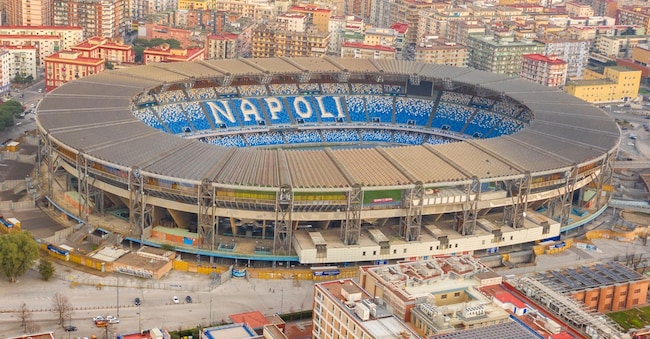
In the letter sent by President Giovanni Malagò to UEFA President Aleksander Ceferin, 13 candidate cities were named: Bari, Bologna, Cagliari, Florence, Genoa, Lecce, Milan, Naples, Palermo, Rome, Salerno, Turin and Verona. There are 14 venues in the running, taking into account the capital’s dual bid with the Stadio Olimpico and the proposed new stadium in Pietralata, whilst Naples is competing with the Maradona stadium alone (therefore, unlike the bid submitted in August, neither the Flaminio nor the new stadium in Naples envisaged by chairman Aurelio De Laurentiis are included).
Documentation
Over the coming months, UEFA will analyse the documentation to verify compliance with 11 thematic areas and over 120 operational requirements. These range from infrastructure compatibility to services for supporters, from accessibility to sustainability, right through to the standards required for the media, broadcasters, security and hospitality. Only once this assessment has been completed will the FIGC proceed to select the five host venues, with the possible identification of a number of reserve venues as well.
“We are pleased with the number and quality of the proposals received by the FIGC,” emphasised FIGC President Giovanni Malagò, highlighting the shared commitment of institutions, local authorities and private entities. This satisfaction stems above all from the scale of the overall plan. The bids submitted, in fact, represent investments totalling around 5 billion euros. The programme is funded to around 80 per cent by private capital, signalling a paradigm shift for a sector that has for years been held back by bureaucratic delays and regulatory uncertainty.
In the last few hours, the field of candidates has grown even stronger. Bologna has formalised plans for the new stadium (see the article below), Hellas Verona has submitted a feasibility study to the City Council for the demolition and reconstruction of the Bentegodi Stadium, whilst in Bari, a proposal has emerged from the American entrepreneur Gregory Vaughn for an investment of around 250 million to regenerate the city’s two stadiums.


