Pollution

Euro 5 diesel vehicles: from 1 October, the driving ban will come into force only in Lombardy

Following Piedmont and Emilia-Romagna, Veneto has also officially lifted the ban. Veneto’s President Stefani said: ‘A promise kept. We won’t leave anyone stranded.’

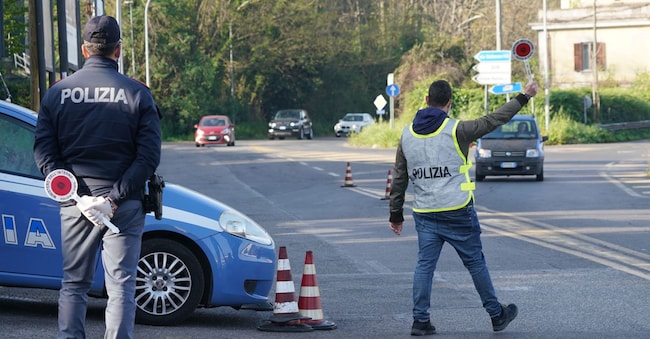
Posto di blocco della Polizia che effettua controlli delle auto Diesel Euro 5. (Imagoeconomica)

4' min read

Translated by AI
Versione italiana

4' min read

Translated by AI
Versione italiana

Only Lombardy will enforce restrictions on car use Euro 5 diesel vehicles which were due to come into force in the regions of the Po Valley from 1 October. Piedmont, Emilia-Romagna and Veneto have opted to adopt compensatory measures to reduce emissions.

The case of Veneto

“A promise kept. We won’t leave anyone stranded.” Alberto Stefani, President of the Veneto Region, commented with these words on the go-ahead voted through on 15 September by the Regional Council to suspend the ban on Euro 5 diesel cars. The measure, which was originally due to come into force a year ago, on 1 October 2025, applies to vehicles registered from September 2011 until the introduction of the Euro 6 standard in 2015 and was designed to reduce emission levels in one of the most polluted areas in Italia and across Europe.

Loading...

The leader of the Lega, Matteo Salvini, is strongly opposed to the measure, having set himself the aim of preventing a lockdown across the entire Po Valley. “As Transport Minister, I asked for an extension because I don’t think it’s sensible to penalise those who cannot afford to buy a new car or van,” said Salvini, warning that 500,000 Lombardy residents “risk being left stranded”.

Stefani shares this view, explaining that ‘protecting the environment is a priority, but the green transition cannot be paid for by the public. We cannot impose a new cost on those who, for example, use their car every day to get to work, take their children to school, look after a family member or run their own business. Sustainability must also be economic and social’.

The governor stated that ‘there are hundreds of thousands of people who drive a Euro 5 vehicle, and we cannot simply tell them to change their car’. However, he went on to say, the regional administration will not abandon its goal of improving air quality, but will choose a different route to achieve it, by adopting ‘concrete and effective’ measures, starting with remote working in the public sector: ‘The Veneto region,’ he emphasised, ‘wants to protect the environment without penalising those who work and without causing hardship to those who cannot afford to buy a new car’.

Piedmont and Emilia-Romagna

The first region in the Po Valley to announce the lifting of the ban was Piedmont, which had already approved, by a majority, a resolution in July to update the Regional Air Quality Plan, thereby averting the ban. Among the compensatory measures identified by the regional government led by Alberto Cirio are incentives for the use of HVO (Hydrotreated Vegetable Oil) biofuels for local public transport and for Euro 5 and Euro 6 diesel vehicles. “We are achieving the goal of reducing emissions and protecting air quality through measures other than banning Euro 5 vehicles,” announced President Alberto Cirio, “because we are convinced that the ecological transition is a necessary challenge, but it must not fall on the shoulders of the most vulnerable families and the less well-off”.

The Emilia-Romagna region has decided to suspend the structural ban on Euro 5 diesel vehicles from Friday 11 September, announcing that, as required by national law, a package of alternative measures has been put in place ‘to ensure a reduction in pollutant emissions that is even greater than that achievable through the ban’.

The ban, which was due to come into force on 1 October, would have affected around 90,000 vehicles in Piacenza, Parma, Reggio Emilia, Modena, Bologna, Ferrara, Ravenna, Forlì and Rimini. Alternative measures include postponing the start of domestic heating in lowland areas until 1 November and, during air quality emergency periods, tightening restrictions on the use of domestic biomass heating systems. In addition, the region has allocated ten million euros to incentivise the replacement of the most polluting heating systems with heat pumps – including those combined with photovoltaic systems – through a measure that has already been submitted to the Ministry for the Environment.

Lombardy

Lombardy therefore remains the only region in the Po Valley that has not suspended the ban imposed by the government through compensatory measures. Here, the restrictions – which apply only to municipalities with a population of over 100,000 – will be in force on weekdays in the main urban centres (Milan, Brescia, Bergamo and Monza), where owners of the affected vehicles must comply with the ban from Monday to Friday, between 7.30 am and 7.30 pm. The restrictions on Euro 5 diesel vehicles will come into force from 1 October 2026 for passenger cars, from 1 October 2027 for categories M2, N1 and N2, and from 1 October 2028 for all other categories.

Citizens will be able to check whether their vehicle falls within the categories subject to restrictions by referring to their vehicle registration certificate or, alternatively, by entering their vehicle’s number plate on the Motorist’s Portal. Vehicles potentially affected are those registered between 2011 and 2015, but the actual outcome depends on the technical specifications listed on the vehicle registration certificate. Those who breach the restrictions face fines ranging from 168 to 679 euros.

Copyright reserved ©

Brand connect

Loading...

Newsletter

Notizie e approfondimenti sugli avvenimenti politici, economici e finanziari.

Iscriviti