
Eurobonds resurface at the Eurogroup meeting on energy
Although it was not on the agenda, the controversial issue of shared debt was once again discussed by the ministers, who were divided in their views. Among the countries that welcomed the proposal was Italia

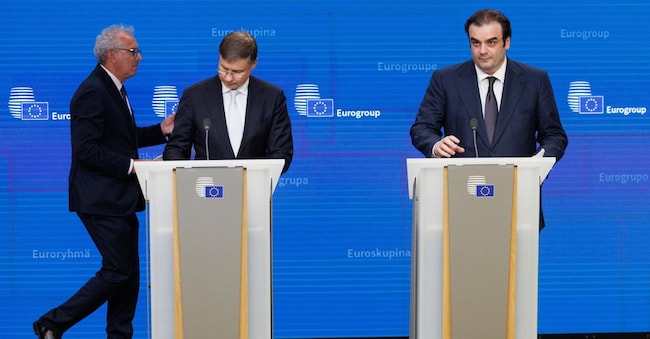
“Despite the shock to energy prices, the euro area economy is proving resilient.” This is the view of the finance ministers, as set out in a Eurogroup document on the fiscal policy stance. The ministers note that “before the outbreak of the conflict in the Middle East, the conditions for economic expansion were in place, with inflation stabilised around the target, favourable financing conditions and a robust labour market. With rising energy prices affecting growth and inflation, the Commission’s spring forecast now indicates that economic growth in 2026 will continue at a slower pace than previously anticipated, before recovering moderately in 2027.” Inflation will reach 3 in 2026 and is expected to slow in 2027, moving closer to the 2% target. However, the Eurogroup notes that ‘uncertainty surrounding the macroeconomic outlook remains very high and the risks to growth are tilted to the downside’.
Energy was not the only topic discussed at yesterday’s meeting. The ministers returned to the controversial issue of shared debt, which, although not on the agenda, was raised again by Spain. The Minister for the Economy, Carlos Cuerpo, proposed ‘reducing the fragmentation of debt issuance across the twenty-seven Member States by centralising part of that issuance’. More specifically, Madrid suggests creating a mechanism to allow the Commission to issue a portion of EU Member States’ debt with the aim of developing a common market for government bonds, with sufficient liquidity and depth to promote a secure financial ‘asset’ capable of attracting savings and investors. According to Spain, if all EU countries were to participate, €850 billion could be raised on the market each year.
As the President of the Eurogroup summarised, the proposal does not, for the time being, enjoy widespread support (among those who immediately spoke out against it is the Netherlands, with its Finance Minister, Eelco Heinen, who pointed out that ‘every now and then’ a ‘new proposal for Eurobonds’ emerges), but it is said to have been welcomed by others, such as France and Italia. “Italia welcomes the Spanish proposal” to issue additional EU joint debt of up to 850 million a year to provide loans to member states, sources at the Ministry of Economy and Finance (MEF) told ANSA. Italia is not opposed to the idea; on the contrary, it views Madrid’s initiative ‘positively’, ‘despite the difficulties such proposals face within Ecofin and at European level’.

