

Dazi globali bocciati, ma non scattano i rimborsi automatici
di Antonino Guarino e Benedetto Santacroce

3' min read
3' min read
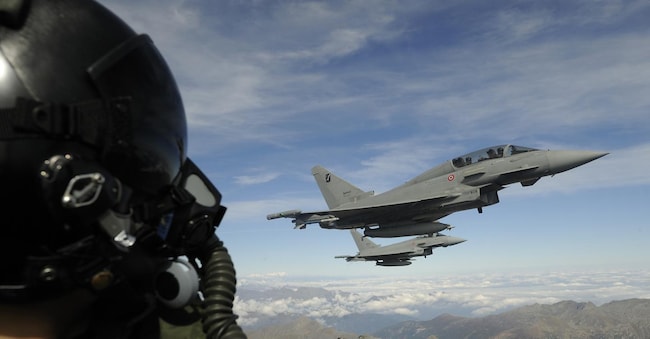
A common defence platform for the European skies acting as a driver for growth and jobs. The Eurofighter Typhoon programme represents an example of excellence in European industrial collaboration. Born from the cooperation between four nations (Germany, United Kingdom, Italy and Spain) with the objective of developing and producing the latest generation of combat aircraft, thanks to its configuration it favours international cooperation and the integration of the specific skills of each country, creating an interdependent and highly specialised industrial ecosystem.
An independent study by Pwc Strategy& highlights the programme's significant impact on European economies. In fact, the study examines the entire spectrum of development, production and support activities in the four partner nations, declining the projected economic effects over the next ten years on two possible evolutionary scenarios.
In the most conservative scenario, with orders for new Eurofighters from Spain (Halcon I and II) and Germany (Quadriga), the programme is expected to contribute EUR 58 billion to the GDP of the four partner nations over the next ten years, generating EUR 14 billion in tax revenues and supporting 62,700 jobs per year. Including the additional sales opportunities of around 200 Eurofighters in domestic and export markets in the estimates, the numbers increase significantly. In this scenario, for the next decade, the programme will contribute EUR 90 billion to GDP, generating tax revenues of EUR 22 billion and supporting over 98,000 jobs each year.
In this sense, it is clear that the importance of the programme is not limited to the sole purpose of keeping European skies safe. In fact, the socio-economic benefits generated are evident, as well as the substantial support to the European aerospace sector with tens of thousands of jobs supported annually, benefiting the communities where the Eurofighter production lines are located. Moreover, the programme guarantees the sustenance of industrial production and maintenance infrastructures on European soil, promotes national and community sovereignty by limiting excessive dependence on foreign technologies in the defence sector, and above all, guarantees the enabling and development of technological and industrial skills in Europe, which are fundamental for the future transition to next-generation combat systems.
The ability to produce state-of-the-art systems increases the efficiency of the armed forces and strengthens Europe's technological and economic foundations. The return of war in Europe has highlighted the current inability of the defence industry to sustain a prolonged, high-intensity conflict in a unified and organised manner.

