
Eurogroup, MES ratification in Brussels
President Donohe: without approval more risks in the event of a banking crisis. Italy and Spain call for changes

2' min read
2' min read
FROM OUR CORRESPONDENT
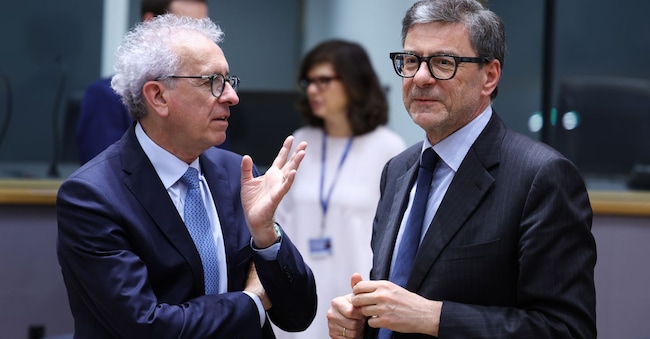
BRUSSELS - A European economy held hostage by the US trade war was the subject of a Eurogroup meeting yesterday, 12 May. Besides the presentation of the German programme by the new Finance Minister Lars Klingbeil, the member countries also discussed the European Stability Mechanism (ESM). Italy's failure to ratify the new treaty complicates the possibility of entrusting new tasks to the financial arm of the eurozone.
The Meloni government has long refused to have a reform passed in parliament that would make the ESM the parachute for the European Bank Resolution Fund (the same reform would facilitate forms of debt restructuring in the event of a request for aid). According to information gathered on the sidelines of the meeting, in yesterday's discussions Italy did not open the door to a forthcoming ratification, while many ministers highlighted the role of the ESM in ensuring financial stability for the eurozone.
In a press conference, Eurogroup President Paschal Donohoe explained among other things that during the meeting Italian Finance Minister Giancarlo Giorgetti 'reiterated the significant political difficulties in completing the ratification'. The Irish politician went on to warn that in the event of a banking crisis the ESM 'would not be able to play an active role'. This, he pointed out, 'could increase the risks in the future, should we face a serious banking crisis'.
The discussion among ministers was described as 'more in-depth and more political' than usual, according to one witness. On the other hand, economic challenges urge governments to think about possible new instruments to strengthen the eurozone. The European Commission itself, in its recent White Paper on rearmament, made it clear that to finance defence 'the EU executive will continue to explore innovative instruments, also in relation to the ESM' (see Il Sole 24 Ore of 20 March).


