
Europe announces an e-car for less than EUR 20,000. It will be low cost or low profile
The doubts of the operation. While Europe announces, China produces and delivers. We must speed up so as not to remain spectators of the future of mobility

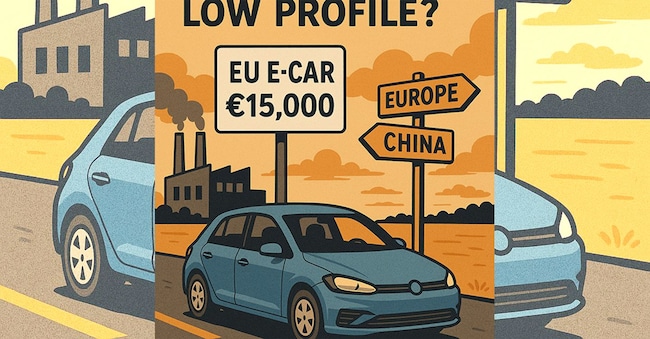
An electric small car that could cost between EUR 15 and 20 thousand. The 'Small Affordable Cars' initiative anticipated by Ursula von der Leyen in the strategic dialogue on 12 September for an affordable European e-car is in the pipeline and will take shape by the end of the year. This was confirmed yesterday by the European Commission's Executive Vice-President for Industry, Stephane Séjourné, to the ministers of the 27 gathered for the EU Competitiveness Council in Brussels. According to Séjourné, 'this will also help to support demand in a segment that is not considered in the European market today and could boost production, including the operation of our suppliers'. This is not the only proposal the Commission wants to put on the table before the New Year: Séjourné also mentioned initiatives on self-driving cars, the decarbonisation of fleets, the proposal on the acceleration of battery production and one to reduce administrative costs.
While announcing the EUR 15,000 e-car with which Europe dreams of boosting demand and suppliers, work is slipping elsewhere: 2,000 Chinese workers will assemble the CATL-Stellantis gigafactory in Zaragoza with money that is also European. Industrial sovereignty in words, subcontracting in deeds. On the other side of the Atlantic, Quebec relaxes the ICE 2035 ban (90% EV, no longer 100%) and Detroit 'engineers' incentives: GM and Ford extend $7,500 credit through captive finance. Pragmatism versus dogmatism. In Germany, the transition makes rubble: between Bosch and VW, there is talk of tens of thousands of cuts by 2030. This is the real front: productivity, scale, supply chains. If we don't lower the cost of the kilowatt-hour and the compact car now, the market will do it for us. While Huawei promises mass L3-level automated driving in 2027 and Toyota lights up Woven City as a mobility laboratory, we stutter with regulations and tariffs. The value chain runs east, so does innovation. JLR asks for more money after the cyber-attack: digital resilience is now an industrial theme, not just IT.
By 2026 Europe will see a wave of China-branded economy EVs arrive while we are still setting the table. If the Small Affordable Cars initiative does not become an armed race - lightweight platforms, European LFP batteries, bureaucracy on a diet, incentives aimed at real demand - the risk is not losing share: it is losing business. In the trenches, he who announces does not win, he who delivers wins: a European electric city car, under 20,000, produced here and now. Otherwise, others will take the lead in the future and we will remain mere passengers.

