
Europe calls Canada to build an alternative to Trump's US
For the first time, the European political community summit was attended by Mark Carney's Canada, a country with which the EU is forging ever closer ties. For High Representative Kallas, the US announcements and choices in the military sphere show 'that we really need to strengthen the European pillar within NATO'.
from our correspondent Beda Romano
 Aggiungi Il Sole 24 Ore
ai preferiti su Google
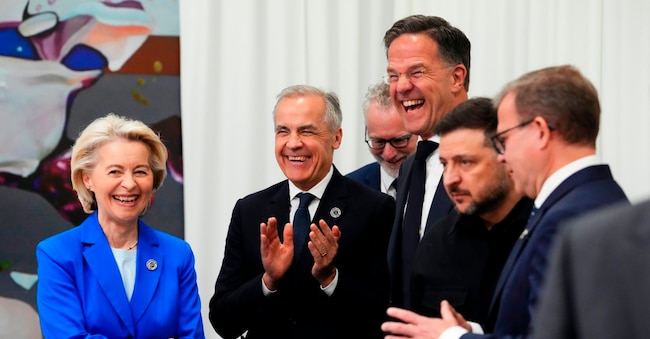
BRUSSELS - Never before in Yerevan has Europe positioned itself as a political and economic alternative to Donald Trump's America. In an international context marked by military conflicts and trade wars knowingly provoked by Washington, the Twenty-Seven gathered in Armenia with the countries of the wider European neighbourhood and beyond. For the first time, Canada, a country with which the EU is forging ever closer ties, also participated.
"In an increasingly chaotic world (...) Europe must be at the forefront in defending the international order based on rules, and founded on the United Nations Charter as the main pillar of multilateralism," European Council President António Costa explained from Yerevan. Moreover, added the former Portuguese Prime Minister, "growing instability requires a multipolar partnership to promote sustainable peace and ensure shared prosperity".
President Costa's defence of the 'European way' of behaving on the international stage came at the eighth meeting of the European Political Community, a twice-yearly gathering of heads of state and government from the whole of Europe. This time the meeting took place in Armenia, on the Asian border. The moment is delicate. Besides the wars in Ukraine and Iran, the European Union has to reckon with increasingly anti-European American decisions.
Last weekend, President Donald Trump announced an unexpected increase in tariffs on imported cars from Europe, from 15 to 25 per cent (however, legal details on the new measure were still lacking last night). At the same time, he warned that there will be a withdrawal of 5,000 US soldiers from Germany. The disengagement, the War Department explained, will take place within 6-12 months.
From Yerevan, the reactions were diplomatic. On the subject of the American military choice, High Representative Kaja Kallas explained: 'This shows that we really need to strengthen the European pillar within NATO and that we really need to engage more'. The partial withdrawal of American soldiers - there are 30,000 troops stationed in Germany - comes while the US has also decided not to send a battalion armed with long-range missiles to Europe.


