Poverty

Europe, growing homeless crisis: over 1.2 million homeless

The 43.8% increase in homelessness in Europe highlights the lack of coordinated policies

by Silvia Martelli

(Adobe Stock)

4' min read

4' min read

In Europe, more than 1.2 million people are homeless. According to the latest report of the European Federation of Homeless Organisations (FEANTSA), homelessness increased by 43% in 2024 alone. In the face of such alarming data, government interventions remain fragmented, often emergency and rarely structural.

While some countries, such as Finland and more recently Austria, have chosen to focus on long-term strategies to guarantee the right to housing, in many other European nations the phenomenon continues to be tackled episodically. Examples are Italy, where there is still no national plan, or Greece, where there are even no official registers on the homeless population. Even in Spain, the images of homeless people camped out in the Madrid-Barajas airport have become the symbol of a crisis faced with temporary solutions and a confused management between different institutional levels.

Loading...

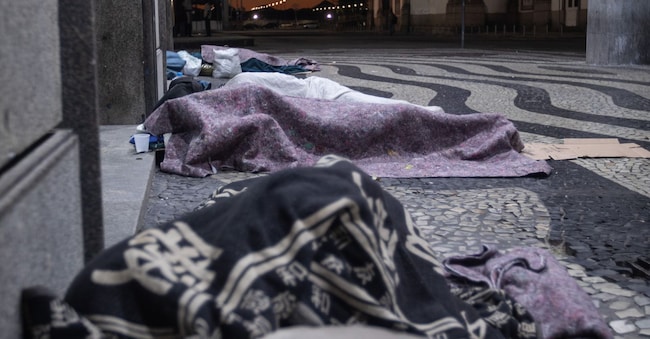
Behind the numbers there are faces and above all social fragilities: job insecurity, inaccessible rents, disability, migration, trauma. A crisis, that of the homeless in Europe, which no longer only concerns the 'margins' of cities, but which increasingly manifests itself in their symbolic places: squares, stations and airports.

Austria: Vienna, emergency in the spotlight

In Vienna, the phenomenon was particularly concentrated on the famous Mariahilfer Straße, the capital's iconic shopping street. In 2023, a series of homeless murders perpetrated by a 17-year-old young man prompted many homeless people to concentrate in that area, which is closer to emergency centres and care services. According to Statistics Austria, more than 20,000 people were homeless in Austria in 2023, half of them in Vienna.

One of the causes of the increase is the influx of migrants from neighbouring countries, especially Hungary, where conditions for the homeless are often unacceptable. The Vienna city councillor for social affairs, Peter Hacker, explicitly criticised the Hungarian government for not taking care of its vulnerable citizens.

However, Austria has initiated an ambitious project inspired by the Finnish 'Housing First' model, with the aim of providing permanent housing for 2,500 people by 2026. Already by 2021, through a pilot project, 945 flats have been allocated to more than 1,800 homeless people, with a planned investment of EUR 20 million. For the first time, in 2023, combating homelessness was included in national legislation, guaranteeing continuous funding. However, according to associations such as Neunerhaus, the problem remains exacerbated by inflation and the economic crisis.

Italy: the paradox of invisibility

While in Austria the census is accurate, in Italy fragmentation reigns. The last official ISTAT census dates back to 2014, with partial updates in 2021. The most up-to-date estimates speak of more than 120 thousand homeless people, concentrated in large cities. Rome, Milan, Naples, Turin and Bologna are the main centres of hardship.

In Rome, Termini has become a shelter for hundreds of homeless, often assisted by Caritas. Milan has recently expanded its dormitories, but requests still exceed supply, especially in winter. Even one of the country's main airports, Fiumicino, has turned into a shelter for dozens of people, a situation reminiscent of Barajas in Madrid.

The core issue remains the chronic deficit of social housing: only 4% of the housing stock is allocated to social housing, one of the worst figures in Europe. The problem is exacerbated for those who do not have an official residence: without a residence certificate one is excluded from welfare, health care and subsidies.

There is still no coordinated national strategy: policies are left to individual municipalities, creating huge territorial disparities. Job insecurity and rising rents complete the picture of a latent and still largely underestimated crisis.

Greece: the shadow of institutional failure

In Athens, the homeless live in makeshift shelters, or disappear at dawn from the central streets to avoid controls. Syntagma, right in front of the Parliament, has become a symbol of this enforced invisibility.

The 'Multipurpose Homeless Centre', opened in 2020, was supposed to be a solution. Instead, it has turned into a case of mismanagement denounced by the Greek Ombudsman: insect infestations, staff shortages, unacceptable sanitary conditions. Those who manage to get a place can stay for six months at most. But for many, access is made impossible by a cumbersome bureaucracy.

Greece does not have an official register of homeless people. FEANTSA estimates that there are approximately 44,000 people in a state of severe housing deprivation. Despite European funds and pilot programmes such as 'Social Housing for the Most Vulnerable Groups', the absence of an organic strategy makes intervention ineffective.

According to Eurostat, 26.1 per cent of Greeks are at risk of poverty or social exclusion, with high rates of in-work poverty and economic hardship especially for migrants and people with disabilities. Experts, including Professor Nikos Kourachanis of the Panteion University, reiterate the urgency of moving from emergency policies to a structured system that links the right to housing to labour and social inclusion interventions.

Spain: Barajas as symbol of failure

In Spain, too, the phenomenon is becoming increasingly visible. In Madrid, Barajas Airport has attracted international attention: from 177 homeless people in 2023, it has risen to over 400 in 2025. The management of the emergency has turned into a political clash between Aena (the airport authority), the City Council and the Community of Madrid. But as the associations denounce, the real problem is structural: a lack of housing policies and spiralling rent prices.

The latest FEANTSA report points out that, at European level, the 'Housing First' strategy adopted in Finland is the only one that has yielded tangible results. Concrete steps are also being taken in Austria, while Italy, Greece and Spain still seem to be prisoners of emergency and fragmented approaches.

The phenomenon no longer concerns only the 'margins', but manifests itself precisely in the symbolic places of urban life: railway stations, airports, central squares. The risk is that as long as housing is not considered a universal right and not subordinated to income, citizenship or stable employment, Europe will continue to show the face of social failure in its most prestigious showcases.

*This article is part of the European collaborative journalism project 'Pulse' and was contributed by Kim Son Hoang for Der Standard (Austria), Lena Kyriakidi for EFSYN (Greece) and Ana Somavilla for El Confidencial (Spain).


Copyright reserved ©
Loading...

Brand connect

Loading...

Newsletter

Notizie e approfondimenti sugli avvenimenti politici, economici e finanziari.

Iscriviti