
Europe lags behind in launches and communication
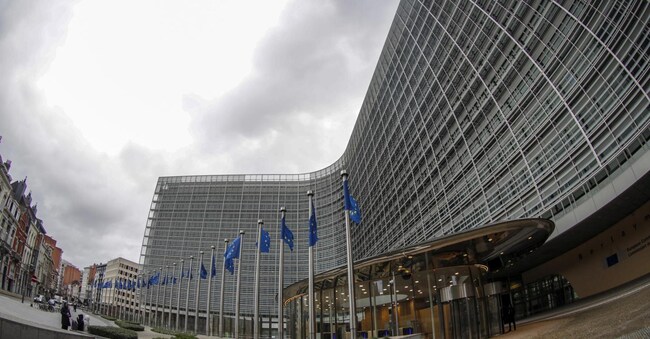
The space industry could not be missing from the report 'The Future of European Competitiveness', presented by Mario Draghi to the European Commission on 9 September.

3' min read
3' min read
The space industry could not be missing from the report 'The Future of European Competitiveness', presented by Mario Draghi to the European Commission on 9 September.
Getting straight to the point, the Space chapter describes the strengths and weaknesses of this sector, which is absolutely strategic for the most diverse fields: from transport to communications, from finance to earth observation, from defence to environmental monitoring in order to respond to natural disasters. After emphasising that the sector is undergoing a phase of great development thanks to the overbearing entry of the private sector, which is driving up turnover in the space economy by more than 9% a year, the report points out that the European industry, while remaining competitive in Earth observation, navigation and science, has lost ground to its competitors on the global market in the launcher and communications sectors, which are dominated by American private investors. This has meant a dry loss in European space exports, diminishing the profit prospects for industries in this sector.
The report goes on to examine the crisis of European launchers, a real sore point with chilling numbers. While Elon Musk alone will exceed the threshold of 100 launches in 2024, European launchers can be counted on the fingers of one hand, perhaps not even all of them. The situation will certainly improve, but the road to the renaissance of European launchers looks very uphill. It is not that our industries do not have skills and competences, unfortunately, short-sighted strategic choices have been made that have made our launchers less competitive. When, in the wake of the resounding success of SpaceX's first-stage recovery, the whole world is moving towards reuse, the new European Ariane 6 launcher is all but disposable, and therefore more expensive than the competition.
Inaugurating, years late, an already obsolete launcher shows that 'the ESA and its member states have failed to keep pace with global technological evolution'. A heavy judgment whose causes are to be found in the complexity of the decision-making process and the governance structure in a European landscape where there is a lack of coordination between the various institutions dealing with space. Alongside the European Space Agency (ESA), in fact, there is the Commission's EU Space Programme Agency (EUSPA). To these three supranational realities are added the space agencies of the states, each of which also has a defence ministry that considers the space sector strategic but hesitates to collaborate with the others.
The report points the finger at the fragmented governance model where different institutional actors act almost independently by applying different regulations. The ESA, for example, operates on the basis of the geo-return rule according to which each state must receive orders equal to the amount paid to the agency. A rule made to favour states with less robust industries, but which prevents them from choosing the cheapest supplier.

