The book

Europe once again becomes a protagonist in history

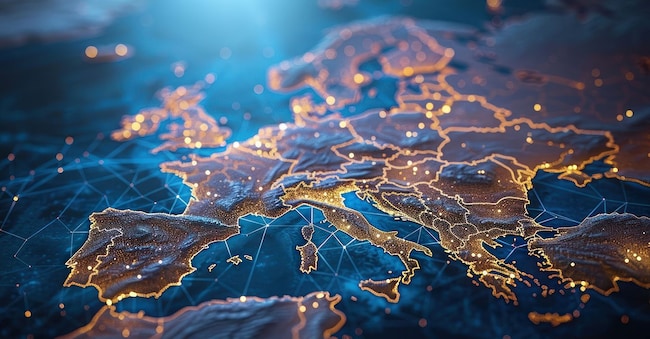
(Adobe Stock)

3' min read

3' min read

It is worth mentioning the turbulent and unpredictable sequence plan experienced by those whose job it is to report on the evolution of European affairs, especially when embedded in the messy contemporary world order. And Donato Bendicenti, Brussels correspondent for RAI, often mentions the vicissitudes that the reporter with the mission of reporting on the evolution of global relations must undergo. Today more than ever.

In his Al centro della tempesta. L'Europa tra ordine mondiale e disordine globale, published by Rai Libri and Luiss University Press (pp. 250, €20), Bendicenti summarises the case that has suddenly become the usual paradigm of transatlantic relations and within the same archetypal idea of the West.

Loading...

It starts with an examination of the year of the superbowl election that covered the world where as many as 79 nations went to the polls, involving 4 billion people, half the world.

A tsunami told as democratic (but involving several autocracies starting with Russia) that ended up redrawing values, borders, alliances. In a world where only 6.4% ('Economist') of the world's population is governed by truly democratic systems.

Of course, that political tidal wave culminated with the advent of the second Donald Trump in the US. The language of politics and reference values have changed, the crudeness of the US leader's management scheme forcing the world to adapt politics, or rather geopolitics, to the canons of the most banal mercantilism.

And this profound reshuffling first and foremost brings Europe into play. Bendicenti analyses the new power relations with the baggage of one who observes the day by day of meetings, deliberations, and the struggle to construct the European democratic response. Which cannot even rely on the certainties of a real international order (and the WTO's inaction in the dispute over tariffs is the counter-evidence) because there are no rules, at most customs and sedimentations of history, creator of world orders (not orders). Bendicenti deduces the urgency of coming to terms with the new requirements of spheres of influence in a world that remains governed by the old classical Greek idea of 'war as the father (or mother ed.) of all things'.

The book reviews the new American demands in dialectic (to put it mildly) with China, which contends for global leadership; the ongoing reconfiguration of power relations in the Middle East; the trench of democracy in the plains of Ukraine invaded by Russia as if we were in a twentieth century that never seems to end.

But it is of course Europe that is the main protagonist. Or rather it is Europe that should be the protagonist and is not. Because Europe, as Bendicenti warns, 'is no longer at the centre of History' and if anything is on the brink of the abyss of history: either it understands that it must act in a united manner in governance reforms and in the choice to increase its competitiveness in the world or it will succumb. United we win, divided we fall. Mario Draghi also recalled this in the presentation of his Report: Europe is in danger of losing its values, its prosperity, its ongoing quest for freedom and justice. The first awareness to grasp, the volume reminds us, is that Europe cannot be that of the micro-sovereignty of nations. Only a truly continental role can enable the Union to play an equal role in the world that has become an arena of confrontation between giants. The important thing - as Foreign Minister Antonio Tajani writes in the preface - is to avoid, today as never before, crediting Europe as merely 'a large market without a soul'. Because the European dream, already intuited by Dante Alighieri, is much, much more. And perhaps for this very reason it also frightens many (even among friends).

© REPRODUCTION RESERVED

Copyright reserved ©
Loading...

Brand connect

Loading...

Newsletter

Notizie e approfondimenti sugli avvenimenti politici, economici e finanziari.

Iscriviti