
Europe wins, China divides and America likes it less than before
Economic growth and a new phase of earnings growth expected in the Old Continent

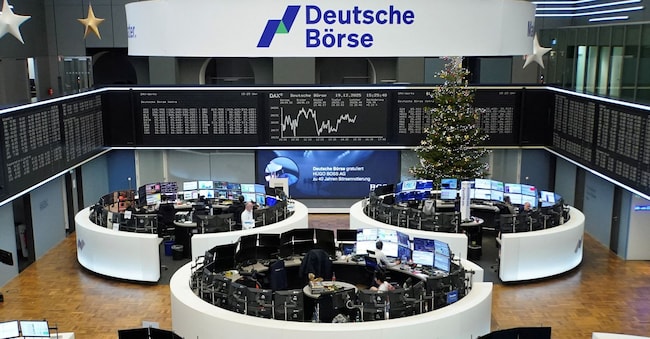
Europe is undoubtedly the geographical area that managers like best. In the list of preferences, the old continent has therefore taken the place of the United States (in pole position in last year's survey), on which, however, the positions are substantially balanced: many advise against it, above all because of the very high valuations on the technology securities segment, but more generally also on that of large caps, which are also overvalued compared to the average company in many cases. Many, however, continue to recommend them because this is an area that cannot be missing from the portfolios of managers and investors, whether large or small.
The other card played by the investment houses polled in the survey is that of the Asian markets, especially from a medium- to long-term perspective. South Korea was named among them, benefiting from a favourable technology cycle and a clearly improving economic phase. Interesting valuations also for emerging markets, India and Brazil in the lead, thanks to a solid economy, inflation under control and, again, very attractive valuations in this context. Among the less popular countries, on the other hand, is the United Kingdom.
The European Choice
"We have gradually rebalanced portfolios towards Europe," explain Tikenhau, "believing that much of the current pessimism is already embedded in valuations. Europe faces challenges such as competitiveness, market fragmentation and political instability, but next year should mark the start of a new phase of economic growth and earnings improvement, with the effects of the German fiscal stimulus set to be reflected more broadly in the region's economy. Moreover, in an environment of lower inflation, monetary policy in Europe is less constrained than in the US. At current levels, Europe is more heavily discounted relative to the US than at any other time in history, making this an opportune time to rebalance allocations in favour of the Old Continent'.
Algebris is also on the same wavelength. "For equities, the preference is for Europe, with a particular focus on Italy," the company explains. But we keep instead a more cautious positioning on the UK'. Scepticism towards the UK puts everyone in agreement. Eastern Europe and the Middle East are also unattractive at the moment. Italy, on the other hand, is liked by several managers and is highlighted in the choices mainly for a couple of reasons, namely the attractive prices in the small and medium cap segment and also because, despite modest GDP growth, it remains attractive in terms of fundamental valuations.
Germany
There is also the topic Germany that has emerged in the money managers' indications. What has been the locomotive of Europe for years is back in the spotlight of the European area's supporters because the consensus view is that it has good prospects of outperforming, thanks to the huge fiscal spending plan, the boost from the EUR 500 billion infrastructure stimulus, and the increase in defence spending across NATO, which should benefit the industrial, infrastructure and climate sectors.


