
Cars, European manufacturers: take action to defend the industry
Stellantis and Volkswagen call for an EU plan to counter Asian competition: 'Targeted action on production, electric powertrain and batteries is needed

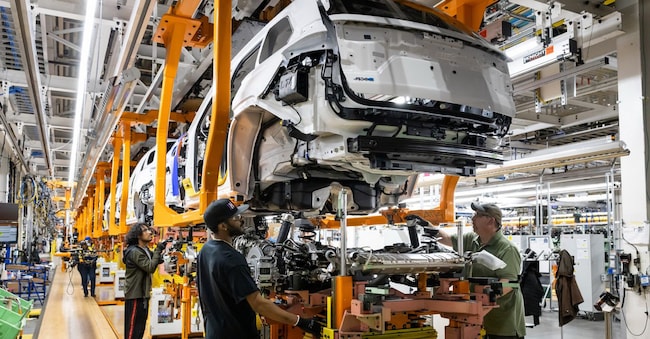
A strategy to protect Made in Europe, which turns fines into investments, and is able, through a system of bonuses, incentives and 'targeted interventions on production, the electric powertrain and batteries', to make electric car production in Europe competitive. This is the joint request that the two leading car manufacturers in Europe, Volkswagen and Stellantis, make to the Commission through an open letter from their two CEOs, Oliver Blume and Antonio Filosa.
A tremendous backlash
The problem of the European car industry lies in the market, at least as much as the market delays are due to the uncertainties of the industry and Brussels regulation. A terrible backlash that is downsizing one of the most strategic manufacturing sectors, generating an unprecedented crisis of competitiveness. All this without counting the variable represented by competition from Chinese manufacturers who, like Japanese and Korean manufacturers did a quarter of a century ago, are carving out a growing space for themselves on the European market.
The revolution that started with the European Green Deal is turning out to be a sort of "Russia campaign" for the Old Continent's automotive industry, which in 2025 (estimates by Anfia, the association of companies in the automotive supply chain) will produce 3,5.5 million fewer cars than in 2019, and faces a 16% gap in registered volumes, while the penetration level of full electric cars has reached 19.5% of the market, four points higher than in 2024 - 29.1% if plug-in models are also included in the calculation -, with Uk, Germany and France in line with the average and Spain, but even more so Italia, below the threshold.
The comparison with Asia
ACEA, the acronym that brings together European manufacturers, takes a merciless snapshot of the sector in the first half of 2025, which shows that global car production will grow by 3.5%, with Asia dominating with 60% of total production, while Europe stops at 15.9%, with volumes down 2.6% against a Chinese production that has grown by 12.3%. The price war between Chinese manufacturers is affecting margins and will lead, according to the main industry observers, to a reduction in the number of players in the field, which to date have been sustained by political support and export advantages. But Europe has other problems, manufacturers are "hampered by stricter CO2 targets, high energy costs and tariffs," writes Acea. And along with car makers, component manufacturers are also suffering. Clepa's latest survey speaks of more than 100,000 announced job cuts between 2024 and 2025, at a rate of 142 per day. A phenomenon, says Clepa, 'that highlights the continued pressure on suppliers as they face weak demand and cost pressures. The European automotive supplier industry faces radical restructuring and political support has yet to reach the scale of this challenge'.
The crux of the matter
This is the crux of the matter: in the face of an ambitious transition, Europe has not put in place adequate transversal tools to support demand, on the one hand, and to accompany supply, i.e. the reconversion of the industrial skills of manufacturers and suppliers, on the other. The Commission has launched a revision phase of the decarbonisation regulation that is running on two tracks: on the one hand, the revision of the targets for cutting CO2 emissions by 2035 from 100 to 90 per cent, considered by operators to be inadequate to solve the problems and guarantee technological neutrality. On the other, the introduction of a local content quota on cars made in Europe to guarantee the component supply chain, a proposal on which the Commission is working and which manufacturers are doubtful about. Complicating the matter is the issue of commercial vehicles, an essential component of both the 'Made in Europe' car industry and the market, orphaned by a 'tailor-made' decarbonisation path.


