
European car market up 10.2 per cent in September; electric vehicles account for 22.7 per cent of sales over the first nine months
Stellantis grows by 4.5 per cent in the EU, EFTA and UK markets, whilst Chinese carmakers are gaining ground. Exports and market share of EU-made cars are falling

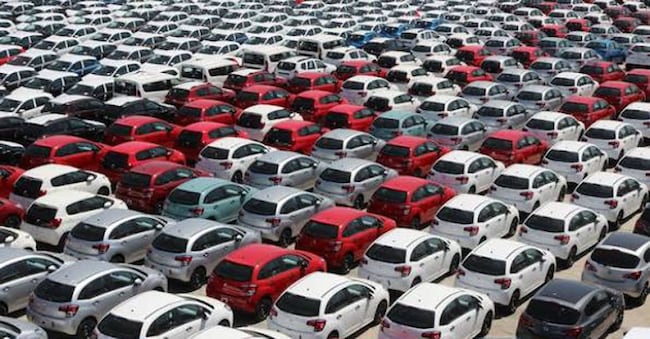
The recovery in the European car market continues, with September seeing a 10.2 per cent rise in registrations – a figure that brings the total since the start of the year to 10.5 million, up 6.3 per cent on January. According to figures from ACEA, the European Automobile Manufacturers’ Association, 1,931,46 electric vehicles have been registered in the EU since the start of the year, accounting for 22.7 per cent of the market and making them the second most popular type of vehicle.
Stellantis sold 172,977 cars in September, up 4.5 per cent, with a market share of 12.7 per cent compared with 13.4 per cent a year ago. The total for the year to date stands at 1,533,540, up 4.7 per cent, with market share falling from 14.8 per cent to 14.5 per cent – a figure that exceeds 15 per cent when Leapmotor’s sales volumes are included.
“Electric car registrations are growing at a rapid pace, which is a positive sign. However, the market share must more than double in less than four years if manufacturers are to meet the CO₂ emissions reduction target set for 2030,” comments Sigrid de Vries, Director General of ACEA.
Strong growth in France, Germany and Denmark
Three of the four largest EU markets, which together account for 64 per cent of all battery-electric car registrations, recorded strong growth: France (+79.1 per cent), Germany (+58.1 per cent) and Denmark (+40.3 per cent). Belgium also saw a more modest increase of 15.7 per cent. Hybrid cars also saw growth, rising to 3,090,530 units across the EU, driven by Italia (+20.8%) and Spain (+20.5%), whilst Germany (+4.9%) and France (+0.6%) saw more modest increases.
Against this backdrop, Stellantis continues to perform well and, thanks to the performance of Fiat and Citroën, has recorded a 4.5 per cent rise in registrations for the month and a 4.7 per cent increase year-to-date, whilst Volkswagen has seen a decline this month but remains at 2025 levels for the period as a whole. Chinese manufacturers are leading the way, with SAIC Motors and Geely seeing their growth ‘normalise’, with double-digit increases in registrations taking their market share to between 3 and 4 per cent in September. BYD and Chery, on the other hand, have seen their volumes triple or quadruple.


