
European Commission in traction von der Leyen
The first phase in the formation of the European Commission, during which the national governments proposed their commissioners, in agreement with the elected president, has now closed. Soon the second phase will begin, that of the European Parliament's approval of individual commissioners and then of the college of commissioners as a whole.

4' min read
4' min read
The first phase in the formation of the European Commission, during which the national governments proposed their commissioners, in agreement with the elected president, has now closed. Soon the second phase will begin, that of the European Parliament's approval of individual commissioners and then of the college of commissioners as a whole. Two opposing logics are confronting each other, that of the national governments and that of the European Parliament representing the citizens of the European Union (EU). Which European Commission is emerging from this confrontation? The European Commission is an executive body whose task is to promote the general interest of the EU. Article 17.3 of the Treaty on European Union (TEU) is clear: it exercises its functions in full independence and its members 'shall neither seek nor take instructions from any government or any institution, body, office or agency'.
Commissioners, although proposed by individual national governments, are there to represent the general interest of the EU, not to bring the interests of those governments into the EU decision-making process. National interests already (and too much) enter the decision-making process through the European Council of national heads of government, an expression of intergovernmental logic. If the European Commission were to become the sum of national interests, there would be no justification for the monopoly of legislative initiative that the Treaties have assigned to it since the origins of the integration process. That monopoly stems from the need to remove its proposals for directives or regulations from the pressures of national governments (proposals that would then have to be approved by national Councils of Ministers and the European Parliament), and instead express the EU interest. Therefore, if Raffaele Fitto is confirmed by the European Parliament, it must be because of his expertise and, above all, his ability to promote the general interest of the EU. Not so for our prime minister, who presented him as Italy's representative in the Commission, as if the latter were an intergovernmental institution.
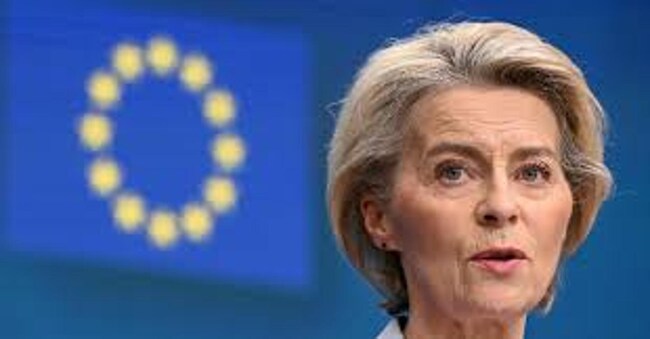
Despite what our premier thinks, the European Commission continues to be the EU's main supranational body, together with the European Parliament and the European Court of Justice. Where supranational means a body independent of national interests. This supranational nature is, however, obscured by its very composition, as well as being questioned by nationalist governments. A Commission consisting of one commissioner per member state is institutionally ambiguous. It is true that the TEU, Art. 17.5, stipulated that, after 1 November 2014, the Commission would consist of two-thirds of the members of the EU, but it was necessary to abolish that clause, reverting to one commissioner per member state, in order to convince Irish voters to vote in favour of the Treaty in the October 2009 referendum, after they had rejected it in the previous referendum in June 2008. As if this were not enough, an executive body of 27 members inevitably has difficulties functioning. Hence, the different strategies pursued by the Commission presidents to rationalise its internal decision-making process. In the case of the current Commission, this rationalisation has taken on the characteristics of a veritable presidentialisation. Resorting to an astonishing nominalistic fantasy, von der Leyen overlapped competences among several commissioners, establishing six executive vice-presidencies with little coordinating powers (if one excludes the High Representative for Foreign and Security Policy). Thus, no commissioner is responsible for a specific policy area, having to share responsibility with other commissioners. A situation bound to generate rivalries that only the president will have the authority to resolve.
This presidentialisation of the Commission is favoured by the particular weakness of the main national governments. The coalition supporting the German government of Olaf Scholz is a minority in the country, French President Emmanuel Macron lacks a coherent majority in the Assemblée Nationale, the Italian government of Giorgia Meloni has not yet decided whether or not to join the European house. Furthermore, the future president of the European Council, the Portuguese Antonio Costa, does not seem to have the personality, political and intellectual, to exercise effective control over von der Leyen. Thus, the latter appears to be 'the president of Europe', as the Financial Times put it. If so, it would be a process to be welcomed (the EU would finally have a unitary executive and a visible leader). However, it is hampered by the Treaties and the political dynamics activated by them. The European Commission has no competence in the field of policies close to national sovereignty (such as fiscal, security and defence policy), policies that continue to be controlled by national governments through intergovernmental bodies.
In short, the formation process of the European Commission is leading to its presidentialisation. This presidentialisation, however, could strengthen either the supranational character of the Commission or the personal character of its management. Which path will von der Leyen take?


