Anti-Racism Commission

Council of Europe: 'Racism from the police'. Meloni: 'They deserve respect'. Astonishment of Mattarella

Critical remarks by the European Commission against racism also on Italian public discourse that has become increasingly xenophobic
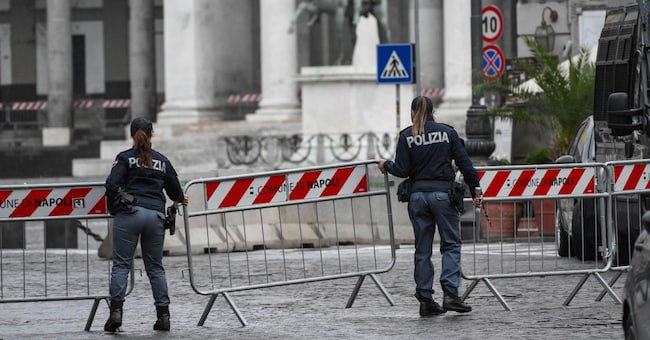
Carabinieri e agenti di polizia presidiano piazza del Plebiscito e Palazzo Reale dove e' previsto il G7 dei ministri della Difesa, Napoli, 18 ottobre 2024.    ANSA / CIRO FUSCO /

4' min read

4' min read

In Italy, law enforcement agencies do racial profiling during control, surveillance and investigation activities, especially towards the Roma community and people of African origin. This is denounced by the European Commission against Racism and Intolerance (Ecri), the anti-racism and intolerance body of the Council of Europe, in its latest report - the fourth - dedicated to Italy, updated to April 2024, adopted last summer and published on 22 October. Strasbourg points out that 'the authorities do not seem to be aware of the extent of the problem and have not considered the existence of racial profiling as a form of potential institutional racism', thus asking Italy for a comprehensive and independent study.

The Ecri's finding follows the line of the European Court of Human Rights (ECtHR), which in a recent ruling condemned Switzerland precisely for racial profiling, for its police force's habit of checking one black man among many whites, in the case of gatherings, a procedure that the ECtHR considers to be an 'impact case' for the protection of human rights.

Loading...

Tajani expresses 'government outrage' at EU Council report

Vice-Premier and Minister of Foreign Affairs Antonio Tajani instructed Italy's Permanent Representative to the Council of Europe, Ambassador Roberto Martini, to express the Italian government's deep outrage at the Council of Europe's report, which singled out Italian law enforcement agencies as being responsible for 'racial profiling'. "I do not agree with a word of what has been written. There is no racism in Italian law enforcement. We must respect those who serve the country, working day and night for the security of all," said Tajani.

Mattarella, astonished by statements on police racism

"The President of the Republic Sergio Mattarella telephoned the Chief of Police, Prefect Vittorio Pisani, expressing his astonishment at the statements contained in the report of the Council of Europe's Commission against Racism and Intolerance and reiterating his esteem and closeness to the Police Forces". This was learnt at the Quirinale.

Meloni, law enforcement deserves respect and not insults

The premier Giorgia Meloni responded to the Council of Europe, siding in defence of the guardians of order. "The Ecri, organ of the Council of Europe, accuses the Italian police force of racism? Our police forces are made up of men and women who, every day, work with dedication and abnegation to ensure the safety of all citizens, without distinction. They deserve respect, not such insults,' the Prime Minister's reply appeared on social media to comment on the report.

Piantedosi: 'Council of Europe unacceptable on police'

The Minister of the Interior also intervened. "The Council of Europe, whose purpose should be to promote democracy, human rights, European cultural identity and the search for solutions to social problems in the countries of Europe, finds the time to express a heavy judgment towards the Italian police force, even going so far as to accuse them of racism,' observes Matteo Piantedosi. 'It is unacceptable that an international organisation - whose role not everyone has yet fully understood - insults women and men who, with dedication, put their lives at risk every day to ensure the safety of citizens.

Crosetto: 'Our law enforcement agencies deserve respect'

"Ecri, the Council of Europe body, accuses the Italian police force of racism. This is unacceptable and the indignant response must be from everyone, without division. Because our police forces, like our armed forces, work with dedication and abnegation to ensure the safety of all citizens, without distinction, without prejudice, without sparing themselves. We are talking about women and men who deserve respect, not an insult of such gravity. The Italian law enforcement agencies are a heritage of Italian legality, not partisan. And it is up to everyone to defend their honour and history'. Thus on X the Minister of Defence, Guido Crosetto.

Romani and African immigrants observed

'During its visit to Italy, the Ecri received many accounts of racial profiling by law enforcement agencies, especially on the Roma community and people of African descent,' the document states. The study requested from the Italian authorities should aim 'to identify and address any practices of racial profiling by law enforcement agencies'. Strasbourg will then assess in two years whether the recommendation has been followed.

The Council of Europe, of which the Ecri is an expression, is an international organisation, based in Strasbourg, which brings together 46 democratic European countries. Its mission is to promote democracy and to protect human rights and the rule of law in Europe: in the past, it has repeatedly censured our country for the excessive length of trials and for the inhuman conditions in prison facilities.

In Italy increasingly xenophobic public debate

Ecri's strongly critical remarks are not limited to the protocols of the police, but also touch on the quality of political debate. In fact, the Commission against Racism notes 'with serious concern that Italian public discourse has become increasingly xenophobic in recent years and that political discourse has taken on highly divisive and antagonistic tones, particularly towards refugees, asylum seekers and migrants, as well as Italian citizens with a migration background, Roma and LGBT people'.

"Unfortunately," the document states, "a number of statements and comments considered derogatory and hateful come from high-profile politicians and public officials, especially during election periods". A situation in the face of which Ecri recommends "that public figures, including high-level officials and politicians of all stripes, be strongly encouraged to take a prompt, firm and public stance against the expression of racist and lgbti-phobic hate speech and to respond with alternative speech, as well as to promote understanding between communities, including expressing solidarity with those targeted by hate speech". The Ecri also believes that "parties should adopt appropriate codes of conduct that prohibit the use of hate speech, call on their members and followers to refrain from uttering, endorsing or disseminating it, and provide for sanctions if they do not".

Italy, according to Ecri, should in particular adopt a national action plan against racism, organise an awareness-raising campaign to promote equality, diversity, intercultural and interreligious dialogue.

Copyright reserved ©
Loading...

Brand connect

Loading...

Newsletter

Notizie e approfondimenti sugli avvenimenti politici, economici e finanziari.

Iscriviti