
European defence and autonomy: Draghi's proposals for the EU
From a confederal union, Europe becomes a political federation to counter pressure from the United States, Russia and China

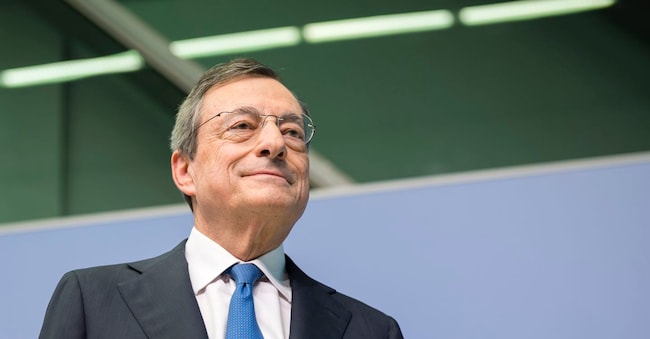
From the haloed halls of the University of Leuven, Mario Draghi once again raised the whip against this Europe, which does not seem to seize the moment to assert its own autonomous role between Trump, Putin and Xi, each one dedicated to shouting at the international level, because it is basically struggling on the domestic terrain. Draghi is relaunching his Plan, so insistently requested by all European governments, but then constantly ignored. Europe must move from being a Union, little more than a confederation, to being a true federation, which, while leaving room for national and local governments, must be able to coherently put together its own unitary choices on foreign policy, defence and the economy, breaking out of the double trap of internal unanimism and submission to the United States.
Draghi's words will join those of Letta at the next informal Competitiveness Council on 12 February in Belgium, but once again the Great Technician will remind that the next steps will be political, i.e. they will force European summits to take clear decisions on the future of Europe.
First of all, European defence. Let us recall that the very proposal for a European Defence Community was, during the Cold War, the first attempt at European unity and it was a failure, precisely because President Eisenhower, as soon as he took office, called the countries freed from his own armies back to their role as 'loyal allies' and thus to realign themselves individually in the Atlantic Alliance founded in 1949. Today that same NATO is being called into question by Trump, also a Republican, and so the time has come to decide, whether each of the European countries individually wants to contribute more to the expenses of the alliance, or whether the European countries as a whole want to give themselves a common defence, playing a role together vis-à-vis the United States. In any case, we must sit down together at the negotiating table to redefine the new rules and profiles of NATO. This requires a common management of foreign policy that places the new Europe in an autonomous position, sustainable over time and therefore credible as of now, not only vis-à-vis the US, Russia and China, but also vis-à-vis all the other countries, which risk already at the end of the year no longer having an institution - the United Nations - in which to confront each other as equals.
However, the choices towards Mercosur and India, once again disguised as trade agreements, pushed the Union into terrain that was considered reserved for the United States, so much so that Trump rushed to conclude an agreement with Modi as well, claiming that the deal with India served to undermine Putin.
The next steps require unity, but also a speed of decision-making that contrasts with the model of unanimity that dominates the Union, pointing to the constitution of the Euro as an alternative model, with a few stronger states as promoters and then the accession of the other members of the Union. In this field too, however, the time has come to take steps forward, combining common monetary policies with fiscal policies and a common management of public debt, policies that also become actions of great international political importance, bearing in mind that the public debt of the United States, largely in Chinese hands, is close to unsustainability and the dollar is increasingly at risk as a reserve currency. At this stage in the Bermuda Triangle of European independence lie the two crucial issues of the current political confrontation, energy security and cyber security, which no European country can play for on its own.

