Football & business

European Football Championship kicks off, Uefa estimates revenue of over 2.4 billion

The match between Scotland and hosts Germany on 14 June will open a continental championship with revenues up 25 per cent

by Marco Bellinazzo

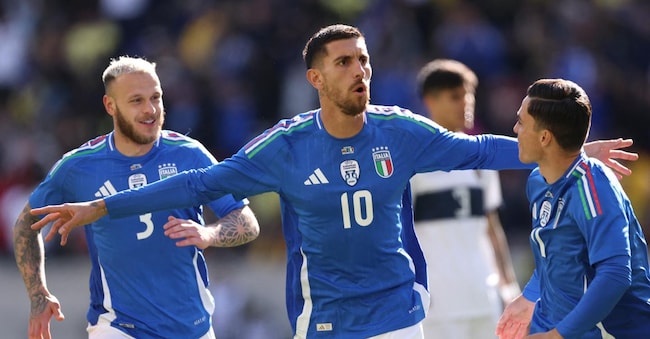
Campioni in carica. L’Italia guidata da Luciano Spalletti debutterà a Dortmund, sabato 15 giugno, contro l’Albania

3' min read

3' min read

Defending champions Italy will make their debut at the Westfalenstadion in Dortmund on Saturday 15 June against Albania. Euro 2024, on the other hand, will officially open the day before with the challenge between hosts Germany and Scotland, scheduled to take place in Munich. This is the viaticum of a continental review that will see 24 national teams compete for the title, in a tournament that will end, after 50 matches, with the final on 14 July in Berlin.

Uefa revenues

.

After the Champions League, the European Championships represent the most profitable event for Uefa. Suffice it to say that for Euro 2020 (although the English edition was played in 2021 due to the pandemic), the European confederation brought home 1.8 billion in revenues from TV contracts and sponsorships, with profits of around 600 million.

Loading...

For the 2024 edition, which after the 'itinerant' formula of 2020, with matches hosted in 11 different cities, will once again be concentrated in a single country and will also be able to count on unreduced ticketing and hospitalies, Uefa estimates revenues of 2.4 billion, with a net result of 1.7 billion. TV revenues will be 1.4 billion, sponsorship and commercial revenues will be 0.6 billion. There are 13 official partners of the event: Adidas, Ali Express, Alipay+, Atos, Betano, Booking.com, BYD, Coca-Cola Zero, Hisense, Lidl, Engelbert Strauss, Visit Qatar and Vivo.

The increase in revenue compared to the 2016 edition. when revenues were 1.9 billion, is therefore around 25 per cent. Uefa's annual turnover will thus be close to €7 billion, also taking into account the €4.4 billion from the new club competition formats debuting from September, a record level for European football's governing body led by Alexander Ceferin.

The prize money

.

The Euro 2024 prize money will be EUR 331 million, the same amount as Euro 2020. In 2016, on the other hand, 301 million were distributed to the national teams admitted to the competition, while 196 million were up for grabs in the 2012 edition hosted by Poland and Ukraine. A participation bonus of EUR 9.25 million is foreseen for all teams, while a national team that wins the trophy by winning all the matches, as happened to Roberto Mancini's Italy in the 2020 edition, can get a cheque for EUR 28.25 million.

Apart from the prize for qualifying for the championship, more in detail, each success in the round will be worth one million (drawing will entitle you to receive 500,000 euros). Passage to the round of 16 will be worth 1.5 million, passage to the quarters 2.5 million. The passage to the semi-finals is quoted at 4 million. Admission to the finals will secure 5 million, while the future European champions, in addition to lifting the cup, can count on a 'token' of 8 million. Since Uefa provided for prize money for the European championship - in 1996, when 51 million was allocated - Italy has collected 90 million, second only to Spain, which collected 90.7 million. Portugal is third in this special ranking with 88.7 million, ahead of Germany (81.2 million) and France (78.1 million).

Club bonuses

.

The Old Continent's Football Federation has also established a premium for clubs that 'loan' their players to national teams. In total, this amounts to 240 million for the four-year period 2022-2024, 30 million more than the previous one. Specifically, for the qualifying matches for the final phase and those of the Nations League, 100 million are allocated (3,659 euros per match for each player on the scoresheet), while for the final phase 140 million are reserved for the athletes of the 24 national teams (and their respective clubs).

Tickets sold

.

The European Championship matches will take place in ten cities: Berlin, Cologne, Munich, Frankfurt, Hamburg, Dortmund, Leipzig, Gelsenkirchen, Stuttgart and Düsseldorf.

The stadiums already built or renovated for events hosted in Germany in recent years, since the 2006 World Cup, are expected to be almost all sold out. In fact, Uefa reported that during the second sales phase alone, more than 30 million requests for tickets arrived from 206 countries.

Compared to the requests, Uefa made a total of 2.7 million tickets available to fans, and at the beginning of May opened the sale for a further tranche of 100,000 coupons. The new admissions include the few unsold in the previous phases, as well as those that were released after the assessment of the actual capacity of the facilities. In addition, Uefa has also decided to offer tickets for seats with limited visibility at discounted prices. The largest number of fans is expected to come from Turkey, Hungary, England, Albania and Croatia. Nyon's budget foresees revenues of around 300 million from ticketing, plus 100 million from hospitality.

Copyright reserved ©

Brand connect

Loading...

Newsletter

Notizie e approfondimenti sugli avvenimenti politici, economici e finanziari.

Iscriviti

Tutto mercato WEB