
European history teaches that peace in the Middle East is not impossible

3' min read
3' min read
The conflict in the Holy Land will soon reach eighty years of history. Adding the decades of conflict and revolt of the British Mandate between the two world wars, it is more than a century that a prospect of coexistence has not been heard. In this long season that has seen epochal changes, upheavals of imperial powers, customs and set-ups, what has not changed is the repeated and insistent failure of international policy to bring Israelis and Palestinians towards the first necessary step: recognising the existence of the other. There cannot be two states or any other solution if the one does not admit that the other, before anything else, has the right to exist.
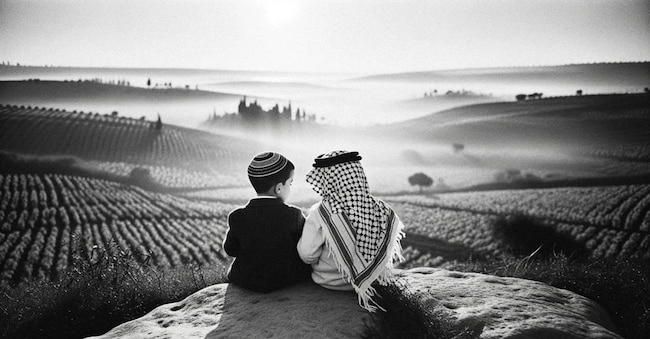
Centuries-old histories, of past powers or persecutions, of universal religions, of spiritualities unique in human history, of multiple particularisms alongside indelible pages of civilisation, fail to produce respect and coexistence. The differences are less than the consonances: a history of biblical patriarchs and prophets unites them, the sense of history, the faith in one God and much more should be the basis from which to start. Wars, deaths and contrasts are no less than the past generations living together and respecting each other, between the shores of the Mediterranean and in the now tormented lands.
All stories and narratives, these, that look at Jerusalem and the handkerchief of land that surrounds it as an ideal of their own imagination, which unfortunately does not speak to others. It is a unique heritage, this one, that must be put to good use, it must be told to others, it must be explained and cultivated in an effective and enriching confrontation, as we are no longer able to do, when the chain of deaths and tragedies closes any desire to listen. Only culture, secular and religious, can where politics has failed and fails. Only the search for the many common words can guide the silence broken by weapons and deaths.
We should perhaps change the narrative and forget for a moment the sterile counting of the wrongs of others and their rights and question the other from the depths of a unique cultural and religious history to seek those principles, which are not lacking, of sharing, acceptance and dialogue with the other. Jews, Christians and Muslims have built on these in the best moments of their history and can, must, make what unites prevail over what divides. And it is much, it is above all a language that is perhaps made up of different declinations, yet sharing the same values.
No place like Israel and Palestine has the history, tradition and culture for an arduous but proactive dialogue, no place like Palestine and Israel can generate irremediable contrasts if the claim of one does not recognise the other and if the difference of details prevails, if Jerusalem does not become the place for all but remains the land shattered by walls and deaf claims across continually redrawn borders. It is difficult but not impossible.

