
European industry responds to Chinese challenge
Groups from the old continent are launching numerous proposals in order to renew their offer and better cover strategic market areas

The year 2025 is coming to an end, and from an automotive point of view it has been a difficult year, but probably the worst, from an industrial point of view, is yet to come amidst resounding reversals with scratching on the all-in advance for electrics (most recent and resounding being the case of Porsche), the definitive realisation that European diktats on the ban on thermals in 2035 are a disaster and that Chinese competition is strong, with high quality powertrain products (including hybrids and super hybrids suitable for fleets). And all this exactly ten years after the deflagration of the dieselgate scandal, which ignited the epochal change in the automotive industry. After that, nothing has been the same.
The automotive industry faces a phase of great turbulence and the continental European industry is trying to remedy and react to a series of crises within crises, which, since the pandemic and the chip shortage, have continued with the transition not taking off and sales struggling.
In recent weeks in Munich, but also in the pre- and post-show announcements, a new chapter in the clash between the European and Chinese automotive industries has been played out.
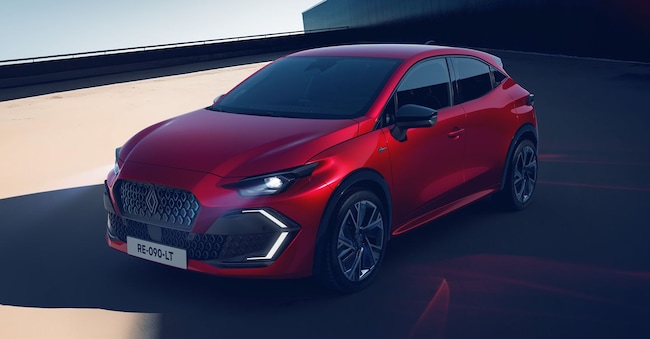
On the one hand, in fact, we have seen the surge of traditional manufacturers from the old continent, with numerous interesting innovations from the Volkswagen group, BMW, Mercedes, to stay in German territory, and Renault, which with the debut of the sixth generation of the Clio wanted to make it clear that the B segment, the compact segment, remains strategic and that with hybrid engines it is also possible to make affordable cars with low emissions.
Clio sixth series celebrates 35 years of a car that has made European automotive history. Increased in size, now 4.11 metres long, it displays a style that winks at compact coupes, enhanced by a new diamond-shaped light signature and wheels up to 18". Inside, the dashboard introduces recycled materials and a dual display up to 10.1 inches housing the OpenR Link system with integrated Google. Engines include the 160 hp E-Tech Full Hybrid and there is also a LPG version with automatic transmission.


