
ETS: European rules will have to take account of specific industrial circumstances
The EU paves the way for a benchmark for fuels used in the production of tiles

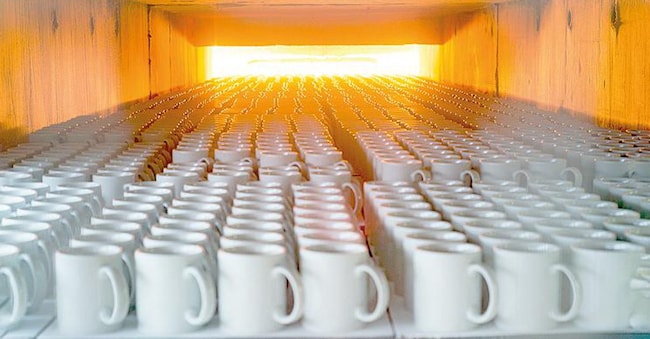
The Italian ceramics industry has secured a long-awaited concession from Brussels: European emissions regulations will have to take account of sector-specific characteristics. The agreement reached in the trilogue between the European Parliament, the Council and the European Commission paves the way for a specific benchmark for the fuels used in tile production. This marks a turning point for Sassuolo, where one constraint remains: there are currently no alternatives to natural gas for fuelling high-temperature kilns. The crux of the matter lies in the functioning of the ETS, the CO₂ market. Companies must surrender a quota for every tonne emitted, but those exposed to international competition receive free allowances to mitigate the risk of relocation. The benchmarks are based on the performance of the top 10 per cent of plants. However, when there is no product-specific benchmark, common values for heat and fuel are used. This is where the distortion arises: demanding the same emissions reduction from industries with different technologies and energy sources penalises even the most efficient ones.
The compromise comes after the review of the figures for 2026–2030 had suggested drastic cuts to free allocations, putting further pressure on budgets. The European agreement addresses the issue on two fronts. On the one hand, it raises the general parameters for heat and fuel, increasing the free allowances over the five-year period up to 2030. On the other, it introduces the possibility of sector-specific benchmarks for fuel, to be defined through delegated acts and consultations. The ceramics sector is not explicitly mentioned, but it is among the potential beneficiaries. The Parliament had backed this solution on 22 October with 474 votes: a cross-party majority. “After months of work, discussion and dialogue with the institutions, we are finally seeing recognition of a valid argument that we have pursued with determination,” said Augusto Ciarrocchi, president of Confindustria Ceramica. This outcome is the result of collaboration with Confindustria, European institutions, the Government, the Emilia-Romagna Region and local authorities. It is not a question of abandoning climate targets, but of avoiding competitive disadvantages for those who have no alternatives.
The matter, however, is not yet settled. The agreement must be formally approved by Parliament and the Council. Timing is crucial: “In practical terms, the sector-specific adjustment can only be finalised in 2028, but the text provides for the recovery of the years 2026 and 2027,” noted Graziano Verdi, president of the European Ceramics Federation. The risk is that new ETS charges will be added to energy costs. PD MEP Annalisa Corrado also spoke of a ‘historic result’ for the Italian and Spanish ceramics sectors, which could be extended to other sectors facing similar challenges. And she called for a balance: “We have achieved all this whilst defending the mechanism, which must continue to drive decarbonisation.” The challenge now is to translate the agreement into enforceable rules, with retroactive effect from 1 January 2026. For businesses, the difference will be measured in the allowances allocated and the costs avoided; for Europe, in its ability to reconcile industry and climate action.

