The Channel Tunnel

Eurotunnel turns 30 and opens to new railway companies

Two high-speed start-ups are challenging the incumbent operator Eurostar: the English Evolyn and the Dutch Heuro. Infrastructure operator Getlink aims to double passenger numbers

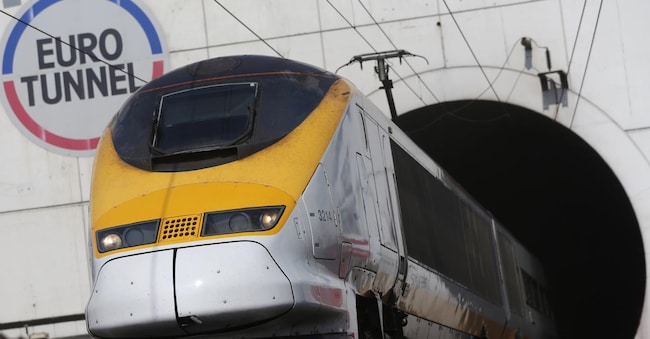
by Marco Morino

5' min read

Key points

  • The work
  • Construction
  • Present and future

5' min read

The Channel Rail Tunnel between France and the United Kingdom, universally known as the Eurotunnel, is thirty years old and looks to the future with renewed ambition. The goal of Getlink, the company that runs the Eurotunnel, is to double the number of high-speed passengers in the next six years. Passengers are expected to grow from 10.7 million in 2023 to 20 million in 2030 as a result of the entry of new railway companies (there are at least two in the running).

These companies would compete with the historic operator Eurostar, whose shareholders are the French (Sncf) and Belgian (Sncb) railways, a Canadian bank and an Anglo-Saxon fund. A sort of The Italo model already successfully experimented in Italy with the entry of Ntv on the high-speed railway tracks, in competition with Trenitalia's Frecciarossa (FS group).

Loading...

L’Eurotunnel fa 30 anni

Photogallery14 foto

Among the shareholders of the concessionaire Getlink is also an Italian partner: the Mundys group (formerly Atlantia). The group, controlled by Edizione, the financial holding company of the Benetton family, owns 15.49% of Getlink's capital and holds 23.3% of the voting rights. But let's go in order.

The opera

The Eurotunnel, which connects Calais (France) to Folkestone (UK, near Dover), was inaugurated on 6 May 1994 and is considered a masterpiece of civil engineering. In the 50.5-kilometre-long tunnel, some 39 kilometres of which are below sea level at a depth of 75 metres, high-speed passenger trains, conventional freight trains and shuttle trains for passengers, cars, lorries and buses run at a total of some 400 trains per day: at peak times, a train passes every three minutes.

It takes about 20 minutes for a passenger train to cross. France and the UK each manage their own section, with theofficial border between the two states being located approximately halfway along the route.

In thirty years, more than 500 million passengers have passed through this tunnel. In reality, the Eurotunnel is a system consisting of three tunnels: 2 for train traffic (each with a single track) and one service tunnel, which has the dual purpose of providing access for maintenance workers and ensuring an escape route in the event of an emergency, such as the fire that injured fourteen people in 2008, six of them intoxicated.

The construction

.

William Shakespeare's Richard II described it as the 'moat that defends our house against the envy of less happy lands' and indeed, for England, the Channel has always been a natural, insurmountable obstacle against every invasion attempt: the Spanish Invincible Armada, Napoleon's France, Hitler's Nazi troops. A tongue of sea, 560 kilometres long and 34 kilometres wide at its narrowest point between Dover and Calais, which, through the construction of the submarine tunnel, has become a route connecting the British world to the continent and a strategic infrastructure that has fostered the economic development of the macro-region.

The first plans to unite France and England date back to 1750, while the earliest work dates back to 1880, when 1,800 metres were dug on both sides, before construction was suspended due to lack of funds.Other attempts failed. Then, in 1957 the French engineer Louis Armand founded the Channel Tunnel Study Group, a company that proposed a work consisting of two railway tunnels and a service tunnel.

The work was abandoned in 1975 after only 250 metres of excavation, but it was to become the starting point for the final project, which was proposed again by Margaret Thatcher in 1985. This time, work began in 1987 and was entrusted to a Franco-British consortium of private companies, and construction of a majestic work began, which started with an initial budget of three billion pounds, entirely private, and ended with an estimated cost of ten billion pounds, equal to about 11.5 billion euros. The Strait Bridge, purely by way of example, is expected to cost about EUR 13.5 billion (plus a further billion in ancillary works).

Digging under the sea were two teams of 4,000 men: the British started from Cheriton, a small town near Folkestone in Kent, the French from Coquelles, near Calais. Twelve digging machines were used to build the tunnels; the fastest were capable of digging 75 metres and 36,000 tonnes of rock per day. The inner walls of the tunnel were covered with more than 750,000 concrete and granite slabs, enough to clad more than a hundred buildings. A total of 13 thousand people, including technicians and engineers, worked on the construction site until 1 December 1990, when the two tunnels met and the tunnel was joined.

When the work was inaugurated four years later, a railway tunnel was handed over to the world, consisting of three parallel tunnels, two for rail transport and a smaller central one for service operations.a unique work, described by the American Association of Civil Engineers (Asce) as one of the seven wonders of modern technology.

Inaugurated on 6 May 1994 by French President François Mitterrand and Royal Queen Elizabeth II, the tunnel is first and foremost a strategic infrastructure with a considerable impact on the economy of the macro-region and will continue to be so in the future, despite the referendum that sanctioned Brexit. The tunnel is a flywheel for tourism and promotes the development of trade. A curiosity: the first train to cross the Channel Tunnel was a goods train.

Present and Future

.

And we come to the present day. Says Oliviero Baccelli, Director of the Master in Transport Economics and Management at the Bocconi University of Milan: "In recent years, the business model has changed for Eurotunnel: in mid-2022, the power line between France and the UK, built inside one of the two tunnels, came into operation, where the cables were housed. The start-up of the power line was instrumental in the growth of Getlink's profit margins. But that is not all. New railway operators have come forward and have already started procedures to obtain authorisation for passenger transport. They are,' Baccelli continues, 'two private start-ups in the high-speed rail sector: a British one, Evolyn, and a Dutch one, Heuro. The two companies, backed by specialised investment funds, are looking to raise between EUR 800 and 1,200 million on the market. The business plan is to expand the number of destinations connected with London'.

Currently, the classic route served by the Eurostar high-speed train, a member of the French Tgv family, is the London-Brussels-Paris. The trains connect Saint Pancras Station in London with Gare du Nord in Paris (in about two hours) and Midi/Zuid Station in Brussels (1 hour 10 minutes), with stops in Ashford, Kent, Calais-Frethun and Lille. The company points out that high-speed rail represents a saving of 393,000 short-haul flights and the associated carbon dioxide production.

Baccelli continues: 'The new rail operators aim to connect London with new cities in Europe, going as far as Switzerland (Zurich, Geneva), the south of France (Marseille) and Germany (Frankfurt). In this way they would compete with Eurostar, which is currently the only passenger company present in the Eurotunnel'. According to the professor, the two companies could start with the first trains in 2027/2028.

To promote traffic development and to attract new operators to the Eurotunnel, Getlink is engaged in a massive investment plan. Says Baccelli: "A new signalling system has recently been introduced in the Channel Tunnel, which reduces the distances between trains, so that more trains run every hour.

To summarise: in recent years, Getlink has diversified its business model with the Eurotunnel by making the most of an existing infrastructure and invested in the railway signalling system to increase train frequency, thereby facilitating the entry of new operators to increase traffic volumes. The best possible present for the 30th anniversary of its jewel: the Eurotunnel.

Copyright reserved ©
Loading...

Brand connect

Loading...

Newsletter

Notizie e approfondimenti sugli avvenimenti politici, economici e finanziari.

Iscriviti