
Emotional ties are also permitted for prisoners who married in prison without having lived together beforehand
The right to private visits cannot be denied on the grounds of previous serious offences or the absence of a previous cohabiting relationship
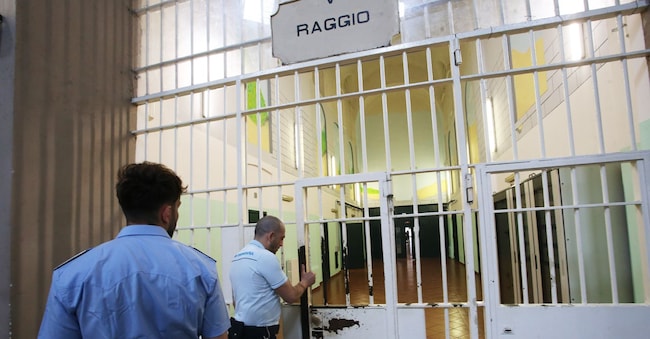
The fact that there was no previous cohabitation is not sufficient to rule outintimate encounterswith the woman whom the prisoner married whilst in prison. The Court of Cassation has therefore upheld the appeal against the refusal of a private visit requested by the man. With a ruling that upholds the guidance of the Constitutional Court as well as that of the ECHR, the Supreme Court notes that ‘a sentence that prevents the convicted person from expressing normal affection towards their partner results in a detriment to the relationships in which their personality develops, leading to a progressive deterioration until it breaks down, which risks provingunsuitable for therehabilitative purpose towards which prison treatment must necessarily be directed”.
The right to private and family life
The judges of the Court of Cassation point out that the mandatory nature of the visual monitoring of the conduct of interviews is also contrary to Article 8 of the ECHR, due to a ‘lack of proportionality with its objectives, however legitimate, thereby compromising the right to respect for private and family life’, where the necessity of the restrictive measure for the purposes of maintaining public order and preventing crime cannot be verified in practice.
The European Court, whilst ruling out the possibility that the Convention requires Contracting States to provide for long-term visits – as the matter is left to their discretion – nevertheless affirmed the need for the prohibition to be laid down by law and for abalance between the authorities’ interest in prohibitingintimate visits and, on the other hand, the rights of prisonerswhich are protected under the Convention. This balancing act, as is customary, is primarily left to the national authorities, taking into account the specific characteristics of the various legal systems, but is nonetheless subject to European scrutiny regarding the proportionality of state interference.
The Constitutional Court has adopted a more progressive approach. In generally permitting intimate visits (except in the case of special detention regimes), the Constitutional Court has definitively redefined ‘private’ visits as a matter of personal rights, distinct as such from any system of rewards, stating that ‘it is nevertheless necessary to ensure the privacy of the room in which the visit takes place, which, to allow for the full expression of affection, must be shielded not only from internal observation by prison staff – who will therefore only monitor from outside – but also from the view of other prisoners and those visiting them’. Finally, the Court provided for exceptions only where justified by security reasons, the need to maintain order and discipline, or judicial grounds.
Security reasons
The case law of the Court of Cassation, following the lead of the Constitutional Court, has held that requests for ‘private’ visits may specificallybe refused on security grounds, for the purposes of maintaining order and discipline, due to the prisoner’s own misconduct, or for judicial reasons, in the case of a person who is still a defendant.

