
Protests: every Saturday when shops are closed, bars and shops lose 5 million in takings
The estimate of lost sales, excluding any property damage caused by the violence and theft.

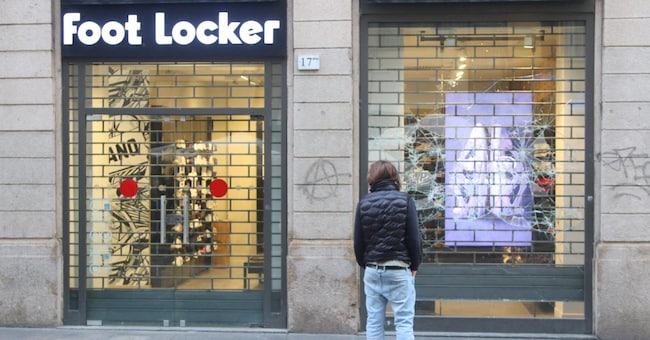
In the event of businesses being forced to close for the whole day, every Saturday on which city life comes to a standstill due to street clashes could cost shops and cafés up to five million euros in lost turnover. The alarm has been raised by Confesercenti, which has based its estimate on the areas of the historic centres affected by the routes of the demonstrations in Rome, Milan, Genoa, Bologna, Florence and Turin.
Confesercenti’s estimate
The calculation by Confesercenti, which represents more than 350,000 SMEs in the retail, tourism, services, craft and industrial sectors, takes into account the businesses located in the areas affected by potential unrest and the turnover normally generated on Saturdays, assuming that business operations would be suspended for the entire day.
If the scenario of a prolonged closure lasting four Saturdays were to materialise, the total loss of revenue could reach around 20 million euros. And this estimate relates solely to lost sales, without taking into account any material damage caused by violence and theft.
The 17 October Movement
The situation is particularly alarming precisely because the demonstrations of recent days may not be an isolated incident. Indeed, following the example of what is happening in France, the newly formed 17 October Movement – which last weekend set the streets of numerous Italian cities ablaze with protests that culminated in destruction and looting – has announced a permanent mobilisation: the gatherings are scheduled for every Saturday at 3 pm. Numerous cities have been called upon on the Movement’s social media profiles to oppose the ‘government of the bosses’, ranging from Turin to Bari, via Milan, Padua, Bologna, Genoa, Rome and Florence.
“We strongly condemn the violence and express our solidarity with the business owners affected. There is concern amongst local businesses, particularly regarding the risk that this situation might happen again,” says Confesercenti’s president, Nico Gronchi.

