Real estate

Evergrande, from crack to expulsion from the stock exchange: off the Hong Kong list

Since 25 August, the listing of the former Chinese real estate giant has been cancelled: it does not meet any trading requirements

by Rita Fatiguso

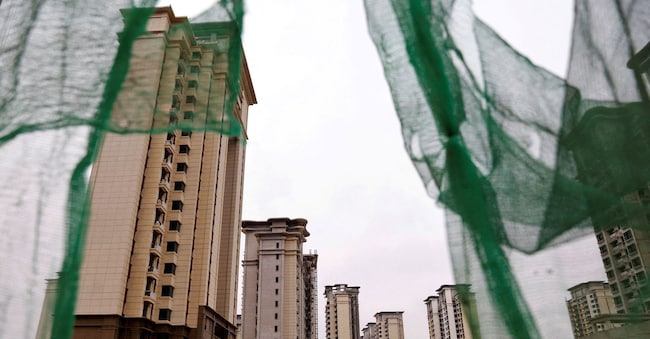
Un gruppo di immobili rimasti incompleti per il crack di Evergrande nella città di Shijiazhuang

3' min read

3' min read

What happened to Evergrande, the $50 billion Chinese real estate giant that collapsed under the weight of $300 billion in liabilities?

Apart from the protests of defrauded creditors in China and abroad, still looking for a shred of revenge, the company and its travails were lost.

Loading...

Evergrande's share price has come to an end without any glory. Yesterday news broke that Evergrande would be delisted from the Hong Kong stock market as of 25 August. What remains of the company that once symbolised the grandeur of Chinese bricks and mortar and is now the ballast of China's recovery has declared that it will not oppose the delisting.

The first crack

.

The first crack in the real estate system opened at the end of 2021, due to the loan crunch decreed a year earlier by the central government, with the default of a dollar bond in December 2021.

A descent that culminated in its suspension from trading on 29 January 2024 by the Hong Kong High Court, which, in the absence of a viable restructuring plan for its $23 billion offshore debt, decreed its liquidation.

After 18 months of suspension from trading, by law, a farewell to the lists is obligatory, with the mathematical certainty that delisting reduces the hopes of recovering one's investment to a minimum.

Evergrande's history is a quagmire of corporate holdings and asset castles that goes far beyond the bare official figures. The great founder and orchestrator Hui Ka Yan, once the richest man in China and owner of 60% of the company, has disappeared into thin air.

The liquidators

.

Liquidators speak of 187 claims for USD 45 billion filed as of 31 July, an amount that far exceeds the USD 27.5 billion of liabilities on the balance sheet as of December 2022.

So far, the realisation of assets has been 'modest', amounting to USD 255 million from sales of non-strategic assets, such as futures and stockbrokerage holdings, school bonds, club memberships, artwork and motor vehicles. Recall that Hui had bought the most expensive building in London, only to be forced to resell it, overwhelmed by the crash, to Arab investors.

For the other two listed companies, Evergrande Property Services and China Evergrande New Energy Vehicle Group Ltd.

In a report on the progress of the debt collection operation, liquidators Edward Middleton and Tiffany Wong of Alvarez & Marsal, stated that the entities now under the direct control of the liquidators had a total value of $3.5 billion at the time of the liquidation order.

Of the USD 255 million in asset sales, however, only USD 11 million came from assets held directly by Evergrande, the rest were attributable to its subsidiaries, about a hundred recovered so far.

The liquidators also warned that it should not even be assumed that the $244 million derived from the assets held by the Evergrande units will all be available. So far, only $167 million has been delivered. Crumbs.

Perhaps a decade will not be enough to close a game that has left deep scars on the Chinese system. An era has closed, the brick business model has changed.

But around the corner are other detritus, other delistings. Modern Land ChinaCo., which has been suspended for more than 16 months, and Dexin China Holdings Co., which received a liquidation order in June last year.

Copyright reserved ©
Loading...

Brand connect

Loading...

Newsletter

Notizie e approfondimenti sugli avvenimenti politici, economici e finanziari.

Iscriviti