Materials

Everyone’s crazy about aluminium, the ‘grey gold’ beloved by designers

Lightweight, waterproof, malleable, reflective and, above all, infinitely recyclable: aluminium is becoming one of the most popular materials in design

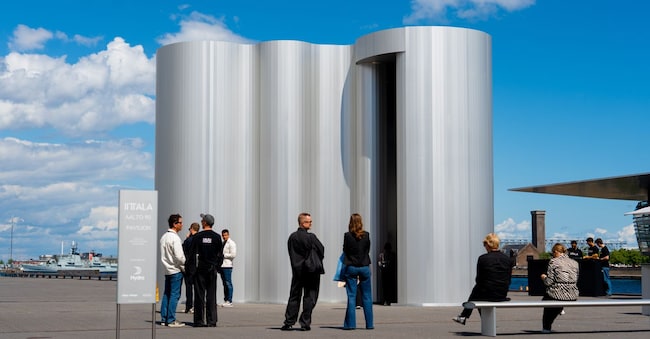
by Enrico Marro

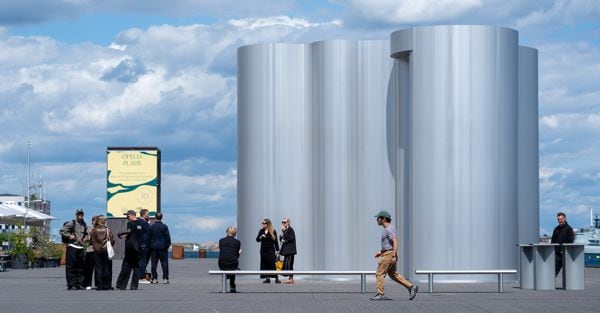
Il Padiglione Aalto 90 esposto in questi giorni a Copenaghen per 3daysofdesign: realizzato in alluminio a basso impatto ambientale, è nato dalla collaborazione tra i designer finlandesi di Iittala e Hydro per celebrare il 90° anniversario dell’iconico Vaso Savoy, disegnato da Alvar e Aino Aalto nel 1936 (foto Herman-Skjolsvik / Hydro).

4' min read

Translated by AI
Versione italiana

Key points

  • Never Dies
  • Emissions halved

4' min read

Translated by AI
Versione italiana

It is lightweight, waterproof and odourless. Non-toxic and malleable: it can be extruded into any shape for a wide variety of uses, from transport to automotive, from construction to electronics, from industrial plant to furniture and even renewable energy (think of frames for solar panels or materials for wind turbine blades).
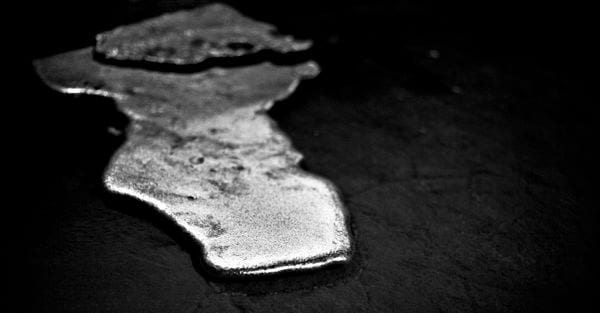
Leggero, robusto, atossico, impermeabile e malleabile: l’alluminio è chiamato «l’oro grigio» anche per la sua caratteristica di essere eternamente riciclabile (foto Kimm Saatvedt / Hydro).

Grey Gold

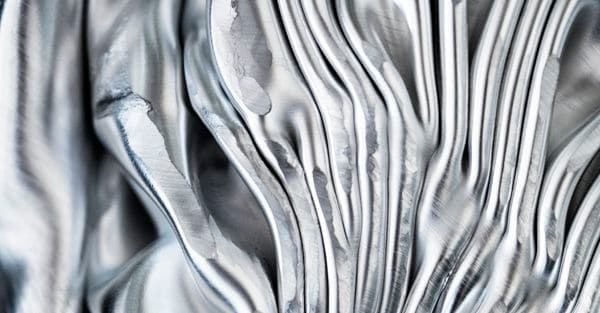
An excellent conductor of heat and electricity. Resistant to corrosion and combustion: it only melts at 660 degrees without releasing any gas. It perfectly reflects light and heat with its characteristic lustre.
Loading...

«Un materiale splendido, con una sua luce interna», si entusiasmava Vico Magistretti, che adorava l’alluminio per la sua eleganza e leggerezza.

It never dies

But above all, it is infinitely recyclable , unlike paper and plastic, for example. In fact, 75% of the aluminium produced is still in use .

There is no doubt about it: aluminium is the material of the future. Grey gold, as it has been dubbed. Almost magical. It never dies; it merely changes form.
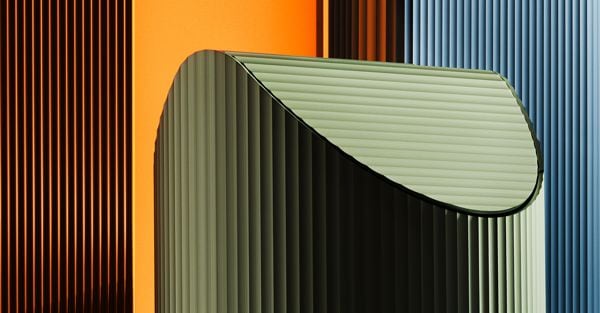
Un dettaglio di Boss, opera di Stefan Diez realizzata per il progetto R100 presentato l’anno scorso alla Milan Design Week e alla Dutch Design Week (foto di Einar Aslaksen).

“A generous metal: it can be worked and bent, but it does not break easily,” wrote Primo Levi in his The Periodic Table, in which he devotes an entire chapter to aluminium.
A splendid material, with its own inner glow,” enthused Vico Magistretti, who adored it for its elegance and lightness.

A cornerstone of the green transition

“But above all, it is the key material for the green transition,” explains Yon van den Oever, Business Development Manager at Hydro, the Norwegian giant with around 140 plants in 40 countries, 32,000 employees and over 30,000 corporate customers, which has made the extrusion of ‘grey gold’ its hallmark.

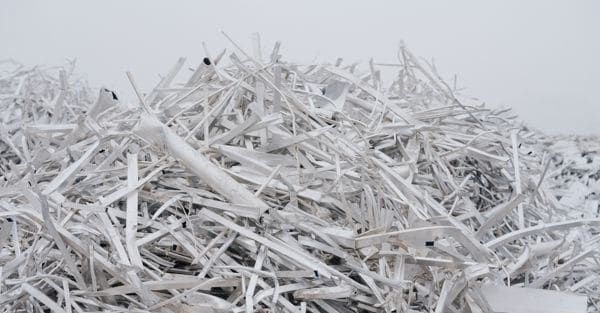
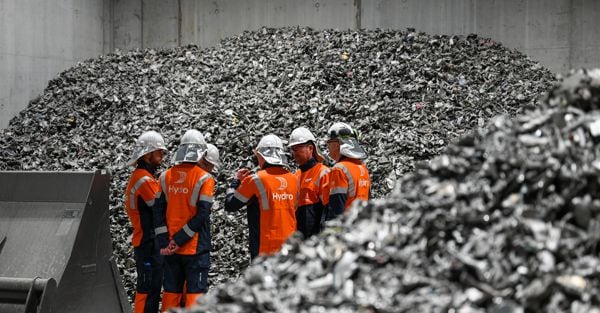
Alluminio di scarto pronto a essere riciclato (foto di Jens Christian Boysen/Hydro).

“Recycling aluminium saves 95% of the energy needed to produce it from raw materials,” he explains as we tour the plant in Drunen, in the Netherlands, one of eight in the Benelux region.

The magic of extrusion

What is extrusion?

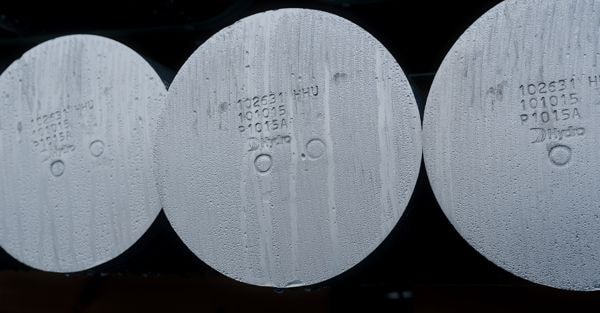
It is a process of hot plastic deformation that enables the transformation of a cylindrical block of aluminium, known as a billet, into a profile with a constant, defined cross-section.

Loading...

“This technique enables the creation of complex geometries with high precision, allowing features to be integrated directly into the profile. This combination helps to create lighter, smarter and more efficient solutions,” explains Yon van den Oever.

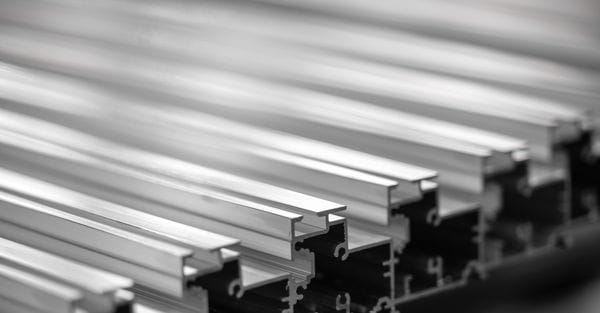
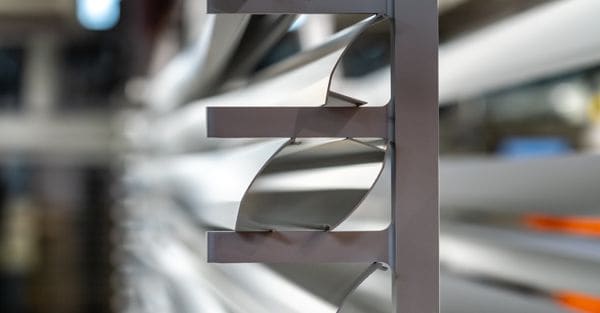
Profili in alluminio dopo il processo di estrusione (foto Studio Polidori / Hydro).

Extremely complex geometric shapes, which cannot be achieved using other methods, with strong and durable profiles thanks to improvements in the metal’s structure.

The R100 collection…

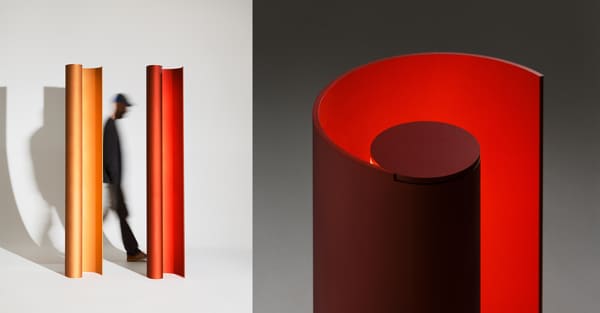
It was at the Drunen plant that some of the masterpieces from the R100 collection, seen at Milan Design Week and at Dutch Design Week last year: it brought together five international designers to take on the challenge of creating design objects using waste materials collected within a 100-kilometre radius.

Dalla collezione R100, le lampade Orbit Light firmate dall’olandese Sabine Marcelis: eleganti contenitori di luce dalle forme fluide e profonde (foto di Einar Aslaksen).

…and that 100R

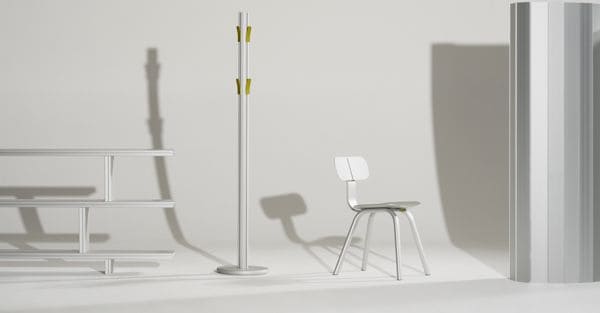
A project coordinated by art director Lars Beller Fjetland, coming a year on from the equally intriguing 100R, in which seven other designers had created seven works based on the Circal 100R, Hydro’s flagship product and the first industrial aluminium produced entirely from scrap.

Parte della collezione 100R, presentata alla Milan Design Week 2024: curata da Lars Beller Fjetland, è realizzata al 100% con scarti post-consumo riciclati (foto di Einar Aslaksen).

Thanks to extensive technological research, it has a carbon footprint of less than 0.5 kg of CO₂ per kilogram of aluminium, which is 97% lower than the global average.

Emissions halved

By the way: since 1990, Hydro has reduced emissions from its Norwegian smelting plants by more than 50%, whilst increasing production by 40%.

Circal 100R è la gamma di alluminio riciclato al 100% di Hydro: ha un’impronta di carbonio inferiore a 0,5kg di CO2 per chilogrammo di alluminio (foto di Einar Aslaksen).

Globally, across its 140 production sites, the aim is to achieve a 30% reduction in CO2 emissions by 2030 compared with 2018.

What it’s like to work at Drunen

But let’s get back to the factory. At Drunen, the symphony of aluminium unfolds in four movements.

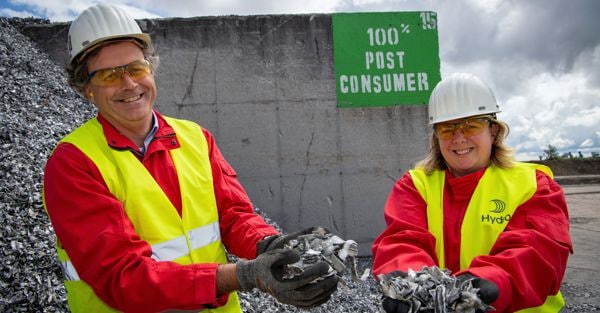
La lavorazione dell’alluminio inizia dalla raccolta dei rifiuti riciclati (foto Halvor Molland / Hydro).

Recycling

We start with recycling : the site houses a remelting unit that transforms post-consumer and industrial aluminium scrap into new extrusion billets: approximately 74% of the material used comes from recycled aluminium.

Le billette della gamma Circal 100R nell’impianto olandese di Drunen (foto di Einar Aslaksen).

Billets

Then there is the preparation of the billets: the cast aluminium ingots are cut into cylindrical blocks and preheated in a furnace at temperatures ranging from 400 and 500°C to make the metal malleable without melting it completely.

Extrusion

So we have pressing, or extrusion.

A hydraulic press (Drunen has two, measuring 8 and 10 inches) pushes the heated billet through a steel die, which acts as a mould.

Profili di alluminio estruso e anodizzato nello stabilimento svedese di Vetlanda (foto di Herman Skjølsvik / Hydro).

The metal emerges on the other side, taking on the shape of the die’s cross-section: it “flows” to assume the desired profile (solid, hollow or semi-hollow).

The profile is then cooled and mechanically straightened to straighten it and align its molecules, ensuring the required dimensional accuracy.

Loading...

The production process

At this stage, we have the post-extrusion processes.

The Drunen plant is renowned for its in-house service centre, which is capable of producing complex components ready for use, specialising in bending and CNC machining (a metal-cutting process).

But it is also the foundation of “pole products”, namely the specialised manufacture of lighting poles, flagpoles and road infrastructure (which are then exported all over the world).

Il padiglione Aalto 90, esposto in questi giorni sul lungomare di Copenaghen per 3daysofdesign (foto Herman-Skjolsvik / Hydro).

In honour of Aalto

Let’s finish on a high note – quite literally – with design: right now at 3daysofdesign by Copenhagen stands the iconic Aalto 90 Pavilion, a monumental installation created through a collaboration between Finnish designers from Iittala and Hydro to celebrate the 90th anniversary of the iconic Savoy Vase, designed by Alvar and Aino Aalto in 1936.

The pavilion is a good seven metres tall and is located on the Copenhagen waterfront: inside, it houses an exhibition and a sound installation that reproduces the sound of glassblowing.

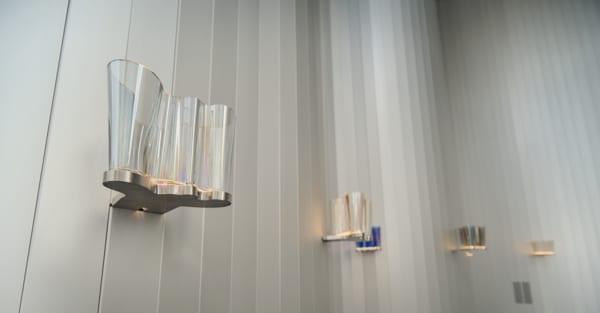
Un dettaglio dell’interno del padiglione: ospita un’esposizione e un’installazione sonora che riproduce il suono della soffiatura del vetro.

The entire structure is made from aluminium with an extremely low environmental impact, produced in Norway using exclusively 100% renewable energy: it has a certified carbon footprint of no more than 4.0 kg of CO₂ per kg of metal, less than a third of the average.

Primo Levi was right: aluminium is not just a metal, but a metaphor for rebirth. It never dies. It merely changes form.

Copyright reserved ©
Loading...

Brand connect

Loading...

Newsletter RealEstate+

La newsletter premium dedicata al mondo del mercato immobiliare con inchieste esclusive, notizie, analisi ed approfondimenti

Abbonati