
Excellent grapes, full cellars: the paradox of Sicilian wine
Assovini has announced a high-quality 2026 grape harvest, whilst Confcooperative, Legacoop, Unci and Unicoop are calling for measures to tackle surpluses. With nearly three million hectolitres in storage, the key challenge is to manage supply

Key points
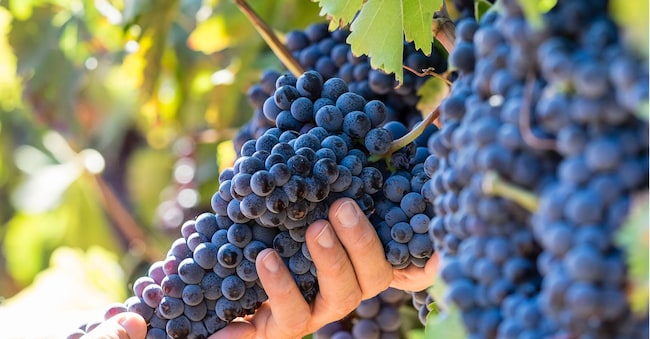
The grape harvest in Sicily began a few days ago and promises grapes of excellent quality. Meanwhile, some producers are looking for ways to clear their cellars of the wine they have already produced. This is the dilemma facing the sector as it enters the 2026 season: nearly three million hectolitres in storage tanks, stocks up by almost 32 per cent in a year, seven million in public funding for green harvesting, and a call from the central cooperatives to resort to emergency distillation. Resources to produce fewer grapes, and others that could be used to remove excess wine from the market. This comes just as Assovini announces a harvest with promising prospects.
Gabriella Favara, president of Assovini Sicilia, emphasises “a journey characterised by quality, innovation and a constant pursuit of excellence, helping to add value to the regions and the people who look after them”. Shortly after her election, she also highlighted another priority: “Our aim is to listen ever more closely to the needs of the market”. “The outlook for the 2026 grape harvest in Sicily is decidedly positive,” adds Vice-President Pietro Pollara, who notes that water reserves have been replenished and the vines are in good health. “We expect a high-quality harvest.”
Almost an entire harvest still in the cellar
Gaetano Mancini, president of Confcooperative Sicilia, Filippo Parrino of Legacoop Sicilia, Andrea Amico of Unci Sicilia and Felice Coppolino of Unicoop Sicilia set out the other side of the story in black and white: ‘The wineries are preparing to receive the new harvest whilst the tanks are still full of wine’. If stocks grow faster than the market’s capacity to absorb them, they warn, prices and liquidity will be squeezed.
But the cooperative sector also presents a varied picture. Cantine Ermes, Italy’s largest primary-level wine cooperative, kicked off the 2026 grape harvest in the Trapani area with an operation that extends well beyond Sicily’s borders: over 3,000 winegrowers, more than 16,000 hectares, 16 production facilities and a harvest that spans seven regions over the course of around one hundred days. Chairman Rosario Di Maria expects yields to be ‘likely lower than in an ordinary vintage’, but notes that the first grapes show ‘good balance and interesting quality characteristics’. This model, based on scale and geographical diversification, introduces a further variable within the cooperative system itself.
The ICQRF figures do, however, give an indication of the scale of the Sicilian phenomenon. As at 30 June, the island’s wineries held 2.94 million hectolitres, compared with 2.23 million a year earlier: an increase of over 711,000. Of this total, 1.56 million are PDO and 1.10 million are PGI: over 90 per cent of stocks. This does not mean that all of it is unsold: a portion is maturing, certified, earmarked for bottling or already committed. However, the ratio between what remains in the cellars and what is about to be produced indicates an imbalance.


