
Excise duties, here is how much diesel will rise and how much petrol will fall
In five years 5.5 cents per litre more on diesel and the same discount on petrol.

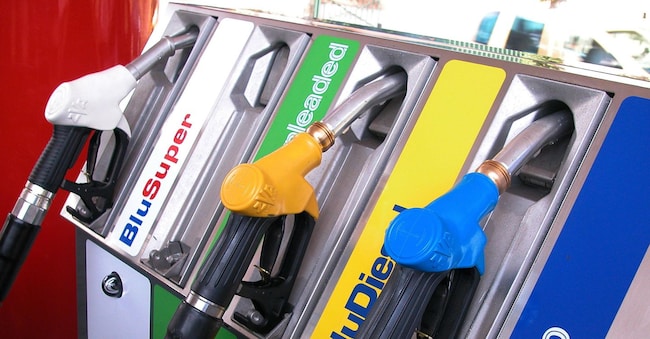
3' min read
3' min read
The one on excise duties is a 'realignment and not an increase', as more than one government representative emphasised during the long eve of the intervention, which ended up in the final text of the legislative decree implementing the tax delegation on the subject and yesterday obtained the final 'yes' in the council of ministers. The fact is that excise duties are 'aligned' but the revenue increases.
Extra income
.This is confirmed by the same measure, which expressly allocates 'the greater resources resulting from rate changes' to the national public transport fund and to the proxy fund (Article 3, paragraph 6 of the decree). In the first case, the new funds will be used to close the contractual renewal of the bus and tram drivers, which has been stalled for months precisely on the obstacle of resources deemed insufficient by the sector's unions, as those in Italian cities who have had to deal with the many strikes this winter are well aware. As far as the second quota is concerned, on the other hand, those who drive a diesel car and will see their bill rise at the petrol station will be able to consider the extra cost as a sort of down payment of tax benefits expected with the next stages in the implementation of the reform. But at the moment this is a gamble in the dark, because it will be necessary to see the scope and specific weight of the new measures, called upon to make their way through a framework of public accounts made more uncertain every day by trade wars and international uncertainties weighing on growth ambitions.
Card Winning, Card Losing
.Clearer, however, is the bill coming in for those who at the petrol station ask for diesel and, speculatively, the discount compared to today for those who instead drive petrol cars. Let's see how.
First point: the mechanism outlined in the decree provides for an increase of the excise duty on diesel and an equivalent reduction of the excise duty on petrol. Today the excise duty on petrol is 72.8 cents per litre, that on diesel is 61.7 cents. The distance is 11.1 cents, so the halfway meeting should take place at 67.25 cents, with an increase of 5.55 cents for diesel and an equivalent reduction for petrol. To get there, the decree goes on to explain, it will take five years from now, with an annual increase of between 1 and 1.5 cents.
Second point: increases on diesel and discounts on petrol are equivalent, but the game is not zero-sum because diesel is sold much more than petrol. In 2024, as can be calculated from the data of Unem (the former Oil Union) pending the technical report to the decree, almost 28.8 billion litres of diesel and 12.3 billion litres of petrol were purchased. That is why one card moves up, the other moves down, but the bank wins.
Numbers in play
.With last year's consumption, each one cent adjustment is worth about 165 million per year, which is the balance between the 288 million more paid on diesel and the 123 million less paid on petrol. At the end of the alignment, that makes 1.1 billion additional revenue, which is the difference between the 1.93 billion more charged on diesel and the 830 million less levied on petrol. However, diesel used in agriculture and biofuels, which will keep the reduced rate, will have to be subtracted from the account. The contract for the bus and tram drivers, with a requirement of 500 million when fully operational, will absorb about half of the new revenue
Corollary: the arrival of the decree in the Official Gazette will close yet another political short circuit. Because the majority in the election campaign had promised reductions or abolition of excise duties, and now finds itself implementing the farewell to an 'environmentally harmful subsidy' as demanded by the EU indications transposed in the Budget Structure Plan. The opposition, after years of proposing cuts in harmful subsidies to finance this or that expenditure, has instead thundered against the 'tax increase' decided by the government. Reality, meanwhile, follows its own path.


