
Maestro Chicco’s Existential Wunderkammer
The brother of the famous architect Vittorio Gregotti, a family friend and a beacon of ‘the good life’. Amidst drawings, whisky, books and friendships: a ‘journey around the room’ that defines a life

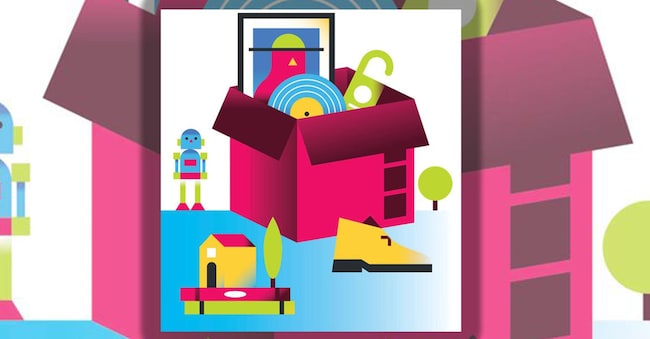
The dark wooden front door, the statue of the Alpine soldier in the courtyard, and right there in the entrance hall, the display cases containing the African weapons brought back to Novara by my explorer grandfather – just imagine how marvelling it must have been for a little boy like me to crawl up the stairs and wander through those rooms full of surprises, like a wonderland. Chicco Gregotti was my father’s friend and, to me, a sort of older companion. His house on Via del Carmine was the first map of my passions. A place I’ve never found again, a wunderkammer whose every detail I can still recall: the textures, the scent of the carpet, his voice drifting from the study, his beard, his thick spectacles and the ever-full ashtray, his braces and shirts, his corduroy trousers and his irreplaceable Clarks. I’d see them peeking out from under the sofa where I’d hide when he came to visit; I’d try to save my tin toys, but they’d inevitably end up at Chicco’s house, amongst piles of Japanese robots and cupboards full of ‘Do Not Disturb’ signs, pins for 78-rpm records, orange wrappers and tobacco tins, and, on top of the bookcase, a line-up of little dolls that changed colour over time. It was a place where bric-a-brac and masterpieces, kitsch and the sublime, coexisted without the slightest embarrassment; where every object told the story of a man whose curiosity eventually became my own.I couldn’t wait for Sunday to come so I could step into that theatre of the world, an alternative school that taught me to love different worlds, from Art Nouveau to Russian Constructivism, from jazz to illustration. Right at the entrance, three engravings from Francisco Goya’s *Desastres*, seemingly identical, found on the street or at antique dealers at vastly different prices. They were Chicco’s mockery of the rules of the market and the technical reproducibility of the work of art. Whilst I was studying Walter Benjamin and tracing an alternative history of the origins of abstract art through Victor Hugo’s watercolours and Romolo Romani’s studies, I would listen to the adults’ lengthy discussions around his desk. Amidst politics and workers’ demands, amongst Cavour armchairs and Viennese lamps, beneath a small Léger and his portrait of Tullio Pericoli, Adelphi books, Louvre catalogues and tales of the latest exhibition at Carla Pellegrini’s gallery would come rushing at me. Between a brass locomotive and Antonio Canova’s portrait of Napoleon, those afternoons flowed by, dense yet light. British pop art and land art, comics and photography – there were a thousand things Chicco collected, from Giuseppe Chiari’s pianos to Franco Francese’s melancholic works; only pieces with a story to tell behind them, like that violent, rebellious Vedova we found with my father in New York whilst Chicco chuckled, “Where are the eyes?”. A prelude to a late-life love for Aubrey Beardsley’s ink drawings and Pieter Saenredam’s immaculate white churches.
A captivating storyteller and maverick, Chicco would recount tales of adventures from long ago in the stairwells with the mothers of my schoolmates, whilst I followed him into the Neue Sachlichkeit gallery. We had to fetch more ice for the whisky; from the age of fourteen, I too had my own glass, just like those who took turns sitting around him – from the semiotician to the artist, from the trade unionist to the bookseller – during the long discussions with my father about work and investments for Bossi in Cameri, the Gregotti weaving mill, another place closely linked to him that I used to explore far and wide when my mother took us there to buy tablecloths and sheets. Amidst the cotton bolts and the clatter of the looms, that factory designed by his brother Vittorio was a sort of funfair where I dreamt of one day becoming an entrepreneur as cultured and inquisitive as he was.
Without Chicco, I wouldn’t have met Davide Mosconi and heard his memories of Sun Ra and Conlon Nancarrow, nor would I have met Donald Garstang and heard his stories about Emma Hamilton and Giacomo Serpotta before that inevitable gin and tonic in his basement during my Erasmus year in London. During those months, Chicco would ring me on the hostel landline, saying, “As a student, you’ve certainly got plenty of time”, and he’d send me off in search of William Nicholson’s woodcuts, Norman Pett’s rather risqué Jane comic strips, and Ronald Searle’s cartoons amongst the Chris Beatles figurines in the Ryder Street shop, as well as first editions of Edward Lear’s *Book of Limericks*. Without Chicco, I would never have written a single ‘Archirick’ – once a summer column in these pages – nor would I have come to know and love Alan Dunn to the point where he’s giving me one of his cartoons to celebrate my umpteenth birthday next Friday. When he passed away, on Christmas Day 1997, I was twenty-four years old. I feared I would not survive without that source which had quenched my thirst since I was old enough to reason. Chicco left me all his records, an ex-libris, an African head, some little frogs, an Abelam mask, and his collection of Jolly Banks. I helped the family clear out that house of wonders, which Chicco wanted to see flowing back out into the world’s streams. Perhaps we should have photographed it, as they did with the walls of André Breton’s house. It didn’t even occur to me, even though it was in those rooms that I had discovered my passions. As I closed the dark wooden front door, I felt as though I’d been left behind; I didn’t yet know that my mind would continue to inhabit that world and spark new curiosities. Chicco’s geography soon became my own. I now know that, thirty years on, that map is still in my trouser pocket. It guides my passions and, therefore, my writing.

