The vote in Germany

Linke comes first in Berlin. In Mecklenburg, the AfD stands at 38 per cent and the CDU fails to make the cut. But Merz says: ‘Let’s press ahead with the reforms.’

According to preliminary results, in the Baltic state, Alternative für Deutschland is ahead of the Social Democrats by a few points, whilst the CDU has failed to clear the 5 per cent threshold. The Chancellor admits it is a disaster, but wants to remain in post. In the capital, the Left Party has achieved a historic result, whilst the SPD has fared poorly.

by Gianluca Di Donfrancesco

Aggiornato il 21 settembre, ore 00:40

Aggiungi Il Sole 24 Ore
ai preferiti su Google
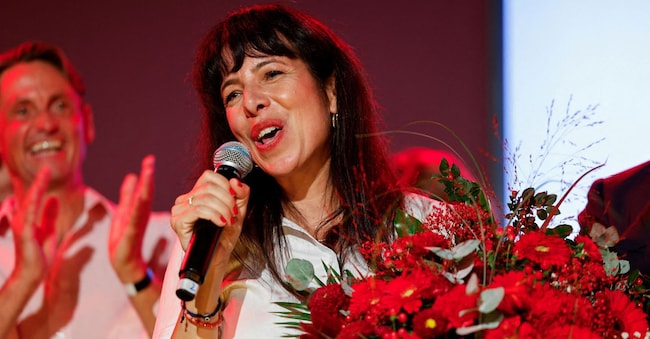
La candidata della Linke, Elif Eralp, festeggia mentre vengono resi noti i primi risultati delle elezioni a Berlino (REUTERS) REUTERS

4' min read

Translated by AI
Versione italiana

4' min read

Translated by AI
Versione italiana

Die Linke sees this as a historic milestone, having won Berlin. For the CDU, there is the equally historic exclusion from the state parliament in Mecklenburg-Western Pomerania. Polling stations closed on Sunday evening in the two Länder, and the preliminary results point to a triumph for the left-wing party and a bitterly disappointing outcome for the Christian Democrats, who came second in the capital and failed to win a seat in the Baltic state’s Land Parliament with 4.9 per cent of the vote. The worst possible outcome the party could have feared on the eve of the election.

A blow for the party leader, Friedrich Merz, who – when the CDU in Mecklenburg was still polling at 5 per cent – had stated that he intended to remain in his post.

Loading...

Not even the SPD’s coalition partners fared well in this round of elections. Their strong result in Mecklenburg – a rarity these days – is offset by their dismal showing in Berlin. And in the Baltic state, the credit goes entirely to the outgoing Minister-President, Manuela Schwesig, who opposes the progressive social reforms put forward by the black-red coalition government.

Alternative für Deutschland continues to make gains, although it is performing less well than expected in Berlin and has not secured enough votes to form a government in Mecklenburg.

The count

According to ZDF projections, in the race for mayor of Berlin, Die Linke is above 25 per cent, whilst the CDU is below 19 per cent. Alternative für Deutschland stands at just over 16 per cent. In the polls on the eve of the election, it was predicted to reach 18 per cent. The Greens follow on 14 per cent. The SPD is faring very badly, dropping to 12 per cent – its worst result ever.

In the capital, 2.5 million eligible voters were called to the polls. Turnout stood at 73 per cent, compared with 63 per cent in the 2023 elections (the 2021 elections were annulled due to irregularities, without resetting the parliamentary term). The CDU secured 28 per cent of the vote. Die Linke stood at 12 per cent, and the AfD at 9 per cent. The Social Democrats and the Greens together accounted for 18 per cent.

In Mecklenburg (1.3 million voters), the AfD has made a comeback: preliminary results provided by ZDF shortly before midnight on Sunday put the party at 38.2 per cent. For the first time, it has overtaken the SPD (35.5 per cent), which had been the leading party in the state since 1994.

According to the preliminary results, the CDU is therefore below the threshold and has been overtaken by the Left and the Greens. The Christian Democrats had never even come close to being excluded from a regional parliament.

Under these circumstances, there are enough votes for a majority comprising the SPD, Die Linke (6.5 per cent) and the Greens (5.7 per cent), with the far right remaining in opposition. The red-brown movement, Sahra Wagenknecht’s Alliance, is itself outside Parliament, with 4.8 per cent, and will not be able to offer her support, as it offered to do in Saxony-Anhalt.

One of the AfD’s two co-leaders, Tino Chrupalla, was quick to state, however, that in Mecklenburg his party had ‘clearly been given a mandate to govern: we will offer talks to everyone’. The other co-leader, Alice Weidel, has gone on the offensive, calling on Merz to ‘draw the necessary conclusions’ and to abandon the policy of political isolation, which prevents the Christian Democrats from engaging in any form of cooperation.

Loading...

In the 2021 elections,, the SPD had secured 39 per cent, the AfD was at almost 17 per cent and here too it doubled its vote share. The CDU stood at 13 per cent. In 1990, it had 38 per cent. Voter turnout on Sunday was 78 per cent, compared with 71 per cent in 2021.

Merz: ‘Let’s press ahead with the reforms’

The run-up to the vote had been fraught with tension, with Merz facing trial. A few days before the election, the Chancellor had been forced to cancel his planned trip to New York for the United Nations General Assembly and to convene a party executive meeting from 6 pm on Sunday, when the polling stations were due to close.

He waited barely a quarter of an hour, then, with the first exit polls in hand, took to the stage at the Konrad-Adenauer-Haus. An unexpected move, intended to make it clear that he intends to ‘move the country and the reforms forward’. A gamble, nonetheless, with the figures so uncertain. In Mecklenburg, Merz admitted, “the result is a disaster”. As the evening wore on, the situation became even more dire for his party.

Support for the Chancellor is at an all-time low, and the defeat in Saxony-Anhalt on 6 September – where the CDU saw its share of the vote halved and the AfD is on the verge of electing its own governor – came as a shock to the conservatives. Criticism has grown increasingly vocal and explicit, to the point where there is speculation about a mid-term replacement. The elections in Berlin and Mecklenburg have thus become a decisive test for Merz.

Linke: ‘History has been made’

Elif Eralp, the candidate for Die Linke, was beaming: ‘Dear people of Berlin, today we are changing our city. We have made history in Berlin,’ she said immediately after the exit polls were announced.

For the party, this is its best result in the capital, achieved through an election campaign that focused on tackling high rents and supporting young people. Die Linke managed to mobilise more former non-voters than any other party: 75,000 according to analysis by Infratest dimap, compared with 65,000 for the AfD (which took as many as 56,000 voters away from the CDU).

She has a comfortable lead over the Christian Democrats, following a neck-and-neck race that lasted for months. If the projections are confirmed, Eralp will be able to attempt to form a coalition with the SPD and the Greens. She would be the first woman from Die Linke and the first person with a migrant background to become mayor of Berlin.

Copyright reserved ©
Loading...

Brand connect

Loading...

Newsletter

Notizie e approfondimenti sugli avvenimenti politici, economici e finanziari.

Iscriviti