
Tarmac: rising energy prices are driving up costs
Siteb analysis: production is rising, but the price per tonne exceeds 720 euros (+70 per cent on 2025)

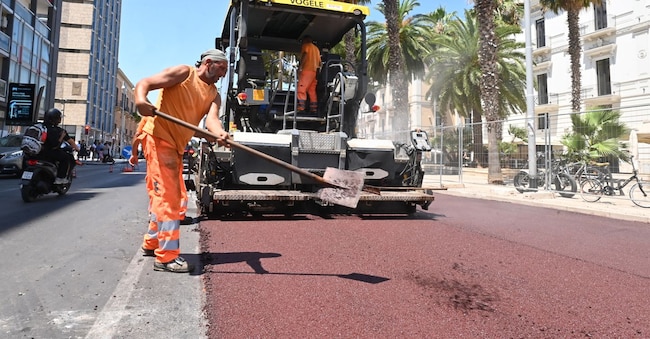
The production value of asphalt reached 4 billion euros, whilst production stood at 34.8 million tonnes (+3.6 per cent compared with 2025). The road surfacing sector is showing a positive trend, although it is being weighed down by rising industrial costs; however, according to business owners, the price review system is showing its limitations. This is the picture that emerges from a report produced by Siteb, Strade italiane and Bitumi to mark the opening day of Asphaltica 2026, the trade fair dedicated to road technologies, solutions and infrastructure, which is taking place in Bologna until Saturday and is organised by the Association and Bolognafiere.
According to Siteb’s initial estimates for 2026, the value of production and construction work for road maintenance is set to rise to 4 billion euros (+5.3 per cent), whilst the sector is expected to maintain its workforce of around 40,000 employees. The number of production plants is set to rise to 430 in 2026, compared with 415 in 2025 and 400 in 2024. The energy crisis is weighing heavily on the sector, which is grappling with a sharp rise in production costs and logistics expenses. In Italia, around 50 per cent of asphalt production plants are fuelled by natural gas, with the remainder running on fuel oil. The impact on bitumen prices in the first eight months of the year has led to price rises of between 65–70 per cent: on average, the price per tonne has risen from 420 to over 700 euros per tonne. Companies are having to cope with price rises that are causing them serious difficulties, particularly when carrying out public works contracts. The Tol 5 mechanism – Homogeneous types of work for price revisions in public works, drawn up by Istat and introduced by the Draghi Government – is in fact considered by operators to be inadequate to fully reflect the extent of the increases: whereas, in the face of much more substantial cost increases, the mechanism only recognises minimal variations, in the region of 3–4 per cent.
“2026 confirms the vitality of the road infrastructure sector, with asphalt production on the rise and the value of production and laying reaching 4 billion euros,” notes Raffaella Donghi, president of Siteb. But behind these figures lies a far more complex industrial reality: companies are facing sharp rises in energy, transport and raw material costs, with bitumen prices having risen by as much as 70 per cent in some cases. The risk is that, as the mechanisms currently available for price adjustments are failing to keep pace with the actual cost dynamics, tensions will arise in the delivery of public works, putting pressure on the economic viability of contracts.”
Alongside the issue of costs, Siteb also draws attention to the implementation of the CAM Strade – an acronym for ‘Minimum Environmental Criteria for Road Infrastructure’ – almost two years after the relevant decree came into force. According to the Association, the measure has had a positive impact on the sector, helping to promote and increase the use of technologies geared towards the reuse of recycled materials and the reduction of energy consumption. However, difficulties remain in the practical application of the new provisions. In particular, according to Siteb, many public bodies that own roads – especially small municipalities and provinces – have not had sufficient time or resources to prepare for the implementation of the CAM, which, despite being mandatory, is therefore still frequently disregarded. ‘The CAM for Roads represents an important opportunity to accelerate the sector’s transformation, as it promotes the recovery of materials, the circular economy and technologies capable of reducing energy consumption and limiting the sector’s carbon footprint. We must now enable road-owning authorities to implement it effectively, supporting the new rules with expertise, tools and appropriate planning. At the same time, the issue of costs and price reviews must be addressed urgently: a modern, safe and sustainable road network requires investment, but also economic conditions that enable companies to carry out the works whilst ensuring their quality and durability,” says President Donghi.

