
Expensive energy in the top ten threats to Italian companies
According to Aon's Global risk management survey, possible price increases or shortages of raw materials and cybercrime are a concern. But only half of the sample has damage mitigation strategies and only 30% have a management plan

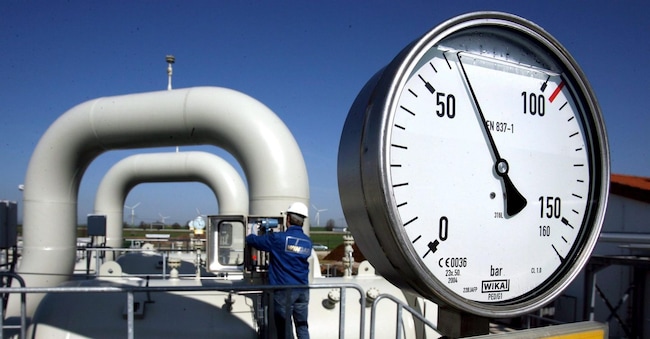
Expensive energy, economic crisis, cyber attacks and growing geopolitical instability: this is the quadrilateral of uncertainty that marks 2025 for Italian companies. So says the biennial Global risk management survey 2025 conducted in 63 countries on almost 3,000 companies by Aon, a company active in insurance brokerage and risk and human capital management consulting. The risk of rising commodity prices - an item that in Italy also includes the energy effect - is confirmed at the top of the list: almost 63% of the companies surveyed have already experienced direct losses. This is followed by cyber attacks and the economic crisis, which has affected seven out of ten companies. The picture shows a country still exposed to market shocks and energy costs, but more aware of the weight of risk in business management. The research, now in its tenth edition, is now one of the largest global observatories on the perception of risk and tells how, in 2025, Italian companies will find themselves in the front line when it comes to costs. In addition to losses due to rising raw material prices, 70% of companies claim to have been affected by the effects of the economic crisis. Rising energy prices and dependence on imported resources amplify a structural fragility that exposes the industrial system more than other European countries. According to Marco Dubini Daccò, executive chairman of Aon Spa, these results 'reflect the pressure that Italian companies are facing, between economic and geopolitical volatility, rising costs and digital transformation'. The manager points out that the weight of raw materials "testifies to the vulnerability of supply chains and the impact of inflation on industrial strategies", while the centrality of cyber risk "is not surprising, because Europe is one of the areas most affected by cyber attacks in the world".
The ability to react is lacking
In addition to the risk ranking, the survey also measures companies' responsiveness. Only half (50%) have a formal mitigation or review plan against rising commodity prices, and barely 8% have quantified their IT exposure. Less than one in three companies (30%) have an operational risk management plan. Numbers that describe a gap between perception and action, and that contribute - as Dubini Daccò notes - "to a structural under-insurance that exposes companies to financial and reputational losses". Despite these weaknesses, however, the survey shows significant progress in risk culture. Over 73% of Italian organisations now have a dedicated risk management department, compared to 68% of the global average. However, only 37.6% use a structured company-wide risk identification process (compared to 46.9% globally) and just 19% have working tables with annual planning. This is a sign, according to Dubini Daccò, 'of a growing but still evolving maturity, which must be transformed into a proactive and integrated approach'.
The report also highlights an often overlooked aspect: over 60% of Italian companies have experienced losses related to at least one of the top ten risks, a percentage higher than the global average. The economic fabric, largely composed of small and medium-sized manufacturing companies, amplifies the impact of external shocks. The most serious effects come precisely from cyber risks and business disruptions, with significant financial and reputational repercussions. In this context, explains Dubini Daccò, it becomes "essential to integrate risk management into business planning processes, adopting prevention, simulation and transfer models that enable companies to react quickly and protect their value in the long term".
In the next three years focus on environmental risks
Looking ahead, however, the risk map for the next three years shifts towards environmental and social issues: climate change enters the top five priorities for the first time, along with economic crisis and cyber risk. Italy, in fact, while maintaining a strong focus on costs and productivity, is showing a growing sensitivity towards sustainability. This is a sign of cultural evolution that aligns the country with the major global trends that are reshaping the geography of vulnerability. "Italian companies are evolving in the way they perceive risk: environmental awareness is growing and a more integrated vision is asserting itself, capable of connecting digitalisation, climate and geopolitical volatility," Dubini Daccò points out. The Survey 2025 thus describes a country that is changing: a production system that is exposed but no longer unaware, that is beginning to read risk as a component of its competitiveness. "Italian companies," says Dubini Daccò, "are learning to transform complexity into opportunity, combining data, predictive analysis and long-term resilience strategies. And in this trajectory, the real challenge will be to combine protection and growth. Because, he explains, 'attention to global risks and the environment must go hand in hand with the development of adequate corporate welfare'. The message is clear. In the new scenario of permanent uncertainty, it is no longer enough to avoid risk: it is necessary to know how to govern it. And it is there that the solidity of made in Italy is already being measured.
Global high alert for cyber attacks
While in Italy the risk has the face of expensive energy, in the rest of the world it takes on that of the web and international tensions. In 2025, according to Aon's Global risk management survey 2025, global businesses are moving in a context of permanent instability, where cyber attacks and geopolitical volatility define the new threat map. For the first time in the survey's history, geopolitical volatility enters the global top ten, having jumped twelve places since 2023. But at the top of the ranking remains the digital dimension: cyber attack or data breach is confirmed as the number one risk for companies, followed by business interruption and economic slowdown. Regulatory changes, growing competition, commodity risk, supply chain disruption, reputational or brand damage, geopolitical volatility and liquidity risks complete the global top ten. It is the representation of a now systemic global risk, in which technology, politics and economics intertwine and amplify each other. Despite widespread awareness, the survey shows a still weak picture of preparedness: only 14% of organisations monitor their exposure to major risks and just 19% use analytical tools to assess their insurance programmes. The result is widespread underinsurance, leaving companies exposed to increasing economic and reputational losses.

