
Expo 2025, the metaverse's bet for the Italian Pavilion
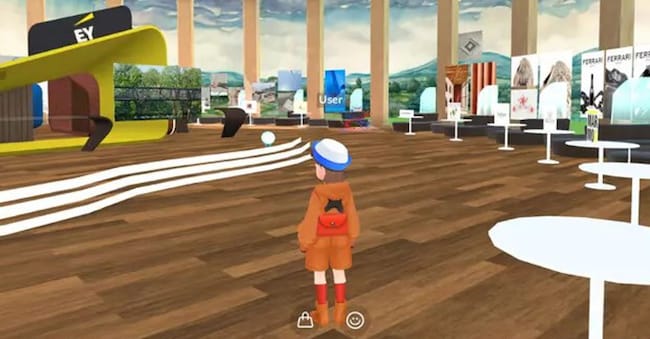
Thanks to Almaviva and Ey, the "Virtual Italian Pavilion" is online, giving the opportunity to remotely visit the space set up at Expo 2025 in Osaka, thanks to an immersive digital experience based on Vr and 3D technology
3' min read
3' min read
Once upon a time, there was Expo as we knew it: kilometres of pavilions, queues in the sun, crumpled maps in hand and swollen feet in the evening. Today, on the other hand, you can also walk the boulevards, but while staying on the couch. At Osaka 2025 there is therefore also this possibility: entering the pavilions of the World Expo without leaving your living room. You smile, you float, you even meet someone. And everything happens in the metaverse.
A kind of silent revolution has begun to take shape thanks to the intelligence of Almaviva and Ey, who, under the direction of the Commissioner for Italy at Expo 2025, have given shape to a digital version of the Italian Pavilion. Here one does not simply look at a screen. One enters, really, into the dream. You can admire Boccioni's 'Unique Forms in the Continuity of Space', the one immortalised in the 20 cent coin, or be dazzled by the dramatic light of Caravaggio's 'Deposition of Christ', generously lent by the Vatican Museums. And finally, one finds oneself face to face - or rather: avatar to statue - with the Farnese Atlas.
Loading...
This immersive version experimented by Sole 24 Ore is not a video game, as those watching from afar might think. Two avatars touching each other between the pavilions suspended in the clouds can start talking, with the real voices of those moving them. That is no small thing.
Italy's challenge is twofold. On the one hand, to tell the world about itself in the language of technology, without losing an ounce of its artistic and cultural identity. On the other, to open a new doorway: one in which beauty becomes accessible to anyone with a smartphone, a computer or a visor. Even those who can never set foot in Osaka will still be able to experience it.
The Italian one, on which Almaviva worked, is currently the pavilion with the most content, after the Japanese one. In others, the avatar, upon entering, is faced with the words 'coming soon'. And all this reveals, against the light, the very interest in the Expo that is felt in Italy. The latest available data referring to a couple of weeks ago reported a record number of accesses to the app and to the portal of the Italian Pavilion developed by Almaviva, thanks to the proprietary #GIOTTO platform: 630 thousand downloads of the app; 1.1 million visits to the portal; almost two minutes spent on the portal. This is different data from the Virtual Expo, with the link to access the virtual visit going through the Expo Osaka platform curated by Ntt Data. But the indication of interest in this truism is clear.


Brand connect
Loading...
