Official opening on Tuesday 6 May

Expo Osaka, 5 universities together at the Italian Pavilion to present the 'Make Italian Culture Alive' project

Ca' Foscari University of Venice (lead partner), University of Florence, L'Orientale University of Naples, Statale University of Milan and Sapienza University of Rome are the five universities representing Italian excellence in research, training and valorisation of cultural heritage

by School Editorial

Expo Osaka, Padiglione Italia

7' min read

7' min read

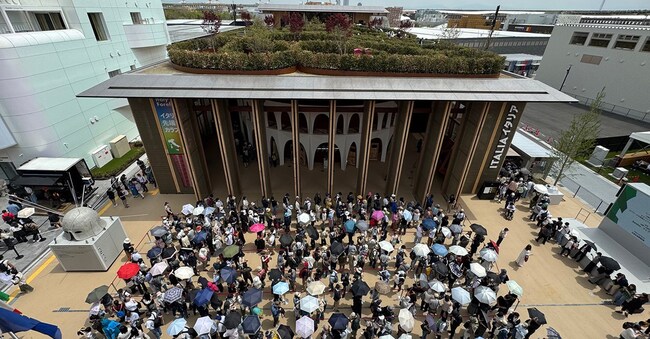
Make Italian Culture Alive (MICA) is a project funded by the Italian Ministry of University and Research that brings together five prestigious Italian universities on the occasion of Expo 2025 Osaka. Scheduled from 6 to 10 May 2025, at the Multimedia Conference Hall of the Italian Pavilion, MICA will offer a relevant opportunity to explore and enhance the Italian artistic and cultural heritage through innovative and interactive approaches. Coordinated by the Ca' Foscari University of Venice, the project is realised in collaboration with the University of Florence, the University of Naples L'Orientale, the State University of Milan, Sapienza University of Rome and with the participation of the CHANGES Foundation.
The initiative will be presented on Tuesday 6 May from 4 to 6 p.m. at the Italian Pavilion in the opening session that will be followed in the following days by a rich programme of talks, multimedia exhibitions and workshops organised by the various universities.
Through an immersive experience that integrates artificial intelligence, innovative didactics, language teaching and forms of artistic expression, MICA promotes dialogue and cooperation between Italy and Japan. The public will be involved in interactive workshops, multimedia installations and presentations of cutting-edge research projects, including RePAIR, CHANGES and iNEST. The initiative aims to create meaningful connections and strengthen the link between the two cultures, contributing to the protection and enhancement of cultural heritage from a contemporary perspective.
Ca' Foscari University Venice will be present on 6,8,9,10 May with a delegation of professors, researchers and researchers accompanied by the Vice-Chancellor for International Relations Chiara Saccon to represent the Italian Pavilion with the project Make Italian Culture Alive (MICA), coordinated by the Vice-Chancellor herself with the contribution of Prof. Marcello Pelillo, Professors Monica Calcagno and Marcella Mariotti and Dr. De Luca. In particular, the experience of the Ca' Foscari research projects RePAIR, CHANGES and iNEST will be brought. In addition to the installations, language and cultural heritage workshops will also be organised for greater public involvement.
The three research projects investigate the relationship between artistic and cultural heritage, innovation and community. From the memory of Venetian craftsmanship (iNEST) to the identification of sustainable tourism practices through the involvement of the local community (CHANGES), to the reconstruction of archaeological finds in Pompeii through artificial intelligence (RePAIR), the projects rethink the way we relate to tangible and intangible heritage. Uniting them is a shared concern for the preservation of identity, accessibility and the transmission of knowledge. In this context, there is also a language laboratory of Italian culture (NoLBrick) that interacts with the MICA digital exhibition.

Ca' Foscari University Venice

.

CHANGES Spoke 9 - Cultural Resources for Sustainable Tourism (CREST)

Loading...

CREST aims to address the challenges related to the integrated management of tourism, cultural heritage and local communities, with a strong focus on sustainability. This approach aims to promote tourism practices that not only protect cultural heritage but also reduce the environmental and social impact of tourism activities. CREST emphasises the active involvement of local communities in decision-making and management of cultural resources, recognising that a participatory approach favours the long-term sustainability of sites and traditions. Through innovative public-private partnerships, Spoke develops strategies to create a tourism environment that enhances local identities and contributes to the economic development of host communities. CREST's multidisciplinary team of academics, researchers and practitioners work together to develop and implement solutions that integrate cultural heritage into the economic and social fabric, promoting a vision of responsible and inclusive tourism.

iNEST Spoke 6 - Tourism, Culture and Creative Industries

.

SOUVENIR: An exploration of craft memory

"Souvenir" is an artistic research project developed within iNEST Spoke 6 - Tourism, Culture and Creative Industries, led by Ca' Foscari University of Venice. The project explores the memory of Venetian craftsmanship by combining photography, storytelling and academic research. Through interviews with retired craftsmen, researchers and artists have created a new narrative form that transforms personal memories into evocative monologues and visual representations. The project investigates how traditional craft skills are passed on from generation to generation and reflects on the role of artisanal knowledge in preserving cultural identity. In a city like Venice, increasingly influenced by mass tourism and commodification, "Souvenir" highlights the value of intangible heritage and the resilience of local culture within an ever-changing tourist ecosystem.

NoLBrick method

.

As part of the Make Italian Culture Alive (MICA) initiative, this project offers an inclusive and accessible opportunity for everyone to approach learning Italian. The NoLBrick method, devised by Professor Marcella Mariotti of Ca' Foscari University Venice, aims to make foreign languages accessible to learners of all levels. Even beginners can immerse themselves in Italian through real-life contexts, using interpersonal dialogue and technology to develop and cultivate meaningful connections.

The workshops that will take place inside the Italian Pavilion at Expo 2025 will engage participants with the surrounding exhibitions and stimulate critical thinking to enhance Italian language skills. It will also be an opportunity to present CAFOSCARI Jisho, the first free multi-platform Japanese-Italian dictionary app developed by Ca' Foscari University of Venice.

Project 'RePAIR' Reconstructing the past: Artificial intelligence and Robotics meet Cultural Heritage

For the first time, state-of-the-art technologies will be used in the physical reconstruction of archaeological artefacts, most of which are fragmented and difficult to reassemble. The main objective of the RePAIR project is to develop innovative technologies that can virtually eliminate one of the most laborious and frustrating phases of archaeological research: the physical reconstruction of shattered artworks. Indeed, all over the world, countless vases, amphorae, frescoes and other ancient artefacts have not survived intact and have been recovered from excavation sites in the form of vast collections of fragments, many of them damaged, worn out or completely missing.

University of Naples L'Orientale

OrienTales: three centuries of travel and books

The video path follows the origins of Japanese language teaching at the University of Naples L'Orientale, starting with the links between Italy and Japan in the 19th century, documented in the University's rich archival heritage. After the first contacts, sanctioned by the Treaty of 1866, the study of Japanese began in Florence and Venice, arriving in Naples in 1903 with the institution of an official course. The contribution reconstructs the main stages of this history, the protagonists and the teaching materials produced. Among the rarest documents is a case of parchment sheets containing the first European proposal for a manual for Japanese cursive, attributed to A. Fidora and dated between 1937 and 1941. The work will be presented in digitised version for the first time at EXPO Ōsaka.

University of Florence

Let's play Renaissance together / ルネッサンスで遊ぼう!

In collaboration with the Opera di Santa Maria del Fiore and the Museo Leonardiano di Vinci, the project Let's play Renaissance together / ルネッサンスで遊ぼう!, coordinated by Susanna Caccia Gherardini of the Department of Architecture (DIDA), aims to promote knowledge of issues related to the conservation and restoration of the cultural heritage, with a special focus on the Florentine restoration tradition. Through the example of the monumental complex of the Cathedral of Santa Maria del Fiore - the object of numerous conservation interventions over the centuries - the project intends to restore the processes underlying the care and protection of the historical monumental heritage, while offering a reflection on the cultural and technical continuity of restoration activity in the Florentine and Italian context. Starting from interactive and immersive video experiences, to practical workshop activities using models of the dome of the Cathedral of Florence - realised with the involvement of the DIDALabs system laboratories of the Department of Architecture (Laboratory of Architecture Restoration and Conservation - LARC, Laboratory of Architecture and Self-Construction - LAA, Laboratory of eXtended Reality - LXR and Laboratory of Architectural Video - LViDA) - the project aims to make the complex dynamics and multidisciplinary readings connected to the conservation of cultural heritage accessible and comprehensible.

University of Milan

CHANGES Spoke 2 - Creativity and Intangible Cultural Heritage

The Creativity and Intangible Cultural Heritage project coordinated by Spoke 2 (UniMI) stands as a hub for the promotion of contemporary creativity and the valorisation of intangible cultural expressions. In a historical moment marked by profound cultural and technological transformations, the work of the Spoke aims to connect tradition and innovation, rediscovering the value of knowledge, languages and artistic practices through a new, sustainable and inclusive design lens. The main objective is twofold: on the one hand, to develop innovative solutions capable of generating new entrepreneurship in the field of performing arts, music, audiovisual media, design, fashion and crafts; on the other hand, to preserve and promote linguistic and cultural heritage, stimulating diversity and multilingualism as strategic resources for a more open and resilient society. A hallmark of Spoke 2 is the commitment to the integration of sustainable practices in research, production and management of cultural activities: sustainability is not just a goal, but a method. This means reformulating the skills of creative professionals, production logics and organisational models, favouring processes of ecological and economic transition that can have a concrete impact on territories and creative communities.

Sapienza University of Rome

CHANGES Spoke 8 - Sustainability and Resilience Of Tangible Cultural Heritage

What we call Cultural Heritage is an endless series of fragments that do not allow us to know either the original object of which they are the only document, its history or its cultural value and significance. Even the grandiose buildings that surrounded the Roman Forum and the centre of Ancient Rome can be narrated and communicated by reconfiguring their appearance. The project focuses on the integration of advanced technologies and scientific approaches to improve the sustainability and resilience of Tangible Cultural Heritage. Its main objective is to develop infrastructure. It addresses in depth the impact of anthropogenic, natural and climatic factors on TCH, promoting integrated conservation strategies that consider the interconnection between cultural, social and economic aspects. It also focuses on promoting participatory governance models that actively involve both public and private entities, as well as local communities, to ensure sustainable and inclusive management of cultural heritage.

Copyright reserved ©
Loading...

Brand connect

Loading...

Newsletter Scuola+

La newsletter premium dedicata al mondo della scuola con approfondimenti normativi, analisi e guide operative

Abbonati