Construction

Construction, exports and public works are driving the sector

The 60th edition of Saie opens today in Bologna. The construction sector is worth 648.7 billion (+0.9 per cent) and employs 3.4 million people (+3 per cent). Exports have grown by over 2 per cent and infrastructure investment by 20 per cent.

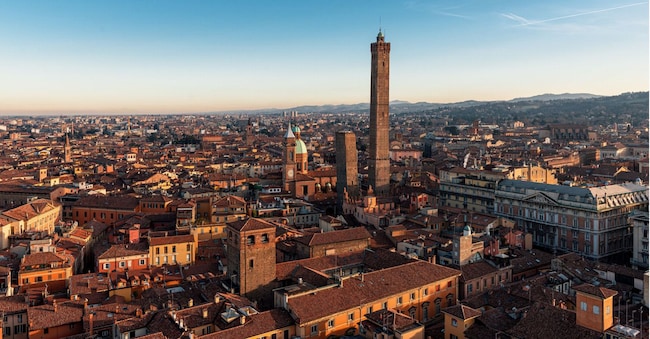
Veduta di Bologna

6' min read

Translated by AI
Versione italiana

6' min read

Translated by AI
Versione italiana

The Italian construction sector is worth 648.7 billion euros and employs 3.4 million people, accounting for 14 per cent of the workforce in Italia. In 2025, the total value of output in the sector rose by +0.9 per cent, an increase of +5.7 billion compared with 2024, whilst the number of employees rose by +3 per cent.

This is the finding of Federcostruzioni’s 2026 Report, “The Construction Sector in Italia”, produced in collaboration with Cresme and presented today during the opening conference of the 60th edition of Saie – The Construction Fair: design, building and installations, currently taking place at BolognaFiere until 10 October, featuring 567 exhibiting companies, 68 partner associations, 235 conferences and 22 special initiatives.

Loading...

Positive performance on international markets

In 2025, exports from the sector reached 64.3 billion, an increase of 2.1 per cent compared with the previous year, with a positive trade balance of 34.7 billion, up by 3.5 per cent. Employment is also on the rise: in 2025, the workforce grew by a total of 3 per cent, reaching 3.4 million, with increases of 4.7 per cent in construction and 7.9 per cent in design. These figures confirm the sector’s strength: between 2019 and 2025, after adjusting for inflation, the sector’s total output grew by 33.7 per cent.

The market was driven primarily by public works, which grew by 21 per cent in 2025 to reach 96.6 billion: this sector now accounts for 41.5 per cent of total investment in construction. This growth is linked in particular to the acceleration of projects under the National Recovery and Resilience Plan (PNRR), investment in the railways and works carried out by local authorities, with capital expenditure by local councils rising by 15.3 per cent in 2025. Overall, investment in construction in 2025 totalled 232.6 billion. Weighing against this is the housing sector, down by 15.6 per cent, with new housing down by 5 per cent and extraordinary residential maintenance down by 18 per cent.
The Report thus illustrates a gradual rebalancing of demand following the strong expansion driven in previous years by incentives for building renovation: the share of residential projects is decreasing, whilst that of infrastructure and public investment is growing.

What are the prospects for 2026?

The Report points to a reversal in the trend. Investment in construction is forecast to grow by 5.6 per cent, once again driven mainly by public works, for which a further increase of 12 per cent is estimated. A recovery is also forecast for extraordinary residential maintenance (+3.5 per cent), following the sharp decline over the previous two years. By contrast, the outlook remains negative for new dwellings (-4.5 per cent) and for new private non-residential buildings (-3 per cent).

In 2025, exports from the sector reached 64.3 billion, an increase of 2.1 per cent compared with the previous year, with a positive trade balance of 34.7 billion, up by 3.5 per cent. Employment is also on the rise: in 2025, the workforce grew by a total of 4 per cent, reaching 3.4 million, with increases of 4.7 per cent in construction and 7.9 per cent in design. These figures confirm the sector’s strength: between 2019 and 2025, after adjusting for inflation, the sector’s total output grew by 33.7 per cent.

The market was driven primarily by public works, which grew by 21 per cent in 2025 to reach 96.6 billion: this sector now accounts for 41.5 per cent of total investment in construction. This growth is linked in particular to the acceleration of projects under the National Recovery and Resilience Plan (PNRR), investment in the railways and works carried out by local authorities, with capital expenditure by local councils rising by 15.3 per cent in 2025. Overall, investment in construction in 2025 totalled 232.6 billion. Weighing this down is the housing sector, down by 15.6 per cent, with new housing down by 5 per cent and extraordinary residential maintenance down by 18 per cent. The Report thus illustrates a gradual rebalancing of demand following the strong expansion driven in previous years by incentives for building renovation: the share of residential projects is decreasing, whilst that of infrastructure and public investment is growing.

The discussion of the figures from the Federcostruzioni Report, new housing policies, the ‘Piano Casa’ and strategies for the future were the focus of the opening conference of the 60th edition of Saie, attended by Matteo Lepore, Mayor of Bologna, Vincenzo Colla, Vice-President of the Emilia-Romagna Region, Emanuele Ferraloro, President of Federcostruzioni; Stefano Betti, Vice-President of ANCE; Rosa Grimaldi, Vice-President of BolognaFiere; Ivo Nardella, President of SENAF / Gruppo Tecniche Nuove; Felice Squitieri, Special Commissioner for the Housing Plan, and Lorenzo Bellicini, Director of Cresme, who presented the data from the Federcostruzioni Report. The Minister for Infrastructure and Transport, Matteo Salvini, also attended via video link.

The views of administrators and practitioners

“We are not simply a collection of building sites, but an industrial system,” said Emanuele Ferraloro, president of Federcostruzioni. Following the strong expansion of 2021–2022, the sector has entered a phase of selective normalisation, marked by the reduction in building incentives and the conclusion of the NRRP. But the end of the NRRP must not mean the end of work on our infrastructure networks and our built environment: the ‘Piano Casa’ scheme, European and cohesion funds, and investments by large public companies must be channelled into a comprehensive strategy encompassing the entire supply chain: design, materials, systems, construction and innovative services. We need a stable, medium- to long-term industrial policy for the construction sector, including in terms of incentives: ones that are certain in terms of timing and procedures, and stable.”

“Across Europe, housing is once again becoming one of the major social issues of our time. When housing needs go unmet for too long, hardship can turn into social division: we see this in other countries,” commented Felice Squitieri, Special Commissioner for the Housing Plan. Minister Salvini’s and the government’s Housing Plan, however, chooses to act before the situation becomes a permanent emergency, by increasing supply and bringing unused housing stock back into circulation. The way forward lies in supply: restoring unusable public housing, regenerating existing housing stock, making the most of unproductive public properties, developing social housing and, within clear rules, mobilising private capital as well. Not expropriating rights to redistribute scarcity, but creating new availability.”

Loading...

“Our sector has had a positive period, which has enabled us to support GDP and create jobs. Now, as a nation, we must not lose this momentum. We need a consistent investment framework so that, by working together with the entire supply chain, we can provide the solutions that citizens need,” said Stefano Betti, vice-president of ANCE. Increasing the housing supply. The climate crisis and the vulnerability of our territory must also spur us to focus decisively on adapting infrastructure – particularly water and energy infrastructure – within a framework of clear rules and timelines based on the NRRP model.”

“We must support this transformation through innovation, digitalisation, sustainable materials and new skills, thereby enhancing the capabilities of the entire supply chain,” said Vincenzo Colla, Vice-President of the Emilia-Romagna Region. “ “As a Region, we are investing 300 million in the new Housing Plan; we are increasingly supporting training, as well as research; and we are continuing to invest in the green transformation of the construction sector through an initiative that also serves as a social economy response.”

“Following the major investment drive under the NRRP and the period of tax incentives, we must ask ourselves what comes next. I believe we need to usher in a new era of town planning and urban regeneration, investing in existing towns, brownfield sites and housing. In Bologna, we have shown that, by working together with professional bodies and trade associations, we can develop solutions that successfully combine sustainability and development. Now this approach must also become national policy,” said Matteo Lepore, Mayor of Bologna.

“A trade fair serves just one purpose: to connect ideas, products and services with the people who will help them do their jobs better,” says Ivo Alfonso Nardella, Chairman of the Tecniche Nuove and Senaf Group. “In over sixty years, SAIE has seen everything change: materials, tools, regulations. One thing, however, has remained the same. People come here to learn from those in the same trade who do it a little better than you, and to teach something to those who know less. When thousands of people return home better equipped to do their jobs, the country improves. Italia and Europe do not just need to build more. They need to look after what they already have: homes, schools, roads and historical heritage sites that require genuine expertise to be properly valued. Those skills cannot be downloaded from a website, nor can they be generated by AI; they are passed on in person, experienced first-hand, and, once again, put into practice together at SAIE Bologna.”

“SAIE’s 60-year history tells us much more than just the story of an event: it tells the story of the evolution of a strategic sector for the country and the trade fair’s ability to support its key milestones,” said Rosa Grimaldi, Vice-President of BolognaFiere. “Today, at a time when construction, infrastructure and urban regeneration are central to competitiveness and quality of life, the role of a platform such as Saie is even more significant: to connect businesses, professionals, associations and institutions, to foster discussion on industrial policies, and to showcase innovation and expertise.”

Copyright reserved ©
Loading...

Brand connect

Loading...

Newsletter RealEstate+

La newsletter premium dedicata al mondo del mercato immobiliare con inchieste esclusive, notizie, analisi ed approfondimenti

Abbonati