Made in Italy

Exports are holding up well in the face of the energy crisis. Diversification is key to growth

Promos Italia’s new White Paper traces the evolution of Italian exports between 2021 and 2026, through economic and geopolitical crises

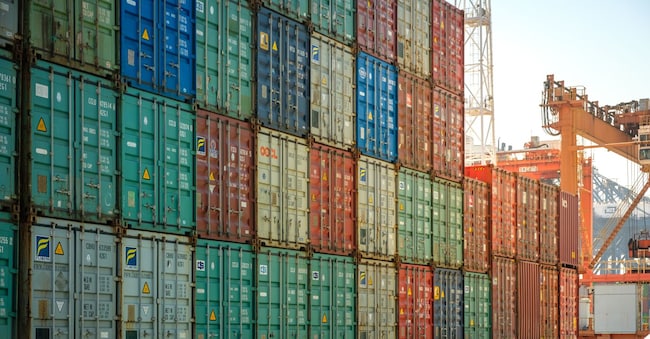
 (AdobeStock)

4' min read

Translated by AI
Versione italiana

4' min read

Translated by AI
Versione italiana

The energy crisis that followed the outbreak of the war in Iran is affecting Italian exporters both directly and indirectly, as it makes the procurement of not only energy itself but also energy-derived products more complex and costly. Furthermore, as is well known, our country faces energy prices that are among the highest in Europe (around 30 per cent higher than the EU average). All this inevitably leads to a reduction in profit margins – for as long as it is possible to keep the selling prices of their products unchanged – or to a loss of competitiveness, when production costs become so high that they must be passed on to the market, at least in part, whilst competitors keep their prices unchanged.

Yet the figures for Italian exports show that ‘Made in Italy’ is demonstrating surprising resilience in the current climate: . According to Istat, Italian exports of goods rose by 4.6 per cent in the first seven months of the year, whilst imports grew by 4.3 per cent. In July, exports rose by 4.7 per cent in value year-on-year.

Loading...

Non-EU markets are also showing positive trends: in August, exports recorded year-on-year growth of 16.1 per cent, and in the first eight months of the year, exports to non-EU countries rose by 5.8 per cent.

The Promos White Paper

This resilience is particularly significant when viewed against the backdrop of a scenario in which, in recent years, businesses have had to contend simultaneously with rising energy costs, instability in trade routes, geopolitical tensions and the resurgence of tariff policies. Italia thus remains one of the world’s leading export economies, thanks to the ability of its businesses to adapt to a constantly changing environment.

This is confirmed by the new White Paper from Promos Italia (‘Energy and International Competitiveness: How the Energy Crisis Has Changed Italian Exports and Regional Economies’), which traces the evolution of Italian exports between 2021 and 2026, using data and analyses from Istat, the Bank of Italy, Eurostat, the European Commission and the ICE Agency.

Five years in which the global economy has faced challenges that were unimaginable just a few years ago, forcing companies to grapple with entirely new competitive paradigms – both in terms of production and sales – and to continually (and rapidly) review their geographical focus, plans and investment priorities.

“The most significant finding is the ability demonstrated by Italian businesses to continue competing on international markets during an exceptionally challenging period,” says Giovanni Da Pozzo, President of Promos Italia. Between 2021 and 2025, export values held up much better than volumes, and many companies were able to maintain their revenue and market position through pricing and diversification strategies. This ability to adapt is a key strength of our manufacturing system. The challenge now is to consolidate this and make it an increasingly structural feature.”

The energy crisis and exports

In 2022, at the height of the energy crisis, Italian exports of goods exceeded 626 billion euros, representing growth of over 20 per cent at current prices. This trend was also driven by rising prices, whilst in subsequent years volumes contracted: down 5.1 per cent in 2023 and down 2.4 per cent in 2024.

In 2025, however, Italian exports returned to growth in terms of both volume and value, exceeding 643 billion euros, with significant regional variations: +13.2 per cent for Central Italy, +2.3 per cent for the North-West, +2.0 per cent for the North-East and +3.2 per cent for the South, whilst the Islands recorded a decline of 11 per cent.

Lombardy remains the leading exporting region, with over 167 billion euros, followed by Emilia-Romagna, Veneto, Tuscany and Piedmont.

Loading...

The best-performing sectors

The sectoral breakdown also played a decisive role, according to the Promos paper. In 2025, the increase in pharmaceutical exports from Tuscany, Lazio, Lombardy, Abruzzo and Campania contributed a total of 2.6 percentage points to national export growth, whilst a further percentage point came from metals and metal products from Tuscany.

The energy situation has improved compared with the peak in 2022: the energy deficit, having exceeded 110 billion euros, fell to 46.9 billion in 2025. However, this remains a strategic issue for business competitiveness. Industrial gas and electricity prices in the European Union are still significantly higher than those of some of its main trading partners.

Possible future scenarios


As mentioned, the figures for the first eight months of the year are positive and encouraging in terms of value growth. However, ‘the trend in volumes and the return of increased pressure on the energy sector confirm that export growth is taking place against a backdrop that remains complex’, the study states.

According to the White Paper, the international competitiveness of businesses must now be assessed alongside their ability to manage risk. “The international competitiveness of SMEs must now also be seen as their ability to operate in conditions of greater structural instability,” adds Da Pozzo. A business may have an excellent product and an attractive target market, but it may be vulnerable if it depends on a single critical supplier, a single logistics route, a single energy source or just a few markets. For this reason, internationalisation strategies must combine an understanding of demand and competitors with an increasingly careful assessment of supply chain risks, energy exposure, logistics and the potential for diversification.”

The crux of global value chains

Before the pandemic, global value chains were assessed primarily on the basis of efficiency and cost. Today, these factors are complemented by continuity, substitutability and geopolitical risk.

For internationalised SMEs, it is therefore essential to understand not only the contribution of individual target markets to turnover, but also the concentration of suppliers, the origin of strategic inputs, the embodied energy in products, dependence on logistics routes, and exposure to sanctions, tariffs and export controls.

“Diversification is no longer just about export markets, but also suppliers, energy sources, logistics routes and critical inputs,” concludes Da Pozzo. Italian exports have proven their ability to maintain their value even during periods of severe instability. The challenge now is to transform this capacity to respond into an increasingly robust and sustainable competitive edge, whilst safeguarding profit margins, production continuity and market access, even when multiple risk factors are at play simultaneously.”

Copyright reserved ©
Loading...

Brand connect

Loading...

Newsletter

Notizie e approfondimenti sugli avvenimenti politici, economici e finanziari.

Iscriviti