
Express couriers: revenue rises to 8.8 billion but profit margins fall
A study by ‘Uomini e Trasporti’: Amazon is the market leader with a 20.3 per cent share, followed by Poste Italiane, BRT and DHL

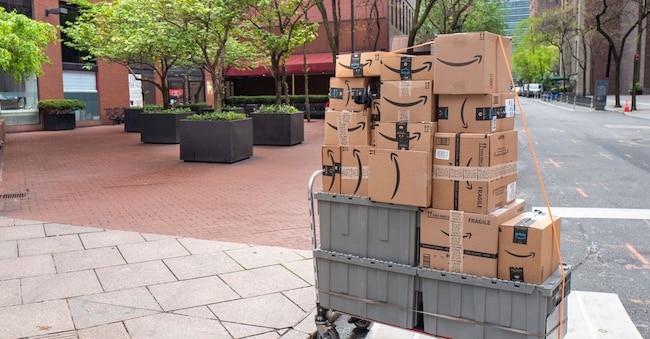
In 2025, around 1.2 billion parcels were delivered in Italian cities, 5.9 per cent more than in 2024 and 29 per cent more than in 2021 (Agcom figures). Distribution is handled by a fleet of 4.6 million commercial vehicles (vans weighing less than 3.5 tonnes). E-commerce and the pandemic have accelerated a trend that was already underway, bringing an increasingly diverse range of couriers, hauliers, suppliers to major operators and specialised networks into urban centres. In June 2026, there were 5,579 Italian express and courier companies, 31.7 per cent more than in 2017. 65.8 per cent of these are sole traders.
This is the picture painted by “Mercincittà”, the new publication in the 100 Numeri series, edited by the editorial team at Uomini e Trasporti, which was presented at the Rimini trade fair during Ecomondo.
Also in 2025, parcel delivery services (last-mile urban logistics) generated revenue of over €8.86 billion, compared with €8.55 billion in 2024 (+3.6 per cent), but operators’ profit margins are shrinking. Amazon is the leading parcel delivery company in Italia, with a 20.3 per cent share of revenue. It is followed by the Poste Italiane group with 18 per cent, BRT with 15.9 per cent, DHL with 12.4 per cent, UPS with 11.1 per cent, GLS with 10.6 per cent and FedEx-TNT with 10.1 per cent. The remaining operators account for a combined total of just 1.6 per cent of the market.
E-commerce remains at the heart of the transformation of urban logistics. Over the past ten years, the value of online purchases of goods has risen from 9.5 to 42.6 billion euros. Now, the most significant challenge for last-mile providers – the companies that physically carry out deliveries for major brands – is to restore profit margins: whilst volumes and overall revenue have grown, the average revenue per delivery has fallen. In 2025, the average revenue per parcel fell to €5.98, 0.6 per cent lower than in 2024 and 6.2 per cent lower than in 2021.
Those who transport goods every day in Italian cities are grappling with: congested historic centres; different access rules in every city; long journeys outside the city to deliver parcels – sometimes very small ones – that have arrived from the Far East; tight schedules in a bid to recoup earnings eroded by time lost; a sense of disorientation caught between vans over 15 years old and new robots capable of replacing human workers in the very near future.


