
The axe of extra costs falls on builders
Rising prices are eroding project profit margins. Companies say: ‘We need compensation immediately, or construction sites are at risk’. The Ministry of Infrastructure and Transport (MIT) says there is a shortfall of 1.5 billion for 2024–2025

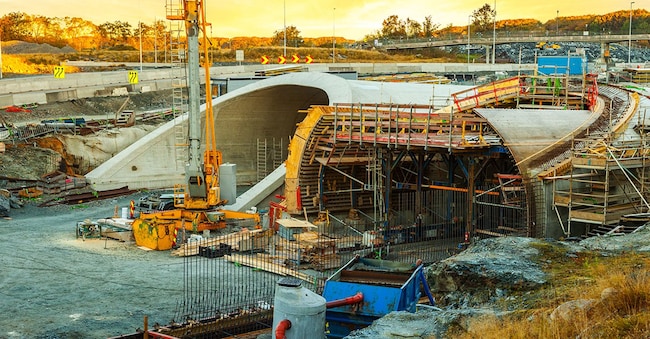
“Concrete, plastic, bitumen, even electrical cables. What do you want me to say?” explains Edoardo Ronzoni. “Everything’s going up here, our profits are being eaten away and we’re short of cash: if things carry on like this, we’ll have to halt some construction sites.” “The outstanding payments amount to 60 million for us,” says Roberto Davoli, “and we’re still missing sums due by the end of 2024 and for the whole of 2025. We’re therefore facing nearly two years of lost revenue – a paradoxical situation that needs to be resolved as soon as possible.”
These are not isolated voices – those of the sole director of the Brianza-based company Ronzoni and the chairman of the Modena-based CMB Group – within a sector – the construction industry – that has been affected across the board by the detrimental effects of additional costs.
Soaring energy and material costs are plaguing the sector as a whole, which is struggling to get the public sector to recognise the upward price movements that have taken place. This problem, which has been present for some time, came to a head in 2022 following the invasion of Ukraine, but is now becoming even more acute in light of the latest surge in prices triggered by the Hormuz crisis. According to estimates by ANCE, the association of building contractors, between the arrears accrued in the two-year period 2024–25 (1.99 billion) and the 1.8 billion estimated for this year, a total of 3.8 billion needs to be injected into the system to cover work already carried out.
In light of this, the funds allocated so far are insufficient, and the Ministry of Infrastructure itself points out that, given the requests received (1.8 billion for 2025 plus an outstanding balance to be settled by the end of 2024) the current cash shortfall stands at 1.45 billion, meaning that the available funds amount to just a quarter of what is required.
“We are awaiting 130 million,” explains Francesco Aguglia, Managing Director of Pizzarotti, “and given the significant delays, we are consulting with our lawyers as to whether we should also claim the associated financial charges; these are by no means insignificant sums. But the problems are even greater for 2026, given that the Budget Act has stipulated that it is now up to the contracting authorities to find the necessary funds for cost overruns, if necessary by cutting funding for other projects.”


