
Extreme weather events on the rise, with damage totalling 11.9 billion in 2025. A heavy price for coastal areas
Legambiente’s City Climate Observatory has highlighted this trend

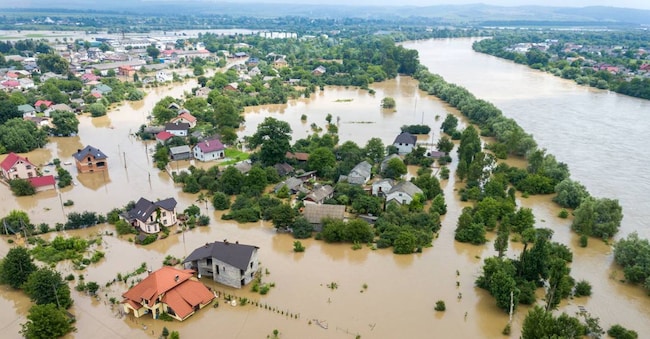
Extreme weather events are on the rise, and the damage to communities and citizens is becoming increasingly evident. From north to south, including the islands, people are coming to terms with the effects of drought, flooding and waterlogging. This is partly because the memory of Cyclone Harry, which struck Sardinia, Sicily and Calabria, causing damage amounting to over 2 billion euros, is still fresh in people’s minds. It is certainly no coincidence that the severe weather alert (downgraded to ‘critical’ just twelve hours later) declared by the Region of Sardinia and the Civil Protection Agency kept the mayors of 83 municipalities on tenterhooks for almost 24 hours.
A growing phenomenon
The fact that this phenomenon is on the rise is emphasised by Legambiente’s City Climate Observatory, which, in its reports, highlights how ‘the climate crisis is gathering pace in Italia too’, causing damage, making the country more vulnerable, and even putting people’s lives at risk.
Counting in progress
“The tally of damage is rising because the number of incidents is increasing,” emphasises Andrea Minutolo, the Observatory’s scientific coordinator. “It is still difficult to provide a precise estimate for this year, as there are as yet no established studies on the damage that has occurred.”
The figures
The environmental organisation has released figures for 2025, when 376 extreme weather events were recorded – an increase of 5.9 per cent compared with 2024. Flooding, wind damage and river flooding were the most frequent. ‘The Peninsula,’ adds the environmental organisation – which will be taking to the streets on 5 December to raise awareness of these issues – ‘is paying the price for sporadic and uncoordinated adaptation measures, lacking a multi-sectoral and multi-level approach. This is occurring against a backdrop where the damage suffered by the country from heatwaves, droughts and floods in 2025, according to a recent study by the University of Mannheim, will amount to 11.9 billion euros and, according to projections for 2029, will rise to 34.2 billion euros.”
Between droughts and floods
Everything is linked to water: droughts in summer and torrential rain within a matter of hours or days. “When six months’ worth of rain falls in a very short space of time,” adds Minutolo, “it’s clear that there will be damage. This varies depending on the area. In Rome, for example, there is flooding in the city and the underground stations are closed.”

