
Defence investment plan: from F-35s to anti-drone systems, from Samp/T to submarines
The indications of the Annex to the Defence Multiannual Planning Document 2025-2027

Key points
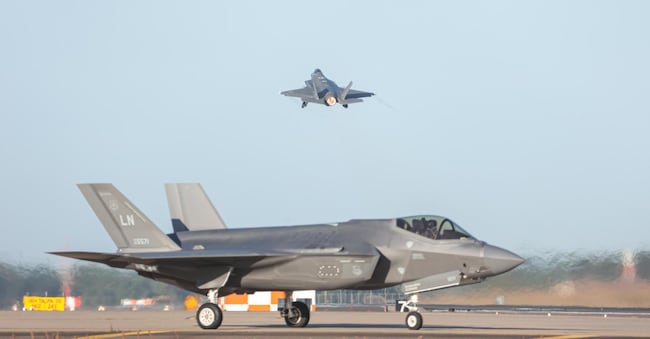
Eurofighter, F-35, sixth-generation Gcap fighter aircraft. And, on the heavy combat front, the modernisation of the Ariete tanks and the renewal of the armoured component with new-generation Main Battle Tanks. Finally, anti-drone systems 'for complex and urban operational contexts', SAMP/T Next Generation batteries and, in the naval sphere, European multi-mission frigates (FREMM), up to U212NFS submarines.
The Documento programmatico pluriennale della Difesa (DPP), for the three-year period 2025-2027, which has just been presented to the Houses of Parliament, is a sort of litmus test of the government's defence strategy, which shows the resources it will deploy and the weapons systems it will acquire or develop with a view to national security. The Documento Programmatico Pluriennale (DPP) represents the instrument through which the Ministry of Defence presents to Parliament the expenditure forecast for the current financial year and the three-year period of reference,' explains Defence Minister Guido Crosetto in the introduction to the document. It provides an updated picture of the state of operations of the Armed Forces and an action plan consistent with the available resources.
The context is defining itself day by day: 'the Russian-Ukrainian war, combined with recent crises in the Middle East, including the Israel-Hamas conflict, the situation in Syria, and the Iranian nuclear crisis, is part of a global geopolitical framework characterised by persistent factors of instability, with significant repercussions in the "extended Mediterranean", an area of fundamental strategic interest for Italy,' reads the Dpp.
The National Strategic Approach
From the point of view of resources, the document explains that in 2025, the ordinary budget of the Ministry of Defence registers an increase of 7.2% compared to 2024, reaching around €31.3 billion; spending remains almost stationary in 2026 and rises to €31.7 billion in 2027. The DPP, which is a bit like the Defence 'manoeuvre', does not, however, give any indication of how the €14.9 billion that Italy has asked to borrow (at subsidised rates) from the European Union under the Safe programme launched by the European Commission in March 2025 will be used. By 30 November, the Ministry of Defence must inform Brussels how it intends to invest this budget.
All this while Prime Minister Giorgia Meloni emphasises that 'on a broader level, the strengthening of defence requires even more ambitious financial solutions, we ask,' she said in the reports to the Senate ahead of the European Council, 'to open a debate to make flexibility in the Stability and Growth Pact permanent' for defence investments.


