
Faber, CEO of Logitech: 'I would like artificial intelligence as a member of my board of directors'
"We already use artificial intelligence agents in almost every meeting," he added. The importance of using good quality data

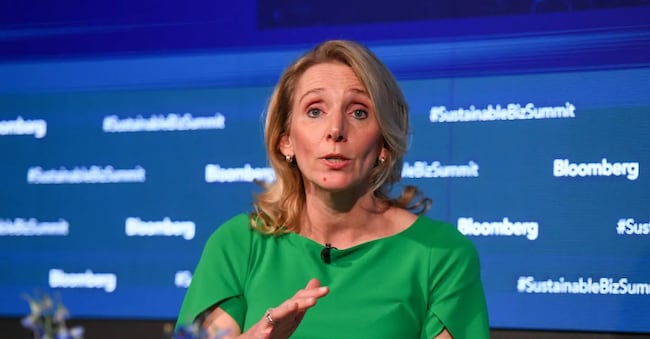
To keep up with the times, you need quick decisions. Especially if you are at the helm of a company in the technology sector. That is why Hanneke Faber, CEO of Logitech, a company that deals with accessories (and not only) for computers and electronic devices, has declared herself open to the idea of having a board member based on artificial intelligence, as stated in an article on Fortune.com.
"We already use artificial intelligence agents in almost every board meeting," Faber told the Fortune Most Powerful Women Summit, held in Washington this week.
According to Faber, today's AI agents are primarily concerned with synthesis and idea generation, but this is likely to change soon due to the pace of technology development. "As they evolve - and some of the best agents or assistants we've helped develop actually do things themselves - this brings with it a number of governance aspects," Faber said. "You have to keep in mind and make sure you really want that bot to act. But if you don't have an AI agent in every meeting, you lose some of the productivity. That bot, in real time, has access to everything," he continued.
Reshema Kemps-Polanco, executive vice-president and chief commercial officer of global pharmaceutical company Novartis, also said it had trained an artificial intelligence bot to help it manage a "very rigorous commercial launch". The bot is being trained to evaluate the team's launch plan and is becoming "increasingly intelligent" in asking strategic questions, she said. "It is trained to look for gaps in the plan," Kemps-Polanco said during a session titled "Analysis of the Global Economy", presented by Novartis. "In a couple of cases... it actually identified two or three aspects that I might have overlooked, aspects that would have added value anyway."
Efficient only if well trained
Other speakers, however, emphasised that artificial intelligence is only as effective as the data it is trained on. "Garbage in, garbage out," said Andrea Calise, president of strategy and communications for the US at global consultancy Teneo. "In practice, we create synthetic stakeholders to understand stakeholders" by using artificial intelligence to obtain and understand data.

