
Fairytale atmospheres in Bremen, the Hanseatic city in northern Germany
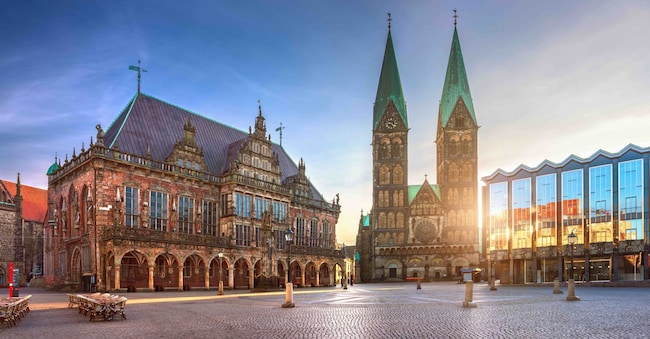
The medieval heart houses Marktplatz one of the most beautiful squares in the Old World surrounded by historic architecture

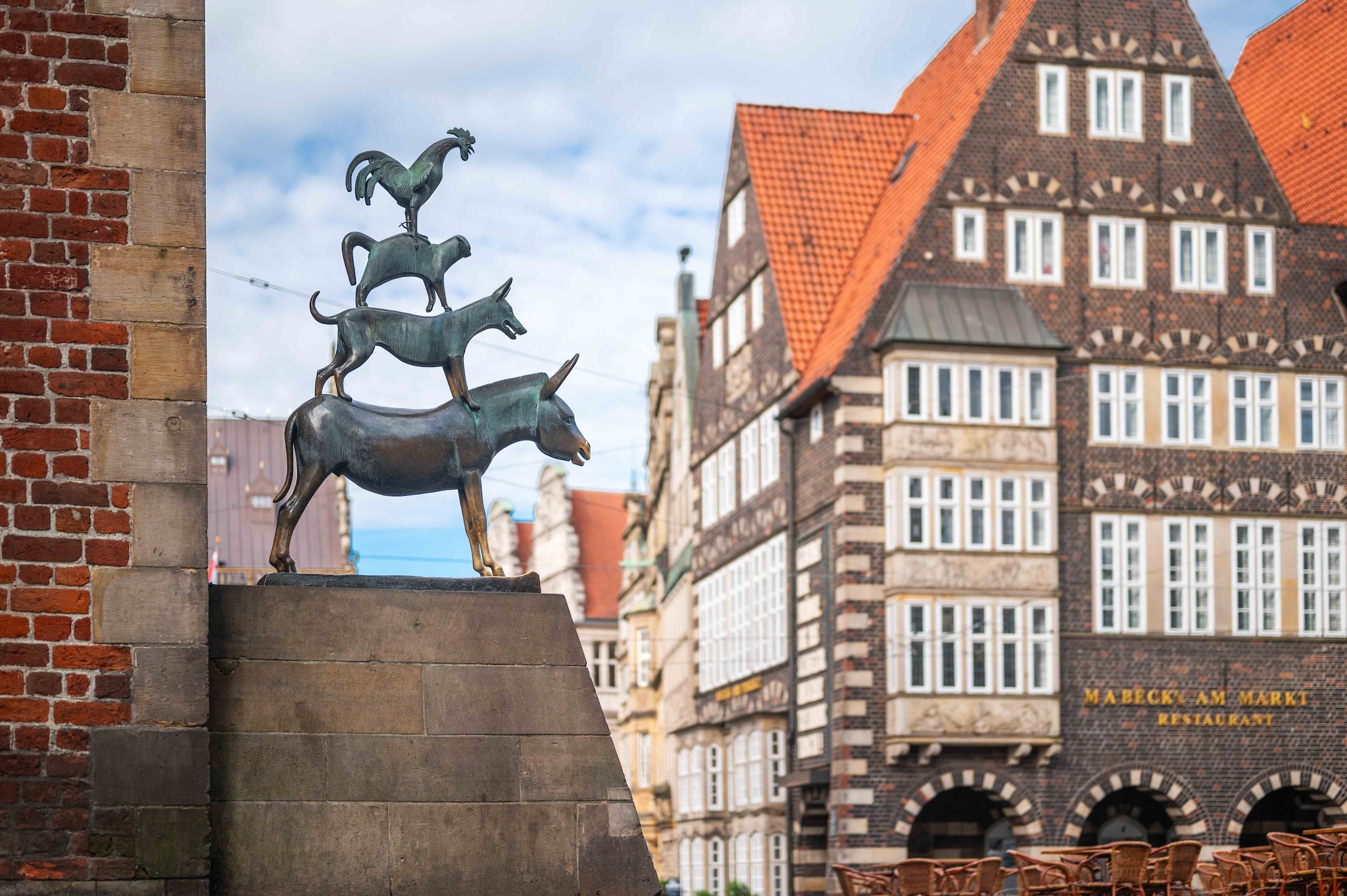
You say Bremen and immediately the famous fairy tale by the Brothers Grimm, The Town Musicians of Bremen, comes to mind. It tells of a donkey, a dog, a cat and a rooster who come to this north-west German city to start a new life and play in the municipal band. The story of the four protagonist animals not only lives on in the pages of the books, but also resonates from the bronze statue that celebrates them in the heart of the old town. In Bremen, the fairy tale comes to life not only in front of this attraction, which has become one of the most photographed symbols of the city, but also when walking through its streets and admiring the monuments that weave together folk tradition, culture and history. The busy calendar of cultural events planned for 2026 amplifies this feeling and transforms Bremen, which has its own airport and is well connected to the rail network, into an open-air stage on which artists, musicians and sportspeople perform.
Discovering the historic centre
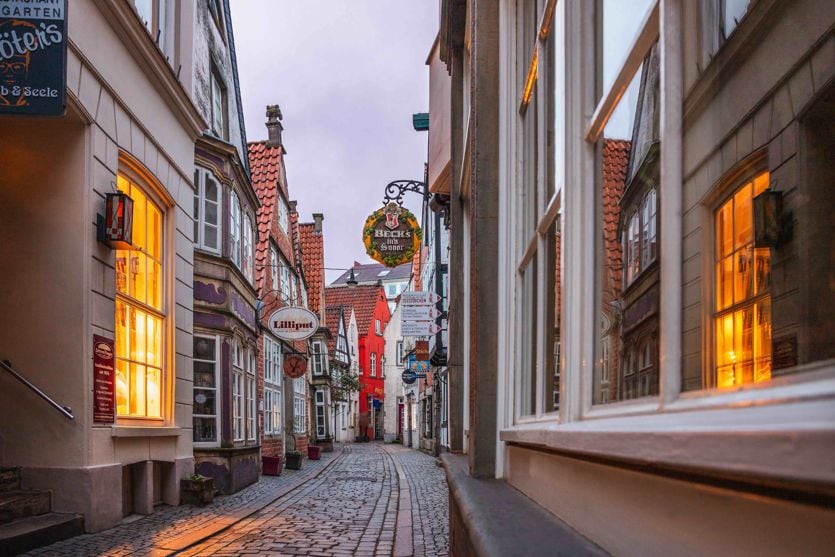
Just as the Grimm brothers' fairy tale catapults readers into an imaginary world, Marktplatz, the central market square, casts visitors back to the medieval era when Bremen was part of the Hanseatic League, a union formed with other German cities to strengthen trade power. Considered to be one of the most beautiful squares in Europe, Marktplatz is surrounded by the city's historical architecture and is overlooked by two UNESCO World Heritage sites: the Town Hall and the Roland statue, representing the development of civic autonomy and sovereignty in a European urban society. Dating back to 1405, the Gothic Town Hall building, where the state government is located, is open to visitors on guided tours tracing its six-hundred-year history; in the basement you can even visit the Bremer Ratskeller wine cellar, which houses one of Germany's most important wine collections. The majestic St. Peter's Cathedral also overlooks Marktplatz, while the aforementioned statue of the Musicians attracts everyone's curiosity, not least because it is said to bring good luck if you touch both of the donkey's front legs. It is easy to continue to feel part of a fairy tale as you walk through the old town and pass places such as the exclusive Böttcherstraße, a street built in the early 20th century by coffee merchant Ludwig Roselius - he is credited with the invention of decaffeinated coffee - in which you will find beautiful brick buildings and two curious attractions, the Haus des Glockenspiels, the house of music boxes, and the Bremer Bonbon Manufaktur, a shop where handmade candies are produced in over a hundred flavours. There is also a fairytale atmosphere in the Schnoor, Bremen's oldest quarter, characterised by narrow alleys lined with small houses from the 15th and 16th centuries. Bremen's maritime tradition can be found by walking or cycling on Schlachte, the promenade that follows the course of the river Weser, on which old boats are permanently moored; an ideal place to relax and to stop at one of the many restaurants or bars where there is no shortage of beer, in fact one of the most famous breweries is in Bremen.
Calendar appointments
Bremen's calendar of cultural events for 2026 is already packed. It starts from 22 to 25 April with Jazzahead, the festival dedicated to jazz music that brings together names from the international scene and emerging artists, and is considered one of the most important European events of its kind. From 11 to 14 June, the historic La Strada Festival returns, the first edition was held in 1994; three days in which the city's public spaces are transformed into an open-air theatre and spectators can enjoy theatre, dance and acrobatic performances. More music from 1 to 5 July with the Breminale, an open-air event that lights up the banks of the Weser River and provides entertainment for all age groups with live music, theatre, circus and dance. Athletes, on the other hand, will enjoy the international GFNY (Gran Fondo New York) race series, which stops in Bremen on 30 August. Amateur and professional cyclists can compete on a route of either 60 or 110 kilometres and have the opportunity to qualify for the legendary GFNY World Championship in New York. In the autumn, the Hanseatic city will host the traditional festivities on 3 October, German Unity Day, and again from 2 to 4 October, Bremen's Old Town will be transformed into a stage for culture, dialogue and encounters with themed presentations, as well as a creative family zone and a gastronomy trail. Delicacies can also be tasted during the two weeks of Freimarkt, the autumn fair, which will take place from 16 October to 1 November and combines folk tradition and contemporaneity through a busy programme of activities and events. Finally, from 23 November to 23 December, the famous Christmas markets will light up Bremen's old town and the Schlachte area with lights and magic.


