Security

Fraud against the elderly: Carabinieri vademecum to defend against the most common scams

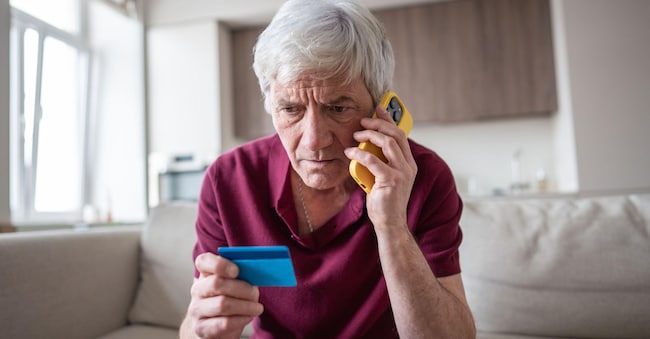
The Carabinieri offer a practical guide to help the elderly avoid telephone scams, fake technicians and ATM theft, thus protecting their financial and psychological security.

by Rome Editorial Staff

(Alamy)

6' min read

Translated by AI
Versione italiana

6' min read

Translated by AI
Versione italiana

The elderly and frail people are often victims of deception. The latest case happened in Pinerolo (Turin). A 37-year-old man was allegedly responsible for 14 thefts against elderly people, all committed in the Pinerolo area and neighbouring municipalities between last August and November. A few days ago, he was hit by a pre-trial detention order in prison issued by the Gip section of the Ordinary Court of Turin. Everything was triggered off after a complaint filed this summer by an 80-year-old man, robbed of 800 euro by a man who had pretended to help him carry out the operation while he was withdrawing cash from an ATM of a bank in Pinerolo. The modus operandi, common to all the thefts committed, was to approach the elderly victims - who were going, alone, to withdraw money from the ATM - to distract them by making them believe that the Atm was not working and to stealthily take possession of the money. The victims, in most cases, only realised later the theft they had suffered or, as sometimes happened, the misuse of their credit cards. The alleged perpetrator is now charged with aggravated theft and misuse of payment cards and has been confined at the 'Lorusso e Cutugno' prison since 23 December.

Faced with the umpteenth case in which elderly people have fallen victim to scams, the Carabinieri are relaunching a vademecum on how to avoid them as far as possible. Scams, in fact, are a widespread phenomenon and target especially frail or elderly people, leaving indelible marks on them. In addition to the financial loss and the psychological trauma of having their space invaded, victims also suffer the sense of guilt of having been cheated. Fraudsters take advantage of the emotional sensitivity and physical frailty of the elderly to win their trust, using the most diverse methods. To avoid falling for these scams, it is often enough to take a few precautions. From the fake nephew to call centres, water, electricity and gas companies: here are some 'tips' from the Carabinieri to protect yourself against domestic and out-of-home scams.

Loading...

DOMESTIC FRAUD

Scam of fake police officers

Example: a phone call from a fake police officer or a fake lawyer makes the victim believe that a relative has been involved in a car accident or has been arrested. The victim will be asked for a sum of money in return for providing medical or legal assistance to a loved one in distress. If the defrauded person accepts, the caller tells him or her that a plainclothes assistant or Carabiniere will be at the home shortly to collect the cash.

Advise: Be wary of appearances; never open the door to strangers; do not trust the ID card alone (it is not enough!); remember that the police never ask for money to assist citizens.

Fake nephew scam

Example: scammers call the victim on the phone, starting the conversation with trick phrases such as "Guess who this is!" or "Auntie/uncle, do you remember me?". In this way they try to catch the name of a relative or acquaintance. Pretending to be this person, they tell them that they urgently need money for serious reasons, but that they are unable to pick up the money. If the victim accepts, the interlocutor tells them that a friend will shortly come to the house to collect the money or invites the victim to make a transfer to their account.

The advice: here too, one should be wary of appearances; never open the door to strangers; do not trust the ID card alone (it is not enough!); limit confidence on the phone: in the case of people who present themselves as relatives and ask for money, one should take your time and call the 112 single emergency number or a relative.

Fake supply company representatives scam

Example: the fraudster presents himself at the victim's home posing as a representative of a utility company (water, electricity or gas), informing the victim of new and more advantageous contract conditions. With this ruse, the perpetrator gains the victim's trust in order to collect his data, which is then used to open new contracts in his name but without his consent.

Advise: Be wary of appearances; never open the door to strangers; do not trust the ID card alone (it is not enough!); contact the supply company at the telephone numbers on the bills (do not call telephone numbers provided by the stranger at the door); do not sign anything and always seek advice from more experienced trusted people.

Fake supply company technicians: the freezer scam

Example: The fraudsters, disguised as water or gas technicians, present themselves at the victim's door reporting that there is a serious problem at home that needs to be solved immediately. Exploiting the victim's anxiety and concern, the fraudsters urge the victim to protect their valuable possessions from potential gas leaks or other threats by placing them safely in a bag inside the freezer, which they then cleverly steal.

Advises: Be wary of appearances; never open the door to strangers; do not trust the ID card alone (it is not enough!); contact the supply company. If you have let strangers into your home, do not be distracted and, without losing your temper, firmly invite them out. Remember that no utility or company sends its employees on home visits to collect payments. All utility companies (gas, electricity, water and telephone) always announce their arrival with notices to the condominium, communicated long in advance.

Call centre scam

Example: the fraudster contacts the victim by telephone, posing as a call centre. The fake operator asks trivial questions to induce the victim to answer with a 'yes', which is then extrapolated and used as a form of consent for the activation of a new supply contract. The victim becomes aware of the scam upon receiving the first bill.

Advise: Be wary of appearances. If you do not understand the identity of the caller, you should ask questions and avoid answering by giving personal details. In the case of an unsolicited contract or activation, send a written complaint to the provider by registered letter or pec. Limit your confidence on the phone: in the case of people who present themselves as relatives and ask you for money, take your time and call the relative who claims to have contacted you, to verify that he or she has actually done so, or the single emergency number 112.

Forged identity fraud

Example: is so-called 'spoofing'. The fraudster contacts the victim through a fake call centre using, thanks to special computer programmes, telephone numbers corresponding to the toll-free numbers of banking institutions. Having gained the victim's trust and obtained access credentials to the current account, he proceeds to move the money to special accounts with virtual cards.

Advise: do not share personal or bank account details over the phone; limit your confidence on the phone: if people ask you for money, take your time and call the single emergency number 112.

TRUFFLE OUT OF HOUSE

Fake Friend Scam

Example: the fraudster approaches the victim, suddenly hugging him and pretending to know him. He usually introduces himself as a friend of the children or grandchildren and engages the swindled person in a long conversation to distract him and make him think he recognises him. He tells him that he has accrued a debt to the bank or shady people and convinces the victim to give him cash or jewellery.

Tips: when going out, do not take large sums of money with you; when paying at the bar, do not show your money or valuables you are carrying; walk in well-lit areas with lots of people.

Mirror Scam

Example: the fraudster makes the victim in the car believe that he has unintentionally hit his car. The victim hears the sound of a sharp blow on his car body, usually on the side (actually caused by the fraudster using a rock or a stick). The fraudster asks the victim to see the damage and to pay a sum of money to avoid an insurance claim, using aggressive tones if necessary.

Advise: stay in the car without getting out of the vehicle; close the rear and passenger side windows to prevent any accomplices from stealing your personal belongings; call the local police or the single emergency number 112.

Atm card scam

Example: this is known as 'skimming'. The fraudster alters the bank's ATM by installing a reader (called a 'skimmer') or a video camera and a fake keyboard to clone credit cards and store the typed data.

Tips: carefully inspect the ATM before using it, checking that nothing is different or abnormal; cover the keypad while typing the pin.

Scam of the blocked banknotes

Example: is so-called 'cash trapping'. When withdrawing at the bank ATM, some banknotes get stuck in the dispenser. This is not a technical problem but a ruse by the fraudster, who has inserted a metal object into the dispenser and then returned to retrieve the banknotes.

Advise: stay in front of the ATM and immediately contact the bank's customer service or the single emergency number 112.


Copyright reserved ©

Brand connect

Loading...

Newsletter

Notizie e approfondimenti sugli avvenimenti politici, economici e finanziari.

Iscriviti