Tax evasion

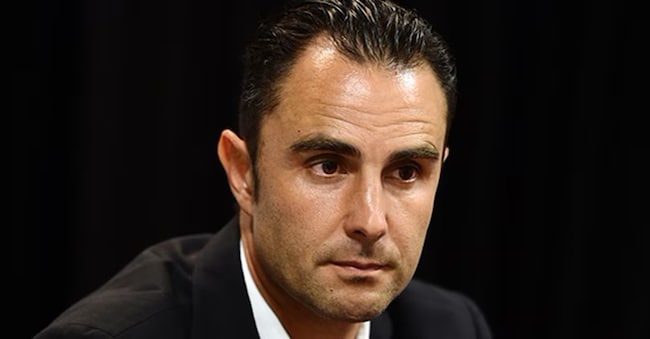
Hervé Falciani arrested in Milan and released by the Ministry of Justice

The French-Italian software engineer was pursued by a Swiss arrest warrant. He had revealed the names of tax evaders at the Hsbc Private Bank in Geneva
by Angelo Mincuzzi

4' min read

4' min read

Arrested and released by order of the Ministry of Justice. Hervé Falciani, the man who made it possible to reveal the names of tens of thousands of tax evaders around the world (including more than 7,000 Italians), all clients of the Hsbc Private Bank in Geneva, was arrested in Milan on 7 December, after an Interpol alert had been triggered on the basis of an international arrest warrant issued by Switzerland. In November 2015, Falciani had been sentenced in absentia by the Court of Bellinzona to five years in prison for economic espionage.

Taken to San Vittore prison, the French-Italian computer engineer spent ten days in a cell before being placed under house arrest. Then, on Wednesday 18, the Italian Ministry of Justice ruled that Falciani be released.

Loading...

Falciani had arrived in Milan on holiday with his wife on the afternoon of 6 December and the alarm was triggered when he checked into Hotel The Corner, near the Duomo. At 3 a.m. between 6 and 7 December, four officers knocked on the door of his room and took him to the police station in via Fatebenefratelli, before transferring him to San Vittore.

The Falciani List

.

Falciani's name had ended up on the front pages of newspapers all over the world when the list of Hsbc clients - known as the 'Falciani List' - had been published by newspapers belonging to the International consortium of investigative journalists (Icij). The first investigations in Turin coordinated by the public prosecutor, Gian Carlo Caselli, and his deputy Alberto Perduca had been triggered. Numerous Italian tax evaders had had to pay unpaid taxes to the Internal Revenue Agency after the Court of Cassation ruled that the Falciani List could be used for tax purposes.

Among the clients of the Hsbc Private Bank, however, there were not only tax evaders. The undeclared money was mixed with dirty money from money launderers, diamond dealers and organised crime figures.

In the decision releasing Falciani, the ministry writes that it has acquired a copy of the judgment of the Spanish courts in 2018, which had refused extradition due to the lack of the dual criminality requirement. The ministry notes that no feedback has come from the French authorities, regarding the possible intention to present a European arrest warrant against the "French citizen Falciani" in application of the principles of law enunciated by the Court of Justice of the European Union.

However, he considers it likely that Falciani's French nationality itself could be the reason behind France's refusal to extradite him to Switzerland.

Finally, in view of Falciani's French and Italian nationality, 'on the basis of which the right to refuse extradition of nationals provided for in Article 6(1) of the European Convention on Extradition could be exercised', he did not request the Court of Appeal 'to maintain the precautionary measures ordered for extradition to the Swiss Confederation'.

It remains to be seen why Falciani was arrested this time, as he has visited Italy very often in recent years, and in different regions. He even attended a conference in Parliament.

In a statement, Falciani's lawyers (William Bourdon, Giorgio Bertolotti and Riccardo Magarelli) welcome 'the Ministry of Justice's stance' and hope that 'the Italian Republic will safeguard both his person and his information, in recognition and protection of the overriding public interest at national and international level'.

The request for provisional arrest made by the Swiss Confederation, the lawyers recall, 'was aimed at obtaining Falciani's extradition'. The lawyers also emphasise that 'the Italian Ministry of Justice asked the Ministry of the Interior for an urgent note in order to gather information and any useful documentation on the extradition proceedings already initiated in France and Spain' against Falciani.

The Madrid High Court had twice - in 2013 and 2018 - refused to grant extradition to Switzerland. Falciani also resides quietly in France, a country that has never granted extradition.

Spanish rejection

.

The Spanish judges had based their decision on Falciani's important contribution to the launch of criminal investigations across Europe into the various offences with which Hsbc was subsequently charged. "The decision of the Spanish magistrates," say the lawyers, "represents a fundamental precedent, since it helped to give Mr Hervé Falciani the protection he deserved as an outstanding whistleblower. The proceedings initiated in France following the Italian-French engineer's revelations led Hsbc Suisse to pay €300 million in damages and a fine to the French Treasury.

The lawyers recall, again, the collaboration between Falciani and the then public prosecutor of Turin, Gian Carlo Caselli, which gave impetus to judicial investigations in Italy as well. And they point out how several billion euros were recovered from numerous European public coffers as a result of Falciani's revelations. Several millions have also been recovered in Italy.

"Consequently," they write, "a paradigm shift is needed, with the protection of whistleblowers moving from a national to an international framework. The criminalisation of whistleblowers, whether for retaliation or political reasons, is no longer acceptable. The undersigned lawyers also call on the European Union and other international institutions, such as the United Nations, to fulfil their duty to raise a shield against the criminalisation of those who denounce the impunity of large private actors whose crimes endanger the future of humanity and the common good of citizens'.

Copyright reserved ©

Brand connect

Loading...

Newsletter

Notizie e approfondimenti sugli avvenimenti politici, economici e finanziari.

Iscriviti