
Ovation for Falstaff failed rock star
In Dresden great success for the opera under Gatti's direction with Michieletto directing. Excellent "Macbeth" in Parma under Renga

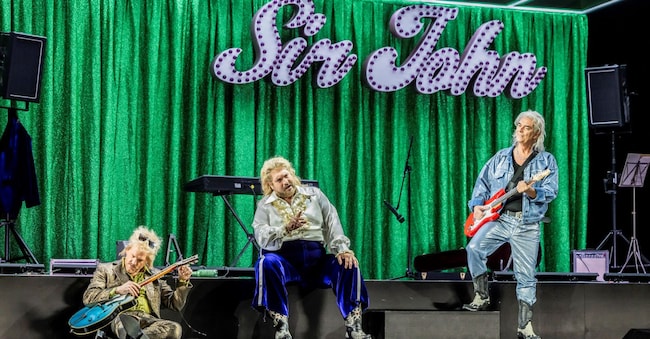
Six Verdi operas in a fortnight: Otello, Macbeth, Falstaff at the Festival Verdi, Rigoletto at La Scala, Macbeth at the Maggio. And again Falstaff in Dresden, in the rich Verdi october, after Parma, Milan and Florence. Extraordinary. By fate, by luck, the greatest gift came at the last: with Daniele Gatti in a state of grace, of absolute musical bliss. The evening before he was on the podium of the Berlin Philharmonic Orchestra, in a Brahms Terza that was memorable for its internal tightness and grandiosity of sound.
The next day in Dresden with the orchestra of the Staatskapelle at the Semperoper opens the opera course with a playful and lively Falstaff: very fast but finely worked in the densest parts; the strings in grand deployment but supple and soft, under a clear and expressive gesture; the harmonies and impastos under the changing chimes of midnight are Verdi saying goodbye. Pure emotion.
No, no relation to the last Falstaff at La Scala. Everything here is new, including the direction by Damiano Michieletto. And if the galloping cavalcades of the capestri, with Nicola Alaimo in the leading role, the diction and the breaks of scintillating beauty, are triggered, so too are the feminine sweetnesses, with Eleonora Buratto's malicious Alice, the crisp consonants. Lodovico Ravizza is a young Ford, a baritone that is already important, Gatell an easy and tuneful tenor, Rosalia Cid the queen Nannetta, thanks to the fairy carpet that the conductor spreads around her.
In the sold out theatre, the audience laughs and enjoys it, applauding in standing ovation (even at the third performance). The show is immediate and intelligent: it wants Falstaff to be a rock star on the brink, but not in disarray. The frame changes, but not the substance of the retrospective gaze. Pop-art is this time the always chic scenes by Paolo Fantin: the cascade of empty cans, in the dump, much better than many sprays of Thames. And the lights by Alessandro Carletti transform the vision into a dream. Loyalty does not mean being didactic. Thus Herne's oak tree multiplies into plastic columns and the "take Mercury" becomes the comic gift of an old LP, of the rocker to the truly witty Marie-Nicole Lemieux without postictive gravity.
There are no two orchestras in our part of the world, a two-hour train ride away, as virtuosic and voluptuously intense as Dresden and the Berliner. So instead of prattling on about phantom conductors and phantom opinion leaders, this is what we should be talking about. Because how much Verdi changes when entrusted with an important instrument.

